Obviously Skincare
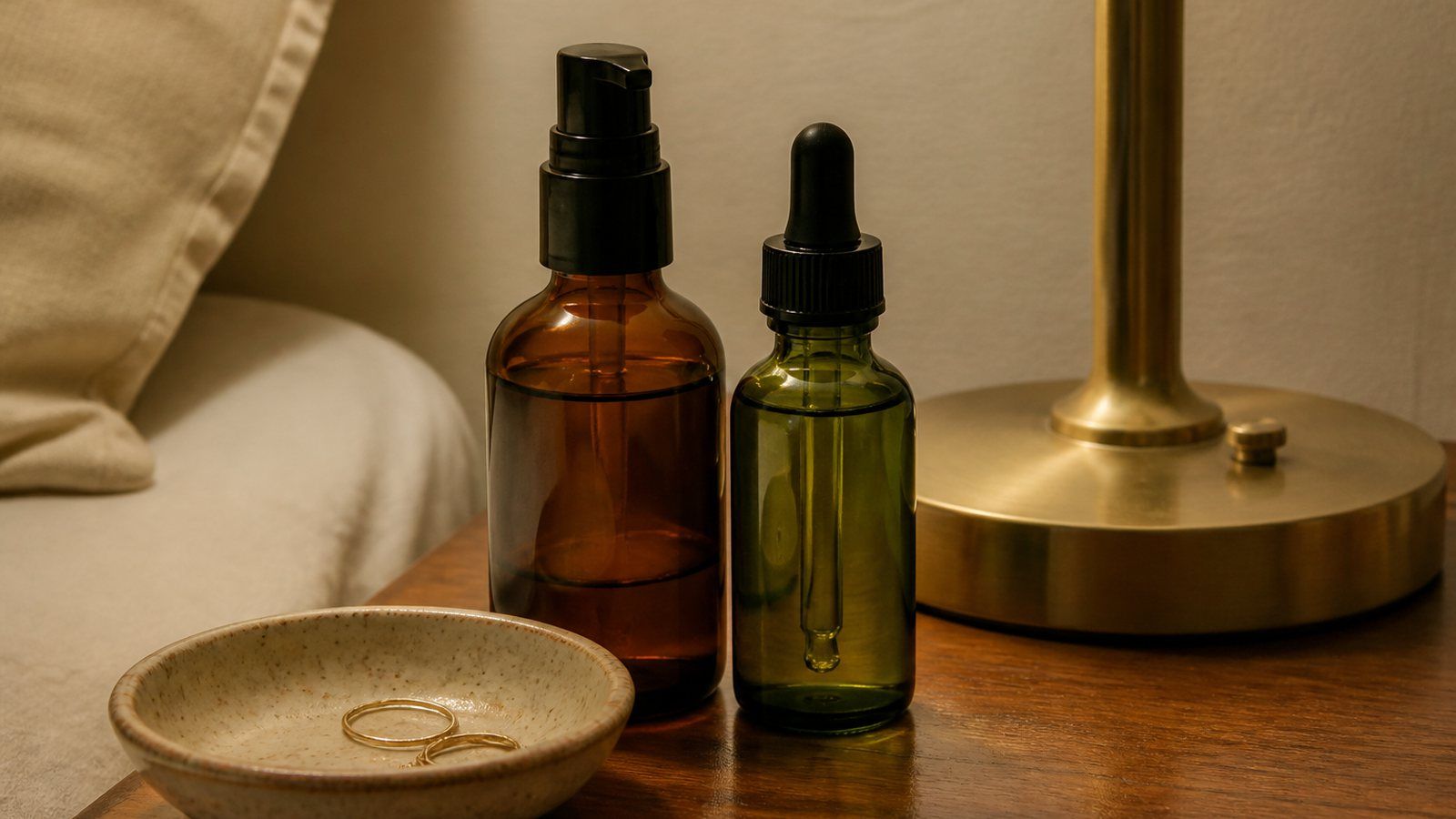
Skin cycling is a four-night evening routine: one night of exfoliation, one night of a retinoid, then two nights of nothing but moisturiser, repeated. The name was popularised on social media in 2022 by the American dermatologist Dr Whitney Bowe. The idea underneath it, spacing out strong products and giving skin time to recover, is how dermatologists have long advised people to use them.
The four nights
| Night | What you use | Purpose |
|---|---|---|
| 1 | Exfoliating acid | Clears dead cells and pores |
| 2 | Retinoid | Speeds up turnover; supports collagen |
| 3 | Moisturiser only | Recovery |
| 4 | Moisturiser only | Recovery |
Then start again at night 1.
Your morning routine stays the same every day: gentle cleanse, moisturiser, and SPF 30 or higher.
Night by night
Night 1: exfoliation
- Cleanse and pat dry.
- Apply a leave-on chemical exfoliant: glycolic, lactic or mandelic acid, salicylic acid if you're oily or get spots, or a PHA if you're sensitive.
- Moisturise.
Use a chemical exfoliant, not a scrub. See AHA vs BHA.
Night 2: retinoid
- Cleanse and dry your skin completely.
- Apply a pea-sized amount of retinol, retinal, or your prescription retinoid.
- Moisturise.
If you're new to retinoids or your skin is dry, moisturise before and after. See the retinol sandwich method.
Nights 3 and 4: recovery
- Cleanse.
- Hydrating serum if you like one: hyaluronic acid, glycerin, niacinamide.
- A moisturiser with ceramides.
No acids, no retinoids, no vitamin C. If your skin is dry, a thin layer of an occlusive balm on top is fine.
Free toolSkincare routine builderNot sure what order to use your products in?Open the routine builder →Why it works
Skin cycling doesn't make the ingredients more powerful. It makes them easier to keep using. The usual reason retinoids and acids fail is that people apply them too often, damage their skin's barrier, and give up. A fixed schedule with built-in rest stops that happening.
It also removes guesswork. You never have to wonder whether two products can go together, because they're never used on the same night.
There are no clinical trials of the four-night cycle itself. The evidence is for the individual ingredients, and for the general principle that retinoids are better tolerated when introduced gradually.
Who it suits
- Beginners to retinoids or acids
- Sensitive, dry or reactive skin
- Anyone who has over-exfoliated and wants a safe way back
- People who want a routine they don't have to think about
Who should adapt it
One retinoid night in four is a starting dose. Trials showing the benefits of retinoids used them far more often, usually daily. So treat the classic cycle as a way in, and progress when your skin allows.
| Version | Pattern | For |
|---|---|---|
| Gentle | Exfoliate, recover, retinoid, recover, recover | Very sensitive skin; rosacea-prone |
| Classic | Exfoliate, retinoid, recover, recover | Beginners |
| Advanced | Exfoliate, retinoid, retinoid, recover | Comfortable after 2 to 3 months |
| Retinoid-led | Retinoid most nights, exfoliate once a week | Experienced users |
If you've been prescribed tretinoin or adapalene for acne, follow your prescriber's instructions. Acne treatment generally needs more frequent use than the classic cycle provides.
Signs to slow down, or step up
Slow down (add a recovery night) if you have stinging with moisturiser, tightness, flaking, or redness lasting into the next day. See over-exfoliating.
Step up (drop a recovery night) if, after two or three months, your skin is entirely comfortable through the cycle.
Common mistakes
- Adding actives on recovery nights. The rest is the point.
- Using a strong peel on night 1. A standard leave-on acid is enough.
- Putting vitamin C at night on top of everything. Keep it for the morning.
- Skipping sunscreen. Acids and retinoids both make it more important.
- Expecting quick results. With one retinoid night in four, allow three to six months.
What to expect
- Weeks 1 to 2: skin feels smoother after exfoliation nights. Possibly slight dryness.
- Weeks 4 to 8: more even texture and a bit more glow.
- Months 3 to 6: changes in tone and fine lines, if you've kept it up and increased retinoid nights.
For a plan that builds retinoid use week by week, use the retinol starter schedule. For whether the two actives can ever share a night, see glycolic acid and retinol.
References
Mukherjee S, Date A, Patravale V, Korting HC, Roeder A, Weindl G. Retinoids in the treatment of skin aging: an overview of clinical efficacy and safety. Clin Interv Aging. 2006;1(4):327-348. (https://www.ncbi.nlm.nih.gov/pmc/articles/PMC2699641/)
Kornhauser A, Coelho SG, Hearing VJ. Applications of hydroxy acids: classification, mechanisms, and photoactivity. Clin Cosmet Investig Dermatol. 2010;3:135-142. (https://pubmed.ncbi.nlm.nih.gov/21437068/)
FAQs
What is skin cycling?
A four-night evening rotation: exfoliant, retinoid, then two recovery nights with moisturiser only.
Does skin cycling work?
It helps people use effective ingredients without irritation. The cycle itself hasn't been tested in trials.
Is skin cycling good for acne?
It can help mild congestion. Acne treatments usually need more frequent use, so follow medical advice.
How long should I skin cycle for?
As long as it suits you. Many people move to more retinoid nights after two or three months.