Obviously Skincare

Skin tags are small, soft growths of skin that hang from a narrow stalk. They're extremely common, harmless, and usually appear where skin rubs against skin or clothing. They don't need treatment. If they bother you, a doctor or trained practitioner can remove them quickly. Removing them yourself, by cutting or tying them off, risks bleeding, infection and scarring.
What they look like
- Soft, small growths, usually skin-coloured or slightly darker
- Often on a thin stalk, so they hang or move
- From about 2mm to 5cm across, according to the NHS
- One, or a cluster
- Painless, unless caught on clothing or jewellery
Where they appear
Where skin folds or rubs:
- neck
- armpits
- eyelids
- under the breasts
- groin
- around the bottom
Who gets them
The NHS says anyone can get skin tags and they can't be prevented. They're more likely if you:
- have obesity, or skin folds that rub together
- have type 2 diabetes
- are pregnant, as hormonal changes may encourage them
They also become more common with age.
Skin tags and insulin resistance
Several studies have linked multiple skin tags with higher blood sugar and insulin resistance. In a multicentre study in primary care, people with multiple skin tags were more likely to have features of metabolic syndrome. That doesn't mean skin tags cause anything, or that a few tags are a sign of illness. If you have a lot of them, especially with dark, velvety skin in the neck or armpits (acanthosis nigricans), weight gain or increased thirst, it's reasonable to ask a GP about checking your blood sugar.
Are they dangerous?
No. The NHS describes them as normally harmless. They're sometimes confused with:
| Looks like | How it differs |
|---|---|
| Warts | Rough surface; caused by a virus; not on a stalk |
| Moles | Usually darker, flat or raised, without a stalk |
| Seborrhoeic keratoses | Brown, "stuck-on", waxy or rough patches, common with age |
| Neurofibromas | Soft bumps that press inwards when pushed |
| Skin cancer | Grows, bleeds, crusts or changes. Needs checking |
Removing skin tags
On the NHS
The NHS generally won't remove skin tags because it's considered cosmetic, unless there's a medical reason. Most people pay privately.
Private removal
Done by a GP privately, a dermatologist or a trained practitioner. Methods:
| Method | How |
|---|---|
| Snipping | The tag is cut off with sterile scissors or a blade, often after local anaesthetic |
| Freezing (cryotherapy) | Liquid nitrogen; the tag drops off over days |
| Cautery | Burned off with an electrical device |
Removal is quick. Removed tags usually don't come back, though new ones can form elsewhere. The NHS notes there's a risk of scarring or darker skin at the site, more so on black and brown skin, which can occasionally be permanent. Ask the practitioner about this.
For tags on or near the eyelid, see a doctor. Don't use home methods near the eyes.
Doing it yourself
The NHS advises against removing a skin tag yourself unless a GP recommends it, because of the risk of infection, bleeding and scarring.
That includes:
- cutting them off with scissors or nail clippers
- tying them off with thread or dental floss
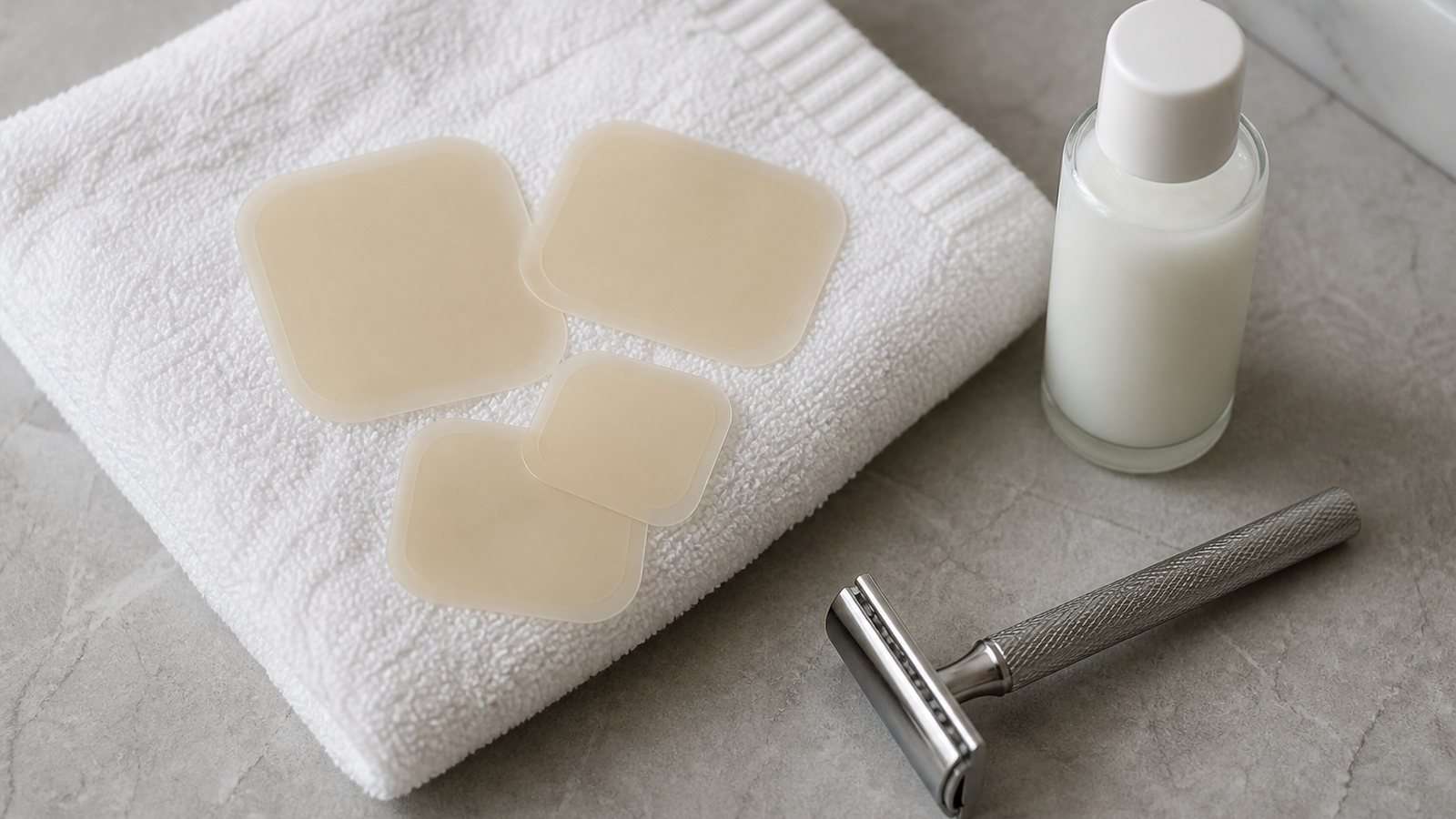
- "skin tag removal" bands and kits sold online
- removal creams, patches and pens
- tea tree oil, apple cider vinegar and other home remedies
Tags have a blood supply, so cutting one can bleed more than you'd expect. Acid-based creams and remedies can burn the surrounding skin and leave a mark bigger than the tag. And a growth you assume is a skin tag might be something that should have been looked at.
Some pharmacy products use freezing. If you're considering one, ask a pharmacist first, and don't use it on the face, eyelids, genitals or anything you're unsure about.
Preventing them
You can't reliably prevent skin tags, but you can reduce friction:
- Loose clothing and soft fabrics where tags form
- Avoid jewellery that catches the neck
- Keep skin folds clean and dry
- If you're overweight, losing weight may reduce new ones
- If you have diabetes, good blood sugar control
When to see a GP
The NHS advises seeing a GP if a skin tag:
- gets bigger
- becomes painful
- starts bleeding
- develops into lots of skin tags
Also see a GP about any growth you're unsure about, one that changes colour or shape, or one in an awkward place such as the eyelid or genitals.
Related
For other bumps and growths, see sebaceous hyperplasia, milia and dark knees and elbows, which covers darkened skin in folds.
Skin tag or something else?
| Growth | What it looks like | Key difference |
|---|---|---|
| Skin tag | Soft, skin-coloured or slightly darker flap on a thin stalk | Moves easily; painless |
| Mole | Flat or raised, brown or skin-coloured, no stalk | Can change; check with the ABCDE rule |
| Seborrhoeic keratosis | Waxy, "stuck-on" brown or black growth | Rough surface; common with age |
| Wart | Rough, firm bump | Caused by a virus; can spread |
| Neurofibroma | Soft bump that sinks when pressed | Rare; often multiple |
Get any growth checked if it bleeds, changes, grows quickly, is very dark or has an irregular shape.
Skin tags and metabolic health
Skin tags are more common in people with obesity, type 2 diabetes and insulin resistance. Studies have found links between multiple skin tags and insulin resistance or metabolic syndrome, and they often appear alongside acanthosis nigricans (velvety darker skin in folds). Having skin tags doesn't mean you have diabetes, but if you have many, a GP may suggest checking your blood sugar.
Removal options compared
| Method | Who does it | Notes |
|---|---|---|
| Cutting (snip excision) | Doctor or trained practitioner | Quick; slight bleeding |
| Freezing (cryotherapy) | Doctor or trained practitioner | Tag falls off in days to weeks |
| Burning (cautery) | Doctor or trained practitioner | Seals the base |
| Home freezing kits | You | Sold in pharmacies; follow instructions carefully |
| Tying off, cutting at home | You | Not recommended: risk of bleeding and infection |
On the NHS, skin tag removal is usually considered cosmetic and not routinely offered. Private clinics charge per tag or per session.
References
NHS. Skin tags. (https://www.nhs.uk/conditions/skin-tags/)
Hui ES, Yip BH, Tsang KW, et al. Association between multiple skin tags and metabolic syndrome: a multicentre cross-sectional study in primary care. Diabetes Metab. 2016;42(2):126-129. (https://pubmed.ncbi.nlm.nih.gov/26725262/)
Barbato MT, Criado PR, Silva AK, et al. Association of acanthosis nigricans and skin tags with insulin resistance. An Bras Dermatol. 2012;87(1):97-104. (https://pubmed.ncbi.nlm.nih.gov/22481657/)
FAQs
What causes skin tags?
Friction where skin rubs against skin or clothing. They're more common with obesity, type 2 diabetes, pregnancy and age.
Are skin tags dangerous?
No. They're harmless. See a GP if one grows, bleeds, hurts or changes.
Can I remove a skin tag myself?
The NHS advises against it because of the risk of bleeding, infection and scarring.
Will the NHS remove skin tags?
Usually not, as it's considered cosmetic.
Do skin tags come back after removal?
The removed tag usually doesn't, but new ones can form.
Do skin tags grow back after removal?
The removed tag doesn't usually return, but new ones can form nearby.
Are skin tags contagious?
No. They're not caused by an infection.