Obviously Skincare

Forehead lines form from two things working together: years of raising your eyebrows and frowning, and the gradual loss of collagen and elasticity from sun exposure and age. Fine lines can be softened with skincare. Deeper lines usually need professional treatment. And daily sunscreen is the best way to stop new ones forming.
Here's what causes forehead lines, which treatments work best, what you can expect from each, and a simple routine to start with.
Types of forehead lines
| Type | When you see them | Main cause | What helps most |
|---|---|---|---|
| Dynamic lines | Only when you raise your eyebrows or frown | Muscle movement | Anti-wrinkle injections |
| Static lines | Even when your face is relaxed | Years of movement in skin that's lost collagen | Retinoids, professional treatments, sometimes fillers |
| Frown lines (the "11s") | Vertical lines between the brows | Frowning and squinting | Injections; retinoids for fine lines |
| Sleep lines | Vertical or diagonal, on the side you sleep on | Pressure from your pillow | Changing sleep position. See sleep lines. |
| Dehydration lines | Fine, criss-cross lines that come and go | Dry, dehydrated skin | Moisturiser and hydrating serums |
A quick test: relax your face completely in the mirror. If the lines disappear, they're dynamic. If they stay, they're static.
Why forehead lines form
The frontalis muscle lifts your eyebrows thousands of times a day as you talk, react and concentrate. Each lift folds the skin above it. Young skin springs back. Over time, collagen and elastin decline, much faster with sun exposure and smoking, and the folds start to stay.
That's why two people the same age can have very different foreheads. In a study of identical twins, the twin who'd had more sun exposure or smoked for longer looked older. See skin ageing and sleep lines.
Free toolRetinol starter scheduleGet a week-by-week plan for starting retinol.Open the retinol schedule →Treatments, from most to least effective
| Treatment | Best for | Evidence | How long until results | How long results last |
|---|---|---|---|---|
| Anti-wrinkle injections (botulinum toxin) | Dynamic lines | Strong | 3 to 14 days | 3 to 4 months |
| Prescription tretinoin | Fine and early static lines | Strong | 3 to 6 months | With continued use |
| Professional treatments (lasers, microneedling, peels) | Static lines, texture | Moderate to good | Weeks to months | Months to years |
| Over-the-counter retinoids | Fine lines | Good | 3 to 6 months | With continued use |
| Fillers | Deep static lines (used carefully on the forehead) | Moderate | Immediate | 6 to 12 months |
| Daily sunscreen | Preventing new lines | Strong | Long-term | Ongoing |
| Moisturiser and hyaluronic acid | Dehydration lines | Good, temporary | Immediate | Hours |
| Peptides | Fine lines | Limited | Months | With continued use |
1. Anti-wrinkle injections (botulinum toxin)
The most effective option for forehead lines caused by movement. They relax the muscles that raise the brows, smoothing dynamic lines and preventing them from deepening. In two large phase 3 trials, people treated for moderate to severe forehead lines were significantly more likely to see improvement than those given a placebo, with results maintained over repeated treatments. Side effects were uncommon but include a heavy or drooping brow or eyelid.
In the UK, botulinum toxin is a prescription-only medicine. It should be prescribed after a face-to-face consultation with a qualified prescriber and given by a trained practitioner, and it's illegal to give it for cosmetic reasons to anyone under 18.
2. Prescription tretinoin
The strongest topical option, with good evidence for fine lines over months. In an early 16-week double-blind study, 14 of 15 people using tretinoin on their face saw their sun-damaged skin improve, compared with none of those using a plain cream. See tretinoin.
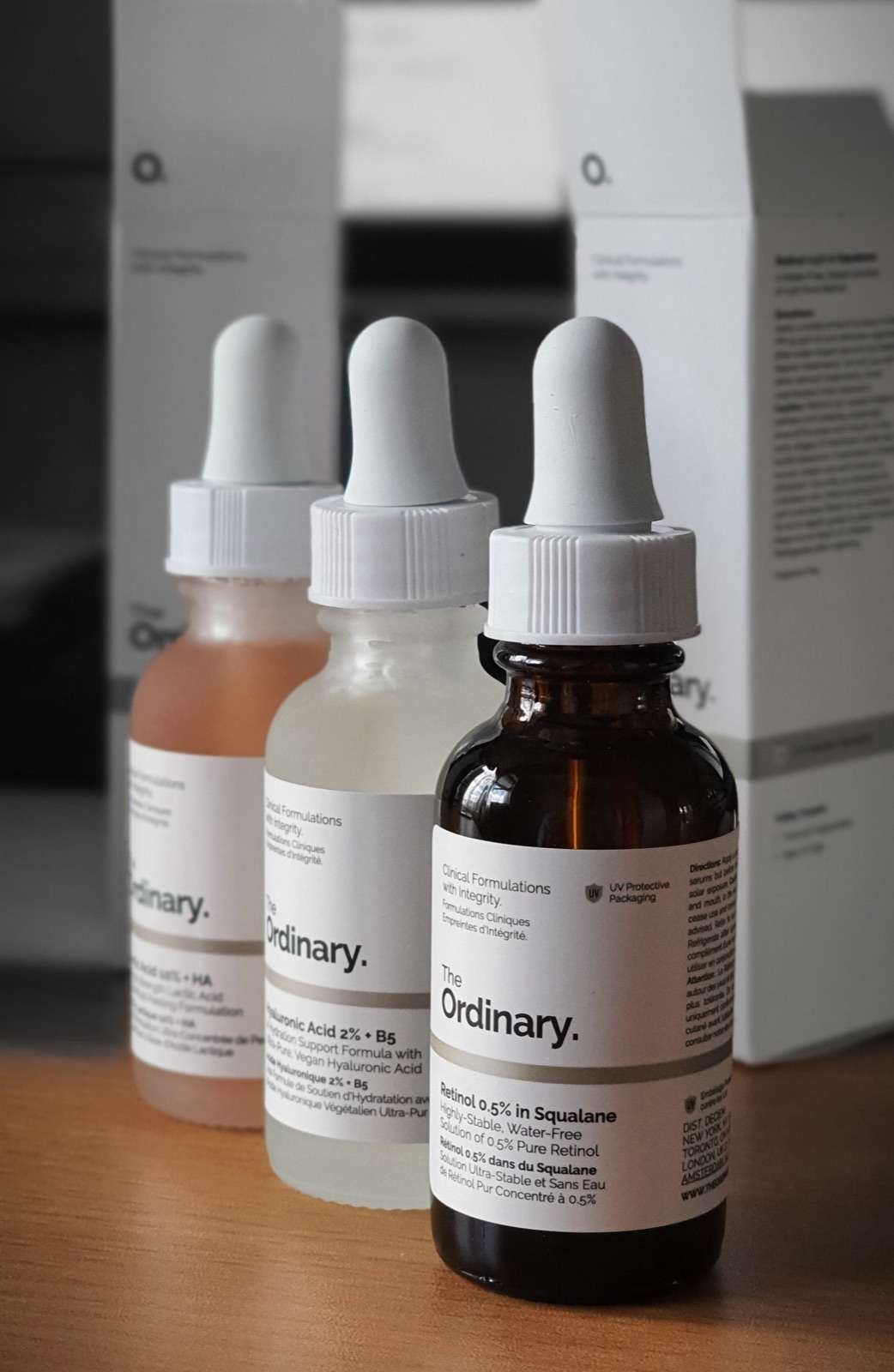
3. Over-the-counter retinoids
Retinol and retinal work more slowly than tretinoin, but improve fine lines over three to six months. In one trial, 0.4% retinol significantly improved fine wrinkles in older adults over 24 weeks and increased collagen production in the skin. See how to start retinol.
4. Daily sunscreen
Not a treatment for existing lines, but the most important way to stop them getting worse. In a long-term trial, people who used sunscreen daily showed no detectable increase in skin ageing over four and a half years. See why SPF matters.
5. Professional treatments
Microneedling, fractional laser resurfacing and medium-depth chemical peels can improve texture and static lines by triggering new collagen. Several sessions are usually needed. Fillers are sometimes used for deep static lines, but the forehead has important blood vessels, so choose a highly experienced practitioner. See a dermatologist or qualified practitioner.
6. Hydration and moisturiser
Moisturisers and hyaluronic acid temporarily plump fine lines caused by dehydration. The effect is cosmetic and short-lived, but real.
7. Peptides
A gentle extra with modest evidence, often from manufacturer-funded studies. See peptides.
What doesn't help much
- Drinking more water. Being well hydrated is good for you, but drinking extra water won't smooth wrinkles.
- Forehead tapes and patches. They may flatten lines overnight, but the effect fades within hours.
- Facial exercises for forehead lines. One small study found 20 weeks of facial exercises made cheeks look fuller, but repeated brow-raising is part of what causes forehead lines, so exercises aimed at the forehead are unlikely to help.
- Expensive creams with no proven active ingredients.
- "Botox in a jar" creams. Topical peptides like argireline don't work like injections. See argireline.
A simple routine for forehead lines
| Morning | Evening | |
|---|---|---|
| 1 | Gentle cleanser | Gentle cleanser |
| 2 | Vitamin C serum (optional) | Retinoid, 2 to 3 nights a week to start, building up |
| 3 | Moisturiser | Moisturiser |
| 4 | SPF 30 or higher, every day | Optional: hyaluronic acid or peptides on non-retinoid nights |
Give it three to six months. Take a photo in the same light at the start so you can compare honestly. If you want a bigger change, consider a consultation about injections or professional treatments.
Habits that help
- Wear sunglasses. They reduce squinting and protect the eye area.
- Get your eyes tested. Squinting to see clearly adds to frown lines.
- Don't smoke.
- Sleep on your back if you can.
- Notice habitual brow-raising, for example while reading screens.
At what age do forehead lines appear?
Fine dynamic lines often appear in the mid-20s to early 30s. Static lines usually develop from the 30s and 40s, earlier with a lot of sun exposure, smoking or very expressive brows. Starting daily SPF and a retinoid in your late 20s or 30s is a sensible way to slow them.
References
- Hughes MC, Williams GM, Baker P, et al. Sunscreen and prevention of skin aging: a randomized trial. Ann Intern Med. 2013;158(11):781-90. (https://pubmed.ncbi.nlm.nih.gov/23732711/)
- Mukherjee S, Date A, Patravale V, et al. Retinoids in the treatment of skin aging: an overview of clinical efficacy and safety. Clin Interv Aging. 2006;1(4):327-48. (https://pubmed.ncbi.nlm.nih.gov/18046911/)
- Weiss JS, Ellis CN, Headington JT, et al. Topical tretinoin improves photoaged skin. A double-blind vehicle-controlled study. JAMA. 1988;259(4):527-32. (https://pubmed.ncbi.nlm.nih.gov/3336176/)
- Kafi R, Kwak HS, Schumacher WE, et al. Improvement of naturally aged skin with vitamin A (retinol). Arch Dermatol. 2007;143(5):606-12. (https://pubmed.ncbi.nlm.nih.gov/17515510/)
- De Boulle K, Carruthers A, Solish N, et al. OnabotulinumtoxinA Treatment for Moderate to Severe Forehead Lines: A Review. Plast Reconstr Surg Glob Open. 2020;8(3):e2669. (https://pubmed.ncbi.nlm.nih.gov/32537333/)
- Guyuron B, Rowe DJ, Weinfeld AB, et al. Factors contributing to the facial aging of identical twins. Plast Reconstr Surg. 2009;123(4):1321-1331. (https://pubmed.ncbi.nlm.nih.gov/19337100/)
- Alam M, Walter AJ, Geisler A, et al. Association of Facial Exercise With the Appearance of Aging. JAMA Dermatol. 2018;154(3):365-367. (https://pubmed.ncbi.nlm.nih.gov/29299598/)
FAQs
Can forehead wrinkles be reversed?
Fine lines can be softened with retinoids and professional treatments. Deep static lines can be improved but rarely erased.
What's the best cream for forehead wrinkles?
A retinoid: prescription tretinoin is strongest, and over-the-counter retinol or retinal works more slowly. Pair it with daily SPF.
Does drinking water help forehead wrinkles?
Not noticeably, unless you're dehydrated.
At what age do forehead lines appear?
Fine lines often show from the mid-20s; lines that stay when your face is relaxed usually develop from the 30s and 40s.
Do forehead lines mean I'm stressed?
Not necessarily. They mostly reflect expressiveness, genetics, sun exposure and age.
How long does Botox last on the forehead?
Usually three to four months.
Can I use retinol on my forehead every night?
Once your skin is used to it, yes. Start two or three nights a week.