
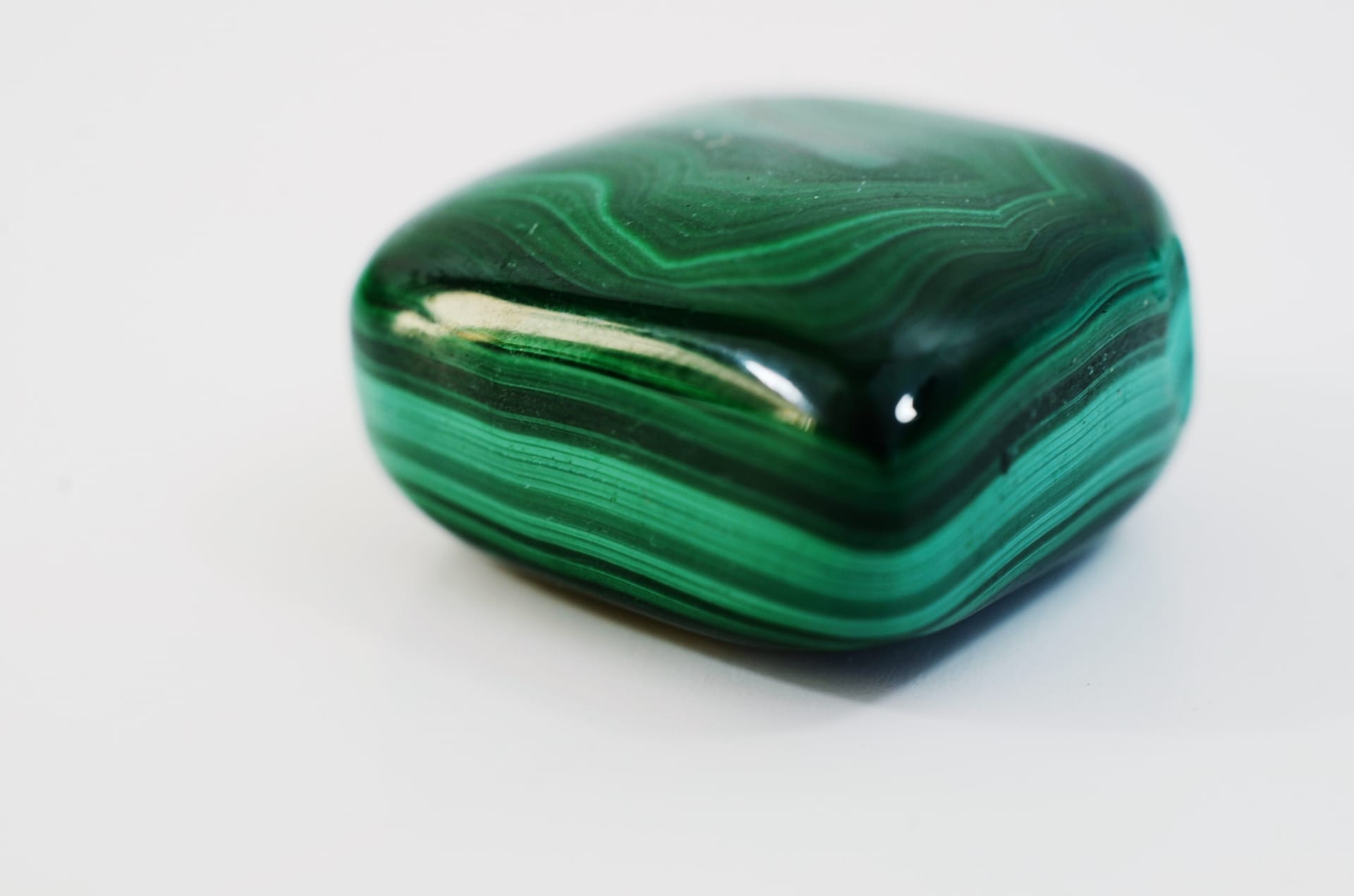
Whether you're formulating your own products or eyeing a striking green serum on a shelf, you might be wondering whether malachite is actually safe to put on your skin. A copper-containing gemstone doesn't exactly sound like a skincare ingredient, but malachite extract has carved out a niche in the "detoxifying" and antioxidant end of the market, so it's worth separating the mineral facts from the marketing.
First things first, what is malachite?
Malachite is a green copper carbonate hydroxide mineral. You've probably seen it as a polished ornamental stone with those distinctive banded green swirls, and it has long been branded the "protection stone" in crystal healing circles. Skincare, thankfully, is interested in something more concrete: its copper content.
In cosmetics, malachite isn't used as ground-up rock. Brands use a purified malachite extract, which delivers copper ions in a form the skin can tolerate. Copper is a trace element your body genuinely uses, including in enzymes involved in collagen synthesis and antioxidant defence, and that's the scientific hook malachite products hang their claims on.
Is malachite safe in skincare?
Yes. Purified malachite extract at cosmetic concentrations is considered safe for topical use, and the likelihood of irritation or allergy is low. It's gentle enough for essentially all skin types.
Two sensible caveats. First, the safety applies to properly formulated cosmetic extracts, not raw mineral powder, so this isn't a DIY ingredient. Inhaling malachite dust (a concern for lapidary workers, not skincare users) is genuinely harmful, which occasionally causes confusion about the topical extract. Second, as with any new product, it's worth patch testing before applying it to your whole face, particularly if your skin is reactive.
What are the potential benefits?
The honest answer is that research on topical malachite specifically is thin, mostly limited to small in-vitro and brand-sponsored studies. The claimed benefits lean on the known biology of copper:
Antioxidant protection: copper supports the skin's own antioxidant enzymes, and malachite extract has been shown in lab settings to help neutralise free radicals generated by UV and pollution. This is the best-supported claim.
Collagen support: copper is a cofactor in collagen and elastin production, which is the basis for malachite's anti-aging positioning. Copper peptides have decent evidence here; malachite extract itself has less.
Barrier support: by reducing oxidative stress, malachite may help the skin's natural defences cope with environmental stressors. Plausible, but not uniquely proven.
If antioxidant protection is your goal, it's worth saying that vitamin C, niacinamide and well-formulated vitamin E have far deeper evidence behind them. Malachite is a reasonable supporting act, not a headliner.
To sum it up
Malachite extract is safe for topical use on face and body, gentle across skin types, and low-risk for allergy. Its copper content gives it genuine antioxidant credentials, though the clinical evidence is still shallow compared with established actives. Treat it as a pleasant bonus ingredient in a serum or cream rather than a reason to buy one, and let a proven antioxidant do the heavy lifting in your routine.