
Most pimple patches "don't work" because they were stuck on damp skin, over moisturiser, or on a spot with nothing to absorb. The patch is not the problem. The application is.
Here's the version that actually does something: clean skin, bone dry, right spot, left on for hours. That's the whole method.
Start with clean, dry skin
Wash the area. A normal gentle cleanser is enough. You are not trying to scrub the pimple into submission. Rinse, then wait. The skin has to be fully dry: not "I patted it once" dry. Residual water, toner or essence sits under the adhesive and the patch peels off at 2am.
Do not put serum, moisturiser, benzoyl peroxide or tea tree under the patch. Grease and water both ruin the seal. Treat the rest of your face as usual; leave a bare island over the spot. If you want cream on that area, put it on after the patch comes off in the morning.
Makeup is the same rule. Patch first, then foundation around it, or skip makeup on that bit. A patch on top of concealer is a waste of a sticker.
When to apply
Apply when the pimple has a head, or when you've already broken the skin and need a lid on it. The best window is evening, after your last wash, before you get into bed. Overnight is when hydrocolloid has time to work.
Morning application is fine if you need the barrier during the day: meetings, a habit of touching your face, a spot that will otherwise get foundation ground into it. Use a thinner patch if you care about it being obvious. Don't expect a two-hour wear before lunch to flatten anything.
Skip it on a red, deep bump with no white head. The patch will sit there looking virtuous and do almost nothing. That's a leave-it-alone spot, not a sticker spot.
How to stick it on
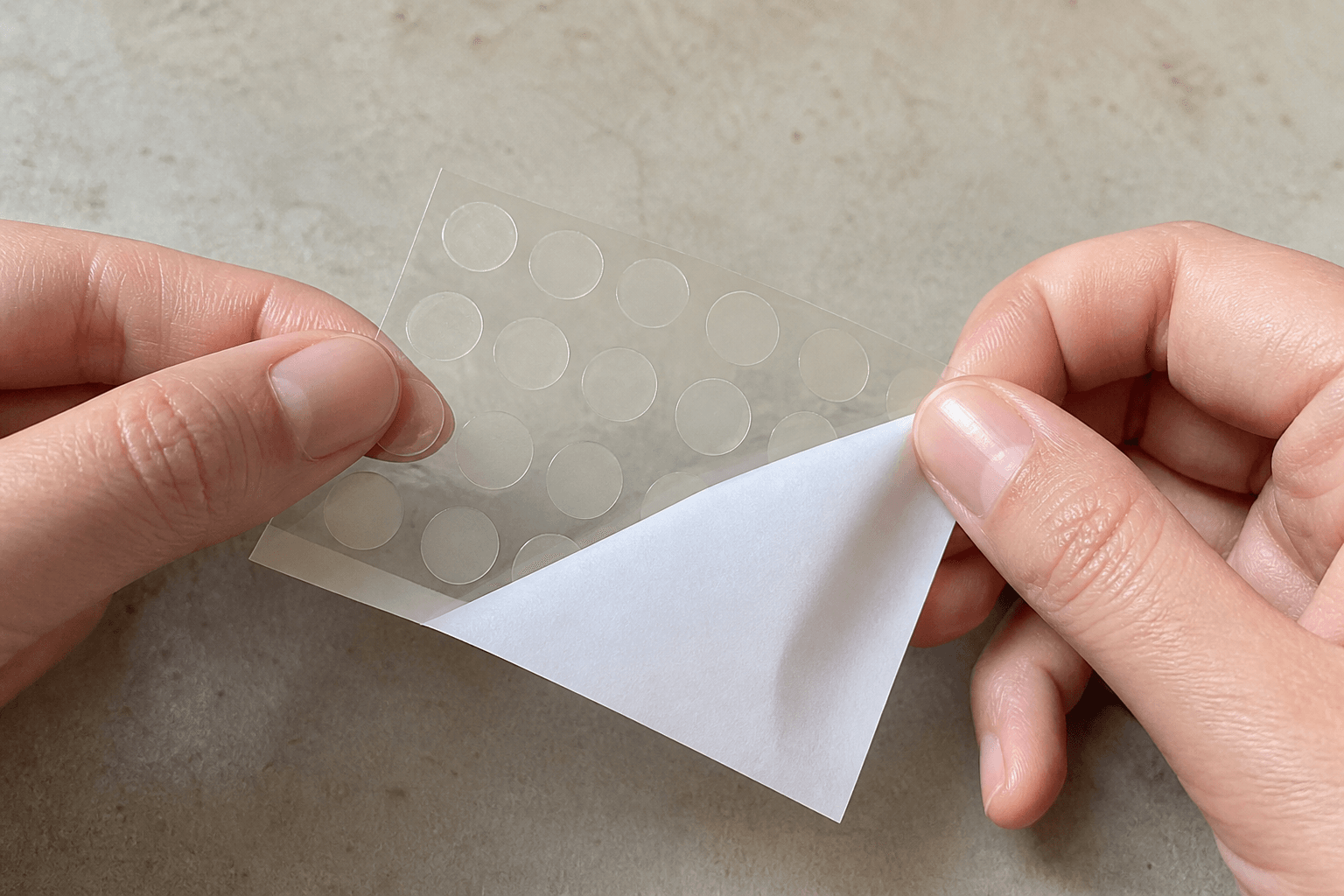
- Peel the patch off the sheet by the edge. Don't stretch it.
- Centre it over the head of the pimple. You want the absorbent middle on the fluid, not hovering next to it.
- Press and hold for ten seconds. Warmth helps it grab.
- Smooth the edges so they aren't lifting. A lifted edge is how pillowcases steal patches.
Pick a size that covers the spot with a little margin, not a giant disc on a pinprick whitehead. Most packs, including COSRX, give you three sizes for that reason.
If it won't stick, the skin is still damp or you've got product on it. Clean, wait, try again. Don't stack a second patch on a first one that failed.
How long to leave it
Six to eight hours is the standard. Overnight covers that without you watching the clock. Some thicker patches are happy for up to twelve hours. Don't leave one on for days "to get more out of it". Once the gel is saturated, it's a used dressing.
Take it off in the morning. Peel slowly from the edge, parallel to the skin, not straight up. If it stings or the skin looks raw, you left it too long or the adhesive was too aggressive for your face. Give that area a rest.
You can put a fresh patch on if the spot is still wet or open. If it's flat and dry, stop. The job is done.
What the white gunk is
The cloudy, milky, sometimes slightly yellow stuff on the underside is not the patch dissolving, and it is not the pimple's soul leaving its body. It is fluid from the spot, serum, pus, a bit of oil, mixed with the hydrocolloid gel as it absorbs.
A white patch means it found something to drink. A still-clear patch in the morning means there wasn't much fluid at the surface, or it didn't stay sealed. That's useful information. It is not a sign you bought a dud, and it is not a reason to squeeze the pimple "to help it along".
After you've popped a spot, the patch often goes very white, very fast. That's damage control, not a treatment win. Next time, don't pop it.
Mistakes that waste a patch
Damp skin. The number one reason they fall off.
Product underneath. Moisturiser, oils, and most spot treatments break the adhesive.
Wrong spot. Closed comedones, cysts and blind pimples have nothing for the gel to absorb.
Peeling it off after an hour to "check". You break the seal and reset the clock. Leave it.
Reusing a patch. It's a single-use dressing. The white side is full of what came out of your face. Bin it.
Wearing one in a hot shower and expecting it to stay. Apply after you dry off.
After you take it off
The skin may look a bit pale where the patch sat. That's occlusion. It settles. Don't pick at gel residue.
If the pimple is flatter, leave it. Moisturiser and SPF in the daytime is enough. If it's still angry, use salicylic acid or benzoyl peroxide around it, not under the next patch.
If the spot looks worse, more red, more open, a scab, you probably popped it first. Fresh patch, hands off, no magnification tour.
The short version
Clean. Dry. Bare skin. Head on the pimple. Six to eight hours. Bin it when it's white.
FAQs
Do I put moisturiser under a pimple patch?
No. Cream, serum and oil stop it sticking. Leave the spot bare, patch it, and moisturise the rest of your face.
How long do you leave a pimple patch on?
Six to eight hours overnight is the default. Remove it in the morning, or when it has turned fully white and starts to lift.
What is the white stuff on a pimple patch?
Absorbed fluid from the spot mixed with the hydrocolloid gel. It means the patch found something to soak up. It is not the patch melting.
Can I wear a pimple patch in the shower?
Apply after you wash and dry your face. A patch already on might survive a quick shower; a lot of them peel. Don't count on it.
Should I use a pimple patch on a brand new red bump?
Only if there's a head or the skin is broken. A fresh, closed, tender lump will not give the patch anything to absorb. Leave those alone.