
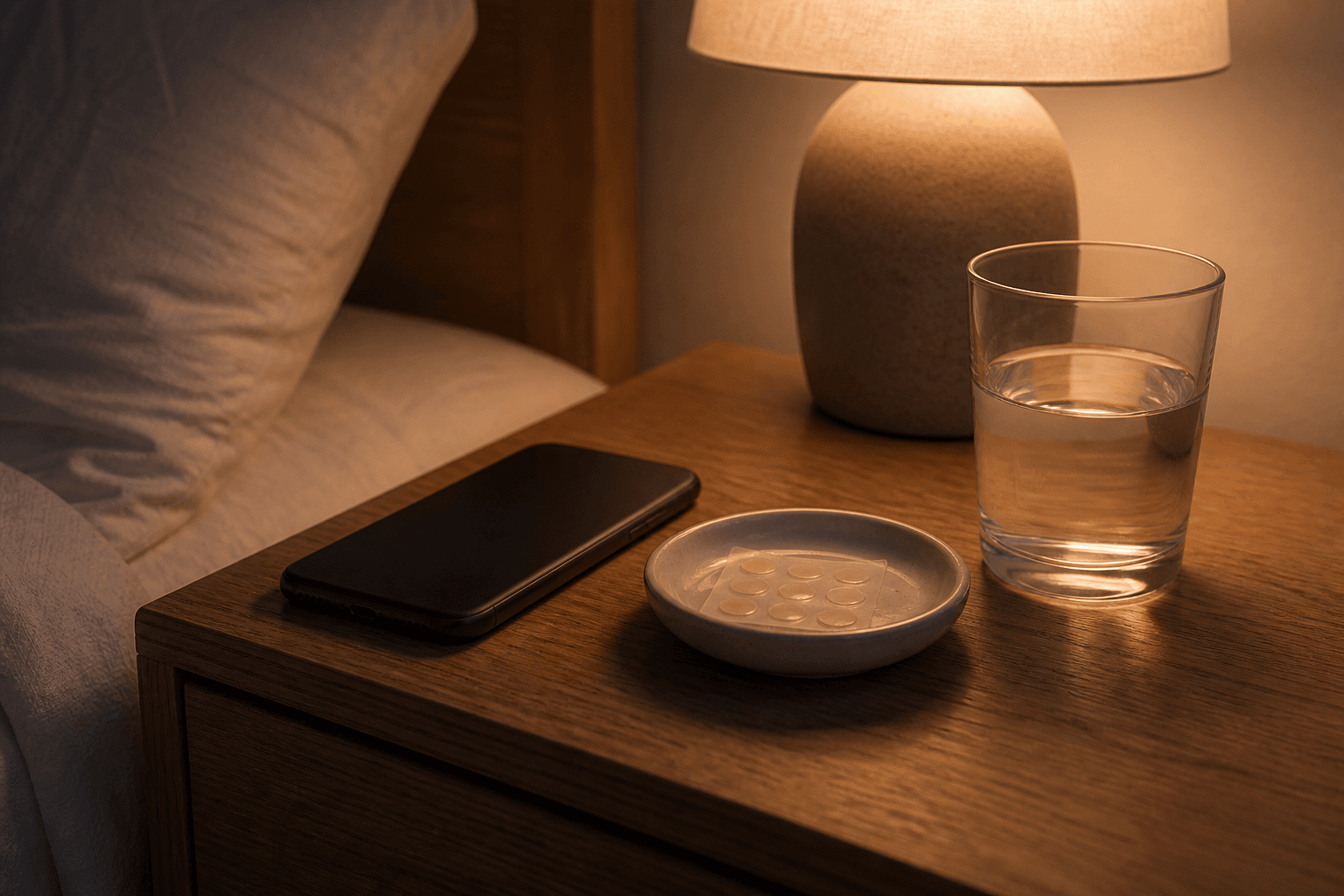
Yes, you should sleep in a pimple patch. Overnight is the point. Hydrocolloid needs hours, not the length of a bus ride, and the eight hours you're unconscious are the only ones you won't keep poking the sticker to see if it's working.
If a pack says six to eight hours, that's bedtime maths. Apply after you wash your face. Take it off in the morning. That's the routine.
Why overnight is the design
The gel absorbs slowly. A whitehead does not empty in twenty minutes. Give it a full sleep and the patch has time to take up fluid, the spot has time to flatten, and you have time not to keep checking it.
You're also still. No talking, no eating, no chin in your hand on a Zoom. The seal lasts. Daytime patches fail because you move your face. Night-time patches fail because of pillows and damp skin, which you can control.
Thicker patches, Mighty Patch Original especially, are built as overnight stickers. Thin ones like COSRX can do night or day. Either way, the absorption window is the same. Sleep is just when you're not poking it.
How to put one on before bed
Wash. Dry properly. This is where overnight patches die. People moisturise, then stick, then wonder why the disc is on the pillowcase. Leave a bare, dry island over the spot. Cream everywhere else.
Apply the patch, press for ten seconds, check the edges. If you use an extra pillow or sleep on that side, a thicker patch is less likely to migrate. Side sleepers lose thin films. That's a Mighty Patch vs COSRX problem, not a reason to skip overnight use.
Don't put one on and then take a steaming shower. Apply after. Don't put ten on "in case". Put them on spots that have a head.
The general steps are in how to use pimple patches. Overnight adds one rule: once you're in bed, leave it. Checking at 2am is how you break the seal and get nothing by morning.
What to do in the morning
Peel from the edge, slowly, parallel to the skin. If it hurts, you may have left a very sticky patch on too long, or your skin is reactive. Don't rip.
Look at the underside, then bin it. White means it absorbed. Clear means there wasn't much fluid or it lifted. Neither result is a reason to squeeze the leftover bump over the sink.
Rinse any gel residue. The skin may look a bit pale or crinkled where the patch sat. That's occlusion. It settles while you make coffee. Moisturiser on the area now is fine. A new patch only if the spot is still open or still has a head.
Then SPF. A flattened pimple still marks if you fry it. The patch does not replace sunscreen.
Will it come off on the pillow?
Sometimes. Cotton pillowcases grab edges. Silk or satin grabs less. Face-down sleepers lose more patches than back sleepers. A thick patch with a firm press on dry skin is your best bet.
If you regularly wake up patchless:
- You applied on damp skin
- You used a very thin patch on the side you sleep on
- The spot was in a crease (smile line, side of nose) that flexes all night
Try a thicker patch, or accept that some locations are daytime-only. A patch that spent four hours on and then fell off still did more than a patch you never used.
Don't tape it down with actual tape. If the hydrocolloid won't stick, the skin isn't ready or the spot is a bad site.
Can you wear one for more than one night?
Don't leave the same patch on for two nights. Once it's saturated it's a used dressing. A fresh patch for a second night is fine if the spot still warrants it. Leaving the same sticker on for days irritates the skin around it.
Some packs say up to twelve hours. That's still "overnight plus a slow morning", not "wear it to Sunday".
Daytime vs overnight
Daytime is for the barrier: meetings, a picking habit, makeup you don't want in the spot. Use a thin, clear patch. Don't expect a two-hour wear to flatten a whitehead.
Overnight is for the absorption. If you only do one, do night. If you need both, thin in the day, thicker at night, or the same thin one swapped at bedtime on clean skin.
You do not need to sleep in a patch every night as prevention. No head, no patch. Save them for the spots that can use them.
The verdict
Sleep in it. That's what the six-to-eight-hour instruction is for. Apply on dry skin, leave it alone until morning, peel, bin, get on with your day. Overnight is when hydrocolloid actually has time to work.
FAQs
Should you sleep with a pimple patch on?
Yes. Overnight is the intended wear time. Six to eight hours covers a normal night's sleep.
What happens if I leave a pimple patch on too long?
The adhesive can irritate, and a full patch starts lifting anyway. Take it off in the morning. Don't wear the same one for days.
Why did my pimple patch fall off overnight?
Usually damp skin, moisturiser underneath, or sleeping on that side with a thin patch. Dry the skin longer and try a thicker sticker.
Can I put a new patch on in the morning after sleeping in one?
Yes, if the spot is still wet or still has a head. Clean and dry the skin first. If it's flat, stop.
Is it better to wear pimple patches at night or during the day?
Night, if you want them to absorb anything. Day is mostly a picking barrier. Thin patches can do both; thick ones belong in bed.