
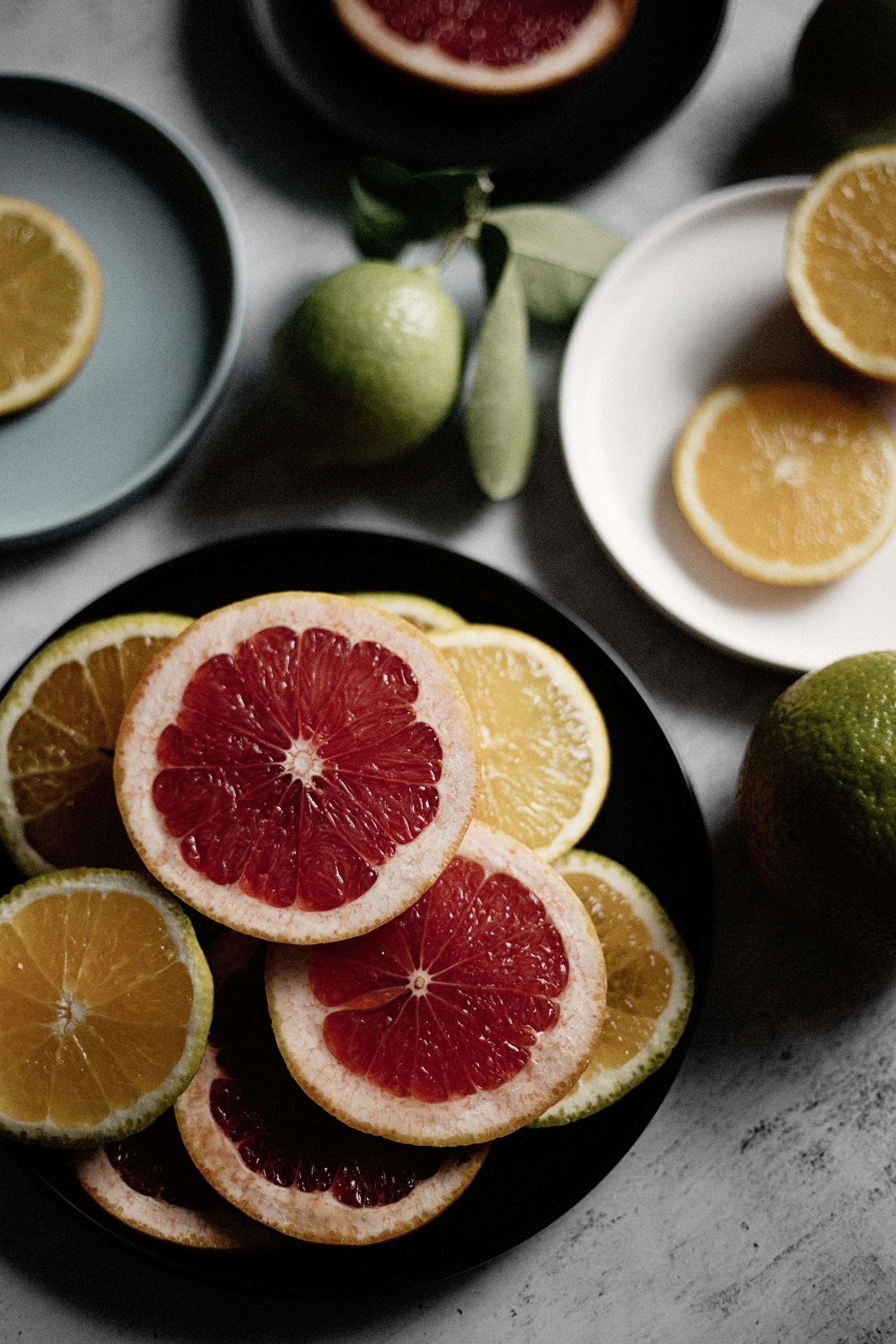
AHA is one of those abbreviations that's everywhere in skincare, and if you're wondering what it actually means, you're in the right place. It stands for Alpha Hydroxy Acid, and while putting acid on your face sounds alarming, AHAs are some of the best-researched and most effective ingredients you can add to a routine. Brighter skin, smoother texture, fewer clogged pores. That's the pitch, and unusually for skincare, the evidence backs it up.
Here's what AHAs are, what each type does, and how to use them without wrecking your skin barrier.
What is an AHA?
AHAs (Alpha Hydroxy Acids) are a group of weak organic acids, some naturally occurring and some made in a lab. In skincare they're used as chemical exfoliants: instead of physically scrubbing away dead skin cells, they dissolve the bonds holding those cells to the surface so they shed on their own.
That distinction matters. Physical scrubs can be harsh and uneven, and it's easy to overdo them. A well-formulated AHA exfoliates the whole surface evenly and, at the right strength, more gently. The result is the brighter, smoother complexion sitting underneath the layer of dead cells.
AHAs work on the surface of the skin, which makes them different from BHAs (like salicylic acid) that are oil-soluble and get deeper into pores. If you're weighing up which to use, we've compared AHA vs BHA properly in a separate guide.
What are the benefits of AHAs?
The key benefits of using an AHA regularly:
-
Smoother, brighter skin. This is the headline benefit. By clearing the build-up of dead cells, AHAs reveal fresher skin and restore that glow dull skin lacks.
-
More even skin tone. Increased cell turnover helps fade dark marks left by sun damage, old breakouts and age spots faster than your skin would manage on its own.
-
Fewer breakouts and blackheads. Acne starts when a pore gets clogged with dead cells and oil. Keeping the surface clear means less material available to block pores in the first place. (For active breakouts, salicylic acid is usually the better tool.)
-
Softer fine lines over time. Some AHAs, glycolic acid in particular, have been shown to boost collagen synthesis. Collagen gives skin its structure and firmness, so this is where the anti-aging claims come from, and they're better supported here than for most ingredients.
-
Better absorption of the rest of your routine. Serums and moisturisers absorb more effectively when they're not fighting through a layer of dead skin cells.
The different types of AHA
"AHA" can refer to any acid in the group. They're not interchangeable though: molecular size is the thing to understand. Smaller molecules penetrate deeper and work harder, but they also irritate more easily. Larger molecules stay nearer the surface and are gentler.
Glycolic acid
The most famous AHA and the one with the most research behind it. Glycolic acid occurs naturally in sugar cane, though the version in your products is usually synthetic for stability.
It has the smallest molecular size of any AHA, so it penetrates the deepest and delivers the most dramatic results: studies have found it accelerates collagen synthesis and speeds up epidermal turnover. The flip side is that it's the most likely AHA to cause irritation, especially at higher strengths.
If you're new to glycolic acid, start with something like The Ordinary's Glycolic Acid 7% Toning Solution a few nights a week. We've written more about why glycolic acid deserves a place in your routine.
Lactic acid
Found naturally in sour milk (Cleopatra's milk baths were on to something), though again lab-made in modern formulas. Lactic acid has a larger molecule than glycolic, so it works closer to the surface and is noticeably milder.
What makes lactic acid special is that it's also a humectant, meaning it hydrates while it exfoliates. That combination makes it the go-to AHA for dry or sensitive skin. The Ordinary's Lactic Acid 10% + HA is a solid, affordable option.
Mandelic acid
Derived from bitter almonds, mandelic acid has one of the largest molecules of any AHA, which makes it the gentlest of the commonly used acids. It penetrates slowly and evenly, so irritation is rare, and it's often recommended for darker skin tones where more aggressive acids can trigger post-inflammatory hyperpigmentation. If glycolic and lactic acid have both been too much for your skin, mandelic is the one to try.
Malic acid
Found in apples. Malic acid is a mild exfoliant with the bonus of antioxidant properties, so it helps neutralise the free radicals that damage skin. You'll rarely see it as the star ingredient; it usually supports stronger acids in a blend.
Citric acid
From citrus fruits, as you'd guess. Citric acid brings antioxidant benefits, but its main job in skincare is actually as a pH adjuster, keeping formulas at the right acidity to work properly. At exfoliating concentrations it can be harsher than other AHAs, something to be aware of if you have sensitive skin, rosacea or eczema. We've covered citric acid's benefits for the skin in more detail.
Tartaric acid
Found in grapes. Tartaric acid usually appears alongside glycolic or salicylic acid, where it helps stabilise pH and adds a surface-level layer of exfoliation. Using several acids at lower concentrations, rather than one at a high concentration, is a common trick to get results with less irritation.
How to use an AHA without irritating your skin
This is where most people go wrong, so a few ground rules:
- Start slow. Two or three evenings a week is plenty at first. Your skin needs time to adjust, and daily acid use is rarely necessary for anyone.
- Use it at night. AHAs increase sun sensitivity, so evening application makes life simpler.
- Wear SPF every morning. Non-negotiable with AHAs. The fresh skin you're revealing burns more easily, and skipping sunscreen will undo the pigmentation benefits you're using the acid for. Here's why SPF matters so much.
- Don't stack it with other strong actives. AHA and retinol on the same night is a recipe for a wrecked barrier. Alternate evenings instead.
- Patch test first. Especially at 10% and above. Our patch testing guide covers how to do it properly.
If your skin starts feeling tight, stingy or looks red and shiny, you're overdoing it. Back off and let the barrier recover; we've written about the signs of over-exfoliation and what to do about them.
FAQs
Which AHA is best for beginners?
Lactic acid. It's effective but forgiving, and it hydrates as it exfoliates. Mandelic acid is even gentler if your skin is very sensitive. Save glycolic acid for once your skin has adjusted to acids in general.
What's the difference between an AHA and a BHA?
AHAs are water-soluble and exfoliate the skin's surface, making them best for texture, dullness and pigmentation. BHAs (salicylic acid) are oil-soluble, so they get inside pores, making them better for blackheads, oily skin and breakouts. Full comparison in our AHA vs BHA guide.
Can I use an AHA every day?
Most people shouldn't. Two to four times a week gives you the benefits without the barrier damage. Low-strength daily toners exist, but even then, watch for signs of irritation.
Are AHAs safe for sensitive skin?
Generally yes, if you choose wisely. Mandelic or lactic acid at low strength, used once or twice a week, works for most sensitive skin. If even those sting, PHAs (polyhydroxy acids) are a gentler cousin of AHAs designed exactly for this situation.
How long until I see results from an AHA?
You'll often notice smoother, brighter skin within a couple of uses. Improvements in pigmentation and fine lines are slower, expect two to three months of consistent use.
References
[1] https://www.ncbi.nlm.nih.gov/pmc/articles/PMC6017965/
[2] https://en.wikipedia.org/wiki/Glycolic_acid
[3] https://pubmed.ncbi.nlm.nih.gov/14756525/
[4] https://pubmed.ncbi.nlm.nih.gov/14756523/
[5] https://en.wikipedia.org/wiki/Lactic_acid#Pharmaceutical_and_cosmetic_applications
[6] https://en.wikipedia.org/wiki/Citric_acid#Cosmetics,_pharmaceuticals,_dietary_supplements,_and_foods