
Salicylic Acid, potentially one of the most important ingredients in skincare products. It's acne-fighting, anti-inflammatory properties have made it very popular and it's not difficult to see why. Salicylic acid can help with numerous skin conditions and ailments.
What is Salicylic Acid?
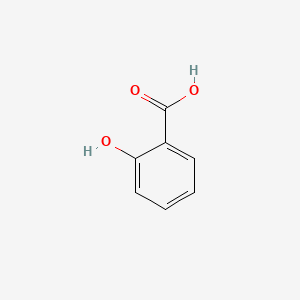
Salicylic Acid (C₇H₆O₃) is a beta-hydroxy acid derived from aspirin, commonly used in skincare products for it's excellent exfoliating and anti-inflammatory properties.
WHAT IS A BETA-HYDROXY ACID?
You've probably heard of AHAs and BHAs by now, two common types of acids being used to treat various skin conditions. A beta-hydroxy acid contains a carboxylic acid functional group, and a hydroxy functional group, which is separated by two carbon atoms.
Contrarily, an alpha hydroxy acid is separated only by one carbon atom. In the cosmetics world beta-hydroxy acid exclusively refers to Salicylic acid, whereas alpha-hydroxy acid can refer to several active ingredients, including but not limited to; Lactic acid; Glycolic Acid and Citric acid.
Key Functions
Anti-inflammatory
Salicylic acid works to reduce inflammation, it has non-steroidal anti-inflammatory properties, (or NSAI, something you may have seen on medications such as Aspirin [acetylsalicylic acid], where this acid is derived from). It does this by inhibiting the formation of pro-inflammatory prostaglandins. These are lipids responsible for the inflammatory response in your skin.
Exfoliates and promotes cell turnover
As a topical agent (applied to the skin), the chemical causes epidermis cells to shed more easily; preventing pores from clogging and promoting cell growth.
Treats Acne
Not only does Salicylic acid prevent breakouts, it can also treat mild acne. It's anti-inflammatory properties reduce the redness and swelling associated with breakouts, while penetrating deep into the skin to dissolve the debris which causes them.
Regulates sebum production
Salicylic acid can help to regulate sebum production, the waxy secretion that is responsible for hydrating and protecting the skin. Excess sebum production can lead to an oily complexion, breakouts, and clogged pores.
Clears pores, prevents blackheads from forming
Salicylic acid works to exfoliate the inner walls of the pores, it penetrates deep inside the pore to break up any debris that can cause blackheads and whiteheads.
How To Use Salicylic Acid
Salicylic acid can be included in your standard skin care regime in a cleanser, serum, or moisturiser form.
If using a cleanser, wash your face in the morning and evening ensuring you're thorough in any problem areas. If using a serum, apply after cleansing twice a day (preferably AM and PM) to the whole face or just affected areas. If using a moisturiser, apply morning and evening to the entire face.
It's best not to combine cleaner, serum, and moisturiser; one will usually do the trick. You can overdo it with Salicylic acid as it's a chemical exfoliant. Excessive use can cause skin dryness, peeling, and inflammation.
What strength should you use?
Over-the-counter salicylic acid comes in strengths from 0.5% to 2%, and 2% is the sweet spot for most people: strong enough to clear pores, gentle enough for regular use. If you're new to acids or have sensitive skin, start with a 2% product used two or three times a week and build up, or begin with a salicylic cleanser, since the short contact time makes it the gentlest introduction. Higher percentages (up to 30%) exist as professional peels and should stay in professional hands.
A budget favourite worth mentioning: The Ordinary's Salicylic Acid 2% Solution, which we've reviewed in full.
Salicylic acid vs benzoyl peroxide: which for acne?
The two most common acne actives do different jobs. Salicylic acid excels at blackheads, whiteheads and clogged pores, the congestion-type breakouts, because it's oil-soluble and works inside the pore. Benzoyl peroxide kills acne bacteria, making it stronger against red, inflamed, pus-filled spots. Many people use both (salicylic for maintenance, benzoyl peroxide as a spot treatment), just not layered at the same time on sensitive skin. For persistent or cystic acne, skip the trial and error and see a GP or dermatologist.
Side-Effects
Beta-hydroxy acids increase skin sensitivity, especially in the sunlight. Either apply SPF or stay away from direct sunlight to reduce probability of irritation. If you have sensitive skin, patch test the product properly before full use, as BHA’s can be an irritant and cause mild chemical burns.
Two more common mistakes to avoid: don't stack salicylic acid with other exfoliants (AHAs, scrubs) or retinoids on the same night, and don't skip moisturiser because your skin is oily. A stripped, dehydrated face produces more oil, not less, and pairing your BHA with a decent moisturiser (ideally one with ceramides) keeps the barrier happy while the acid works.
References
Arif T. Salicylic acid as a peeling agent: a comprehensive review. Clin Cosmet Investig Dermatol. 2015;8:455-461. (https://www.ncbi.nlm.nih.gov/pmc/articles/PMC4554394/)