
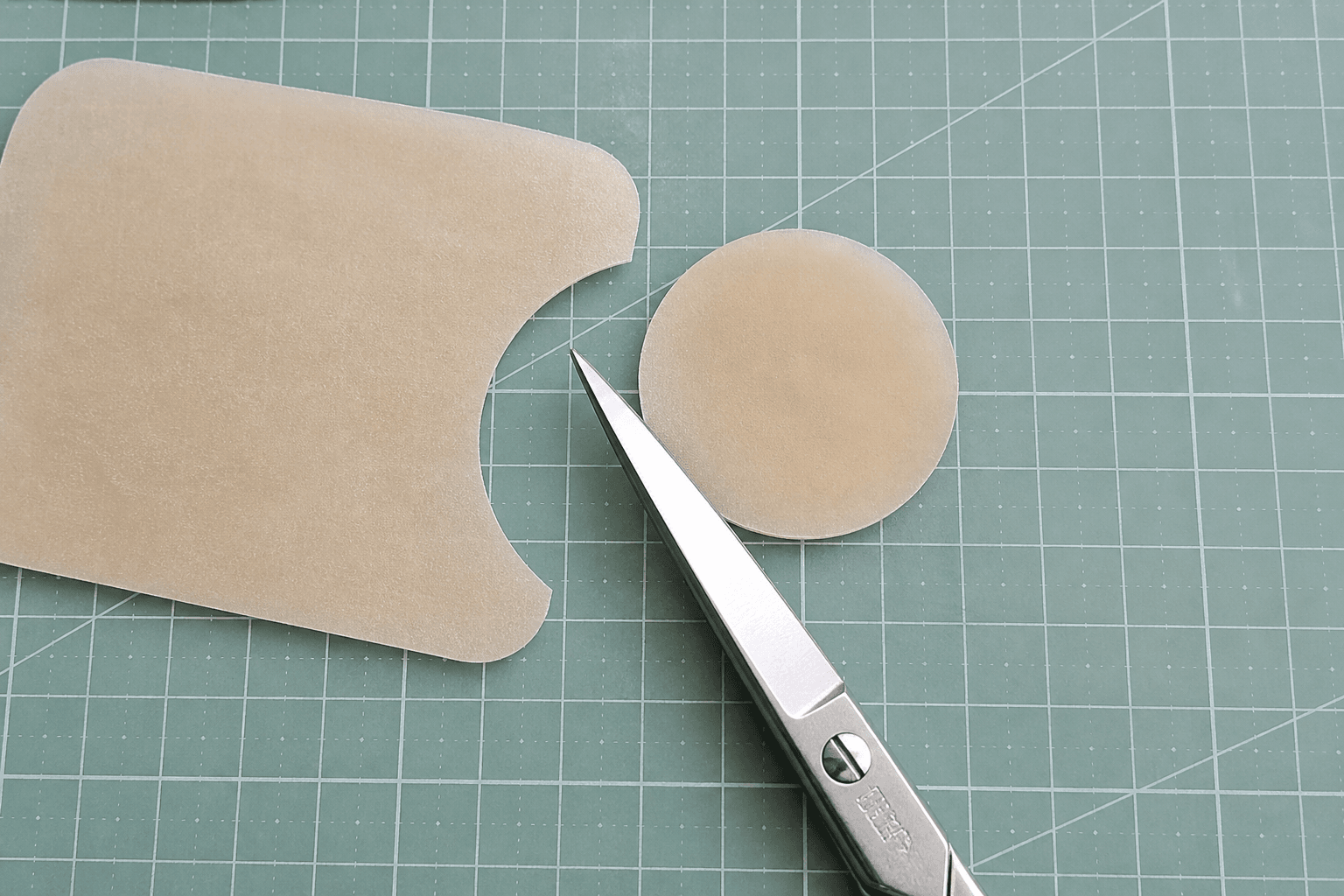
A cut-up hydrocolloid blister plaster works as a pimple patch. Same gel family as the face ones: it will absorb fluid from a whitehead and stop you touching it. It will also look homemade, and it may peel off your face faster than a patch that was cut for a chin.
Use it when the chemist is shut or the proper pack is empty. Dots for Spots is about £6 and already the size you need, which is why this is a backup rather than a system.
Why the hack works
Blister plasters (Compeed and the supermarket own-brands) are hydrocolloid dressings. Pimple patches are the same idea, cut smaller, with a thinner film and an adhesive meant for facial skin.
On a spot with a head, the gel still absorbs overnight, the underside still goes white, and the pimple still flattens if there was something to flatten. Same job as COSRX. The branded ones mainly win on fit, stick and looking like a face product instead of first aid.
How to do it without making a mess
- Buy a hydrocolloid blister plaster, not a fabric plaster, not a gel cushion for heels that is mostly foam. The packet should say hydrocolloid.
- Clean scissors. You're putting this on a pimple. Dirty blades are a good way to add bacteria.
- Cut a disc a bit larger than the spot. Too big and it catches on everything. Too small and you waste the night.
- Clean, dry face. No cream under the DIY patch. Same rule as the real ones.
- Stick, press, sleep. Peel in the morning. Bin it. Don't save the rest of a used plaster.
If you need a refresher on wear time and the white gunk, it's the same as how to use pimple patches.
Where the real thing wins
Stick on a face. Blister plasters are built for heels and toes — thick skin, friction, shoes. On a cheek they can feel rigid. Edges catch on pillowcases and smile lines. Face patches are thinner and usually stay put with less drama.
Size mix. A branded pack already has small and large, so you are not cutting a tiny circle out of a blister oval at 11pm.
Look. A COSRX film disappears. A cut Compeed looks like a cut Compeed. Fine at home. Less fine on a video call.
Adhesive comfort. Some blister plasters are aggressive. On facial skin that can mean redness around the edge when you peel. Face patches are usually gentler because that's the product.
Price per use, once you own a pack. A single blister plaster cut into four is cheap in an emergency. A £6 pouch of 24 Dots for Spots is cheaper than turning the first-aid box into your skincare routine.
When DIY is the right call
- It's late, you have a whitehead, and the proper patches are gone.
- You're travelling and the hotel bathroom has a plaster, not a K-beauty pouch.
- You want to test whether hydrocolloid does anything on your skin before you buy a branded tin.
When it's the wrong call: every week, on purpose, because homemade feels "less chemical". It isn't. Same gel, worse fit, more faff. Buy a face pack.
Don't use random household plastic, sellotape, or a rag soaked in tea tree as a "DIY patch". That's not hydrocolloid. That's a bad night.
Blister plaster vs branded, in practice
I've used both. The plaster works on a proper whitehead. It is worse at staying on the side of my nose and worse under a fringe. The branded patch is the thing I repurchase. The plaster is the thing I remember exists when I've been lazy about restocking.
If you're choosing what to keep in the house, keep a cheap face pack. Keep blister plasters for blisters. Sharing them is a backup, not a system.
For body spots — back, shoulders — a larger plaster can actually be more practical than a tiny face dot. That's the one place DIY sometimes wins on coverage. See patches on the body if that's the real problem.
The verdict
Cut-up hydrocolloid plaster: works in a pinch. Branded pimple patches: stick better on the face, look less homemade, cost little enough that the hack is optional. Use scissors when you have to. Use a proper pack when you don't.
FAQs
Can I use a blister plaster as a pimple patch?
Yes, if it's hydrocolloid. Cut it to size, put it on clean dry skin, leave it overnight. It absorbs fluid the same way a face patch does.
Is a DIY pimple patch as good as COSRX?
Same job, worse fit. COSRX and other face patches are thinner, pre-sized and usually stay on facial skin better. The plaster is an emergency substitute.
Why does my cut-up Compeed keep falling off my face?
It's thick, the edges catch, and facial skin moves. Dry the skin more, cut a smaller piece, or just buy actual pimple patches.
Can I reuse a blister plaster on a pimple?
No. Once it's absorbed fluid it's a used dressing. Cut a fresh piece.
Are supermarket hydrocolloid plasters safe on my face?
On intact skin over a whitehead, people use them as a short-term hack. If the adhesive irritates you, take it off and switch to a face-specific patch. Don't use them on a wide open wound as a homemade medical plan.