Obviously Skincare
Sunburn is damage to the skin from ultraviolet light. It usually shows a few hours after exposure, peaks at 12 to 24 hours, and settles within about a week. Nothing reverses the damage once it's done. Treatment is about cooling the skin, easing pain, and not making it worse.
What to do, in order
1. Get out of the sun
At the first sign of pink or tightness, go indoors or into deep shade. Sunburn keeps developing for hours afterwards, so what you see at the time understates it.
2. Cool the skin
- Take a cool (not cold) shower or bath, or sponge the area with cool water.
- Or hold a cool, damp towel on it for 15 minutes at a time.
- Pat dry gently. Don't rub.
Don't put ice or ice packs directly on sunburnt skin.
3. Moisturise
While the skin is still slightly damp, apply:
- an aftersun lotion, or
- a plain, fragrance-free moisturiser, or
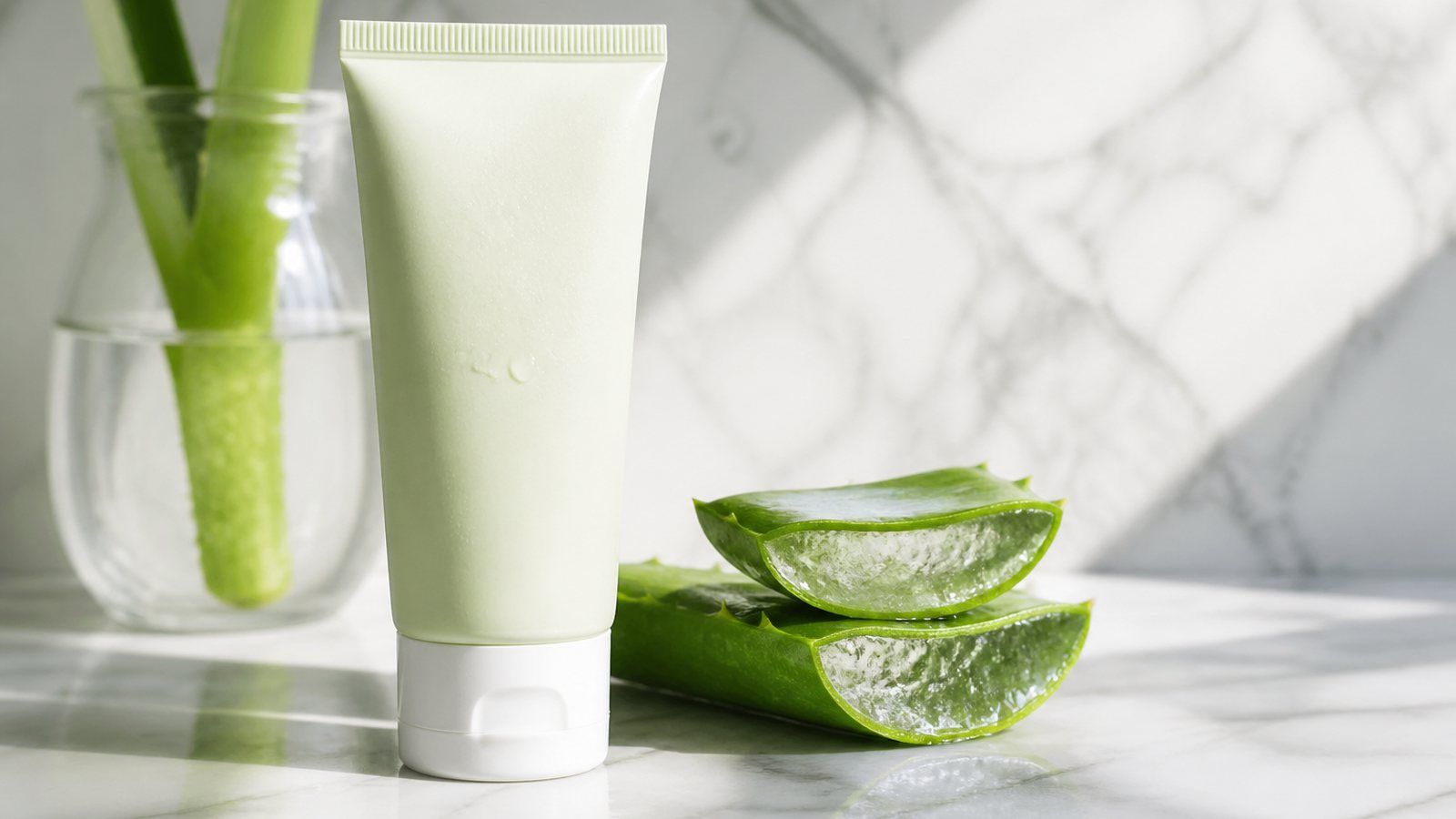
- aloe vera gel.
Reapply frequently for the next few days. Keeping the lotion in the fridge makes it more soothing.
4. Drink plenty of water
Sunburn draws fluid to the skin, and you've probably lost more through sweating. Drink more than usual for a couple of days.
5. Take pain relief if you need it
Paracetamol or ibuprofen eases pain and, in ibuprofen's case, inflammation. Check they're suitable for you; a pharmacist can advise. Don't give aspirin to children under 16.
6. Cover up until it heals
Keep the burnt skin completely out of the sun, with loose, soft clothing. Sunburnt skin burns again very easily.
This follows NHS advice on sunburn.
What not to do
| Don't | Why |
|---|---|
| Put petroleum jelly on fresh sunburn | It traps heat |
| Use ice directly on the skin | It can damage the skin further |
| Pop blisters | Risk of infection and scarring |
| Scratch or peel the skin | Exposes skin that isn't ready |
| Wear tight clothing over it | Friction and pain |
| Use scented lotions, perfume or alcohol-based products | They sting and irritate |
| Use numbing sprays with "-caine" ingredients freely | They can cause allergic reactions |
| Apply butter, toothpaste, vinegar or other home remedies | No benefit; some irritate |
| Use your usual retinoids, acids, scrubs or vitamin C | They'll burn and slow healing |
Your skincare while it heals
Strip everything back until the redness and tenderness have gone.
- Cleanse with cool water, or the gentlest cleanser you own.
- Moisturise often with something plain. Ingredients that help: glycerin, aloe, panthenol, ceramides, colloidal oatmeal.
- Stop all actives: retinol, tretinoin, glycolic, lactic and salicylic acids, benzoyl peroxide, vitamin C.
- Skip makeup on burnt areas if you can.
- No exfoliating, including when it starts to peel.
Restart actives one at a time, about a week after the skin feels normal.
How long does sunburn last?
| Severity | What you see | Time to heal |
|---|---|---|
| Mild | Pink or red, warm, tender | 3 to 5 days |
| Moderate | Bright red, swollen, painful; peeling follows | About a week |
| Severe | Blisters, intense pain, possibly feeling unwell | Up to two weeks; get advice |
On brown and black skin, sunburn may not look red. It can feel hot, tight, tender or itchy, and the skin may look darker.
Related guideBum Acne: Why You Get Spots on Your Bottom and How to Treat ThemSpots on the bum are rarely true acne. They're usually folliculitis or keratosis pilaris, caused by friction, sweat and tight clothing.Read the guide →Peeling
Peeling starts a few days after a burn and is the body shedding damaged cells.
- Let it come off by itself.
- Moisturise generously.
- Don't pull, scrub or exfoliate it.
- Keep the new skin out of the sun. It's very sensitive.
Blisters
Blisters mean a deeper burn.
- Don't pop them. The fluid protects the skin underneath.
- If one bursts, clean it gently with water, leave the loose skin in place, and cover with a non-stick dressing.
- Watch for infection: increasing pain, pus, spreading redness.
- Get advice if blisters cover a large area.
When to get medical help
Call 111 or see a GP if:
- your skin is blistered or swollen
- your temperature is very high, or you feel hot and shivery
- you feel very tired, dizzy or sick, or have a headache or muscle cramps
- a baby or young child has sunburn
These can be signs of severe sunburn or heat exhaustion.
Call 999 if someone is confused, has a seizure, loses consciousness, or is still unwell after 30 minutes of resting in a cool place and drinking fluids. That may be heatstroke, which is an emergency.
Does aloe vera work?
Aloe gel feels cooling and is a reasonable moisturiser for sunburn. The evidence that it speeds healing is limited. Choose a product without alcohol or fragrance. See aloe vera for skin.
Sunburn isn't just a few sore days
Every sunburn adds to cumulative damage: it increases the risk of skin cancer, including melanoma, and speeds up ageing of the skin. A tan that follows a burn is a sign of that damage, not protection.
Check your skin now and then. See a GP about any mole or patch that's new, changing, itching or bleeding.
Not getting burnt again
- Use SPF 30 or higher, with good UVA protection, and enough of it. Most people use half what they need. The sunscreen calculator shows how much.
- Reapply every two hours, and after swimming or sweating.
- Spend time in the shade between 11am and 3pm from March to October in the UK.
- Cover up: hat, sunglasses, long sleeves.
- Don't forget ears, neck, scalp partings, shoulders, feet.
- Cloudy days burn too.
See SPF 30 vs SPF 50 and why sunscreen matters.
References
NHS. Sunburn. (https://www.nhs.uk/conditions/sunburn/)
Green A, Williams G, Neale R, et al. Daily sunscreen application and betacarotene supplementation in prevention of basal-cell and squamous-cell carcinomas of the skin: a randomised controlled trial. Lancet. 1999;354(9180):723-729. (https://pubmed.ncbi.nlm.nih.gov/10475183/)
FAQs
What is the fastest way to heal sunburn?
Cool the skin, moisturise often, drink water and stay out of the sun. Nothing makes it heal much faster than about a week.
Should I put Vaseline on sunburn?
Not on fresh sunburn. It can trap heat. Use a light lotion or aloe gel.
How long does sunburn take to go away?
Mild sunburn takes three to five days; more severe burns up to two weeks.
Should I moisturise peeling sunburn?
Yes. Moisturise, and don't pick or scrub.
Can I use retinol on sunburnt skin?
No. Stop all actives until the skin has healed.
When should I see a doctor for sunburn?
If there's blistering or swelling, a high temperature, dizziness or sickness, or if a baby or young child is burnt.