Obviously Skincare
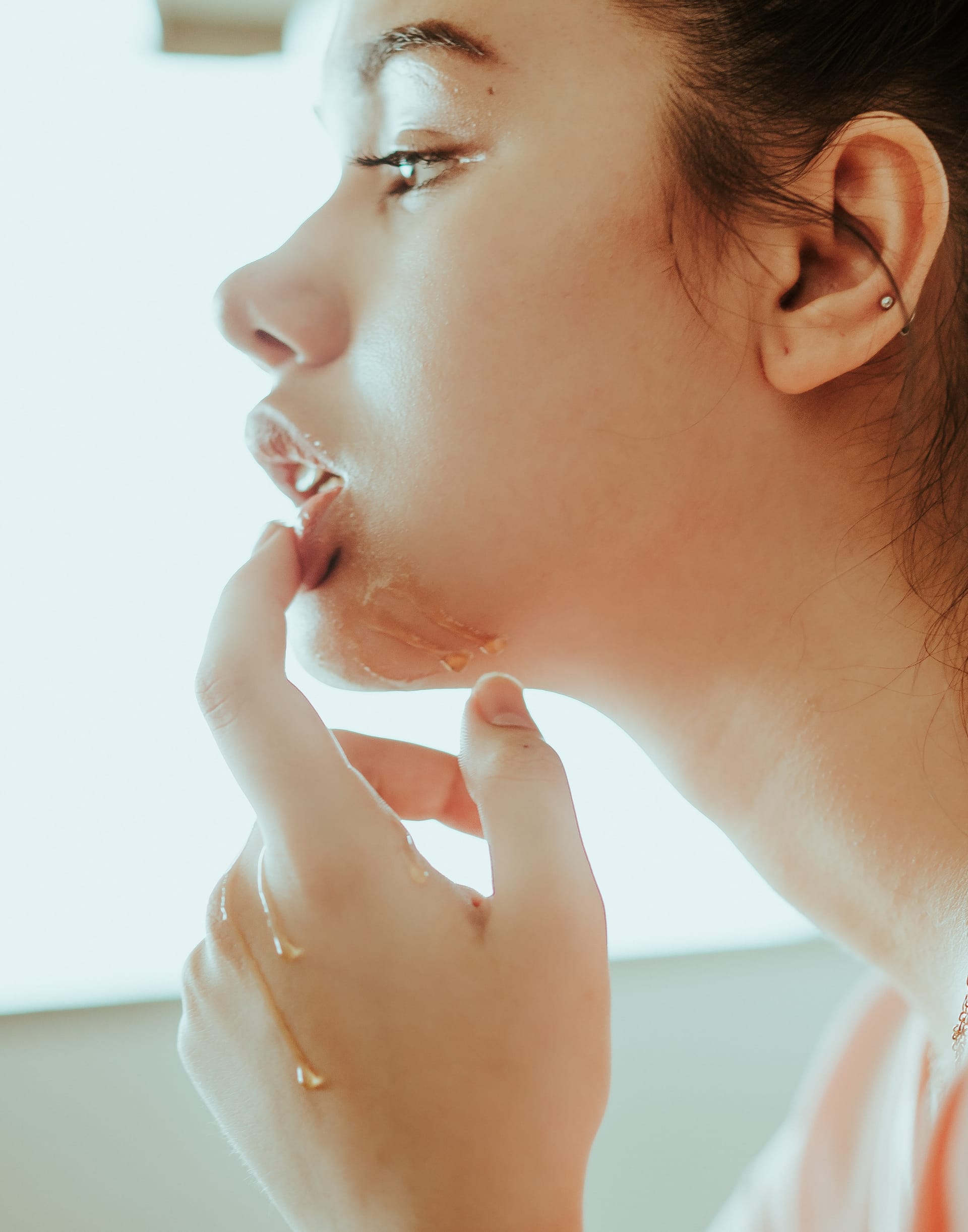
You touch your face far more than you think. When researchers filmed medical students during lectures, each one touched their face an average of 23 times an hour, and almost half of those touches were to the mouth, nose or eyes. Most of it happens without noticing.
Touching alone doesn't cause acne. But resting your chin on your hand, pressing a phone to your cheek and absent-mindedly exploring bumps add pressure, friction and, eventually, picking. Those habits make breakouts last longer, leave darker marks and spread infections.
What touching does to your skin
| Habit | What happens | Who it affects most |
|---|---|---|
| Resting chin or cheek on your hand | Pressure and friction can trigger spots in the same place (acne mechanica) | Acne-prone skin |
| Pressing a phone to your face | Pressure, heat and friction along the jaw and cheek | Acne-prone skin |
| Picking and squeezing | Pushes inflammation deeper, slows healing, causes marks and scars | Everyone with spots |
| Rubbing your eyes | Irritates thin skin, can deepen dark circles and worsen eye-area eczema | Allergies, eczema, hay fever |
| Touching eyes, nose and mouth | Main way colds, flu and stomach bugs get from hands into your body | Everyone |
| Touching broken skin | Bacteria can infect picked spots, cuts and eczema | Picked spots, eczema |
Pressure and friction can trigger spots
Repeated pressure, rubbing and heat on acne-prone skin can trigger breakouts in exactly the area that's being rubbed. Dermatologists call this acne mechanica, and it was described decades ago in people whose spots matched where helmets, straps and chin rests sat. The everyday versions are leaning on your hand at a desk, propping your chin up while you scroll, and holding a phone against your cheek.
A useful clue: if your spots keep appearing in one place, on one side, think about what touches that spot every day.
Touching leads to picking
Touching usually becomes feeling for bumps, then squeezing them. Squeezing:
- Pushes the contents of a spot deeper, which can rupture the pore wall and make the spot bigger, redder and more painful.
- Slows healing, because you keep reopening the wound.
- Leaves marks. Inflammation triggers extra pigment, which leaves flat brown, purple or red marks (post-inflammatory hyperpigmentation). These can take months to fade, and longer on darker skin tones. Treatments help, but most people see partial rather than complete fading.
- Can scar. Deep picking can damage the collagen underneath and leave permanent pitted scars.
See why you shouldn't pop your pimples and how to reduce dark spots.
Rubbing irritates skin
The skin around your eyes is among the thinnest on your body. Rubbing it, especially with hay fever or eczema, causes inflammation, which over time can darken the skin and make dark circles more noticeable. Rubbing also worsens eczema itself: scratching damages the skin barrier, which makes it itchier, which makes you scratch more.
It spreads infections
Your hands pick up germs from everything you touch. Touching your eyes, nose and mouth gives those germs a direct route in, which is why face touching is a key target in hand hygiene advice. Picked spots and broken skin can also become infected with bacteria from your hands, leading to crusting, swelling or impetigo.
Is it dirt on your hands that causes spots?
Mostly no. Acne isn't caused by dirty skin, and the bacteria involved in acne already live on your face. Clean hands won't stop breakouts on their own. What matters more is the pressure, friction and picking that touching leads to.
That said, wash your hands before applying skincare or touching spots, and keep anything that touches your face, like phones, glasses and pillowcases, reasonably clean.
Free toolSkincare routine builderNot sure what order to use your products in?Open the routine builder →How to stop touching your face
Habits are automatic, so willpower alone rarely works. These tactics do better.
1. Notice the pattern
For a couple of days, notice when you touch your face. Most people find it's in specific situations: at a desk, in meetings, on the phone, watching TV, reading or feeling stressed. Once you know your triggers, you can plan around them.
2. Make it harder
- Keep nails short. Harder to pick and squeeze.
- Cover spots with pimple patches. They hide the spot, stop you picking it and protect it while it heals.
- Wear glasses instead of contacts for a while if you're a habitual eye rubber.
- Use earphones or speakerphone instead of pressing your phone to your face.
3. Give your hands something else to do
A pen, a stress ball, a ring to turn or a fidget toy all give your hands a job. This is the core of habit reversal training, the best-studied psychological treatment for skin picking: notice the urge, then do a competing action with your hands until it passes.
4. Treat the spots
Fewer spots means fewer things to pick. A consistent routine with salicylic acid, benzoyl peroxide or a retinoid such as adapalene reduces breakouts over a few weeks. See the minimal acne routine.
5. Look after the triggers
- Itchy skin: treat eczema or dryness with a good moisturiser so there's less to scratch.
- Itchy eyes: treat hay fever with antihistamines or eye drops rather than rubbing.
- Stress and boredom: these are common drivers of picking. See how stress affects your skin.
6. Avoid magnifying mirrors
Close-up mirrors make small bumps look like big problems and are a common starting point for picking sessions.
When picking becomes a problem
For some people, picking goes beyond the occasional squeeze. Excoriation (skin-picking) disorder is a recognised mental health condition. An analysis of 19 studies with over 38,000 people estimated it affects about 3 to 4% of people, more often women than men.
Signs it's more than a habit:
- You pick for long periods, often in a trance-like state.
- You pick at healthy skin, not just spots.
- You've tried to stop many times and can't.
- Picking leaves wounds, bleeding, infections or scars.
- You feel ashamed, avoid people or cover up your skin because of it.
If this sounds familiar, talk to your GP. Habit reversal therapy and cognitive behavioural therapy help, and some medicines, including certain antidepressants, can reduce the urge. It's common, treatable and nothing to be embarrassed about.
If you've already picked a spot
- Stop, and wash your hands.
- Gently clean the area with water.
- Press with a clean tissue if it's bleeding.
- Cover with a pimple patch or a dab of petroleum jelly.
- Leave it alone. Don't apply strong acids or toothpaste.
- Use SPF daily on the area to stop the mark darkening.
References
- Kwok YL, Gralton J, McLaws ML. Face touching: a frequent habit that has implications for hand hygiene. Am J Infect Control. 2015;43(2):112-4. (https://pubmed.ncbi.nlm.nih.gov/25637115/)
- Mills OH Jr, Kligman A. Acne mechanica. Arch Dermatol. 1975;111(4):481-3. (https://pubmed.ncbi.nlm.nih.gov/123732/)
- Farhat LC, Reid M, Bloch MH, et al. Prevalence and gender distribution of excoriation (skin-picking) disorder: A systematic review and meta-analysis. J Psychiatr Res. 2023;161:412-418. (https://pubmed.ncbi.nlm.nih.gov/37023597/)
- Lochner C, Roos A, Stein DJ. Excoriation (skin-picking) disorder: a systematic review of treatment options. Neuropsychiatr Dis Treat. 2017;13:1867-1872. (https://pubmed.ncbi.nlm.nih.gov/28761349/)
- Kashetsky N, Feschuk A, Pratt ME. Post-inflammatory hyperpigmentation: A systematic review of treatment outcomes. J Eur Acad Dermatol Venereol. 2024;38(3):470-479. (https://pubmed.ncbi.nlm.nih.gov/37843491/)
FAQs
Does touching your face cause acne?
Not on its own, but pressure, friction and picking can make breakouts worse and leave marks.
Why do I get spots where I rest my hand?
Repeated pressure and friction can trigger breakouts in acne-prone skin. This is called acne mechanica.
How many times a day do people touch their face?
Does a dirty phone cause acne?
Pressure and heat from holding a phone against your face are bigger factors than dirt, but cleaning it regularly is still sensible.
How do I stop picking my skin?
Keep nails short, cover spots with patches, give your hands something else to do, treat the underlying spots, and avoid magnifying mirrors. See a GP if it feels out of control.
Will my skin clear up if I stop touching it?
It can help, especially with spots in one repeated place, but most acne also needs a treatment such as salicylic acid, benzoyl peroxide or a retinoid.