Obviously Skincare
Much of what The Ordinary is known for, high-strength acids, pure vitamin C and retinol, is exactly what sensitive skin handles worst. The range also contains some very gentle, fragrance-free products at prices few brands match. The skill is in choosing from the quiet end of the catalogue.
What sensitive skin needs
Sensitive skin stings, burns, flushes or itches in response to things most skin tolerates. The usual cause is a weakened barrier: the outer layer lets irritants in and water out. So the priorities are:
- Don't strip it (gentle cleansing).
- Rebuild it (moisturiser with barrier lipids).
- Protect it (sunscreen).
- Add actives slowly, if at all.
The routine
Morning
- Rinse with lukewarm water
- Hyaluronic Acid 2% + B5, on damp skin
- Natural Moisturizing Factors + HA
- A mineral or sensitive-skin sunscreen, SPF 30 or higher
Evening
- Squalane Cleanser
- Soothing & Barrier Support Serum, or Hyaluronic Acid 2% + B5
- Natural Moisturizing Factors + PhytoCeramides
- Optional: two or three drops of 100% Plant-Derived Squalane
Stay on this for at least a month before adding anything.
Free toolSkincare routine builderNot sure what order to use your products in?Open the routine builder →Products that suit sensitive skin
| Product | What it does | Notes |
|---|---|---|
| Squalane Cleanser | Balm-to-oil cleanser | Removes makeup and SPF without foaming |
| Hyaluronic Acid 2% + B5 | Hydration | Apply to damp skin, seal with moisturiser |
| Natural Moisturizing Factors + HA | Light moisturiser | Amino acids, fatty acids, hyaluronic acid |
| Natural Moisturizing Factors + PhytoCeramides | Richer moisturiser | For dry or tight skin |
| Soothing & Barrier Support Serum | Calming, barrier support | Made for irritated skin |
| 100% Plant-Derived Squalane | Light oil | Very low risk of irritation |
| Multi-Peptide + HA Serum | Gentle anti-ageing | No acids or retinoids |
| Alpha Arbutin 2% + HA | Dark marks | Well tolerated |
If you want an active
Go for the gentlest version of each type.
| Goal | Gentle choice | Skip |
|---|---|---|
| Exfoliation | Mandelic Acid 10% + HA or Lactic Acid 5% + HA, once a week | Glycolic Acid 7% toner; AHA 30% + BHA 2% Peeling Solution |
| Anti-ageing | Granactive Retinoid 2% Emulsion, twice a week | Retinol 1% in Squalane |
| Brightening | Ascorbyl Glucoside Solution 12% or Magnesium Ascorbyl Phosphate 10% | Vitamin C Suspension 23% or 30% |
| Redness, blemishes | Azelaic Acid Suspension 10%, every other night over moisturiser | Salicylic acid at high frequency |
| Oil control | Niacinamide 10% + Zinc 1%, diluted in moisturiser | Using it neat if you flush |
Two notes:
- Niacinamide is usually good for sensitive skin at 2% to 5%. The Ordinary's is 10%, and a minority of people flush or sting at that strength. Mix one drop into your moisturiser to bring the dose down, and see how you get on.
- Azelaic acid is recommended for redness-prone skin and commonly tingles or itches for the first week or two. Applying it over moisturiser softens that.
Products to avoid
- AHA 30% + BHA 2% Peeling Solution. The brand itself says it isn't for sensitive skin.
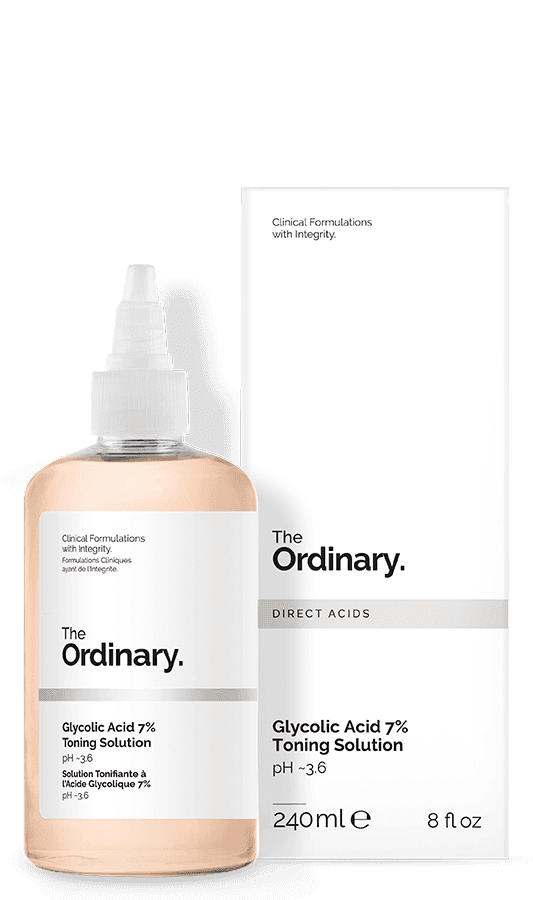
- Glycolic Acid 7% Exfoliating Toner.
- Vitamin C Suspension 23% + HA Spheres 2% and 30% in Silicone. Strong tingling is normal with these even on robust skin.
- Retinol 0.5% and 1% in Squalane, at least to start.
- Lactic Acid 10% + HA.
- Salicylic Acid 2% Masque, and layering any two acids.
How to add a product safely
- Patch test on the side of the neck or behind the ear for three to five days. See patch testing.
- Introduce one product, twice a week.
- Buffer it. Apply over moisturiser the first few times.
- Wait two to four weeks before the next new product.
- Stop at burning, swelling, or a rash. Mild, brief tingling is acceptable; anything that lasts isn't.
When your skin is flaring
Go back to three products: Squalane Cleanser, Natural Moisturizing Factors + HA (or PhytoCeramides), and sunscreen. No actives until your skin has felt normal for two weeks. See barrier repair.
Is it sensitivity, or something else?
Persistent redness with flushing may be rosacea. Itchy, dry, cracked patches may be eczema. A rash that appears a day or two after a new product may be an allergy. If your skin reacts to almost everything, or has worsened suddenly, see a GP. See rosacea skincare routine.
Is The Ordinary good for sensitive skin?
Parts of it are. In its favour: the products are fragrance-free, the ingredient lists are short, and you can avoid whatever you react to. Against: the range leans towards strong actives, and nothing on the shelf stops you buying the wrong one.
For a brand-neutral approach, see skincare routine for sensitive skin. For the order to apply these products, see The Ordinary routine order.
References
Misery L, Loser K, Ständer S. Sensitive skin. J Eur Acad Dermatol Venereol. 2016;30 Suppl 1:2-8. (https://pubmed.ncbi.nlm.nih.gov/26805416/)
FAQs
Which The Ordinary products are good for sensitive skin?
Squalane Cleanser, Hyaluronic Acid 2% + B5, the Natural Moisturizing Factors moisturisers, Soothing & Barrier Support Serum and squalane oil.
Can sensitive skin use The Ordinary niacinamide?
Often, yes. If 10% makes you flush, mix a drop into moisturiser.
Can sensitive skin use The Ordinary retinol?
Start with Granactive Retinoid 2% Emulsion, twice a week, over moisturiser.
Which The Ordinary acid is gentlest?
Mandelic Acid 10% + HA, followed by Lactic Acid 5% + HA.
What should sensitive skin avoid from The Ordinary?
The peeling solution, the glycolic toner, the pure vitamin C suspensions and high-strength retinol.