Obviously Skincare

The Ordinary sells most of the ingredients known to help with hyperpigmentation, at low prices. A routine that works uses two or three of them alongside daily sunscreen. It doesn't use all of them: stacking pigment treatments irritates the skin, and irritation causes more pigmentation.
Which products target pigment
| Product | How it helps | When |
|---|---|---|
| Alpha Arbutin 2% + HA | Slows the enzyme that makes pigment | Morning and/or evening |
| Azelaic Acid Suspension 10% | Slows pigment production; also treats spots and redness | Evening, or morning |
| Ascorbyl Glucoside Solution 12% | A gentle vitamin C; antioxidant and brightening | Morning |
| Ascorbic Acid 8% + Alpha Arbutin 2% | Pure vitamin C with arbutin, in one | Morning |
| Niacinamide 10% + Zinc 1% | Reduces transfer of pigment to skin cells | Morning or evening |
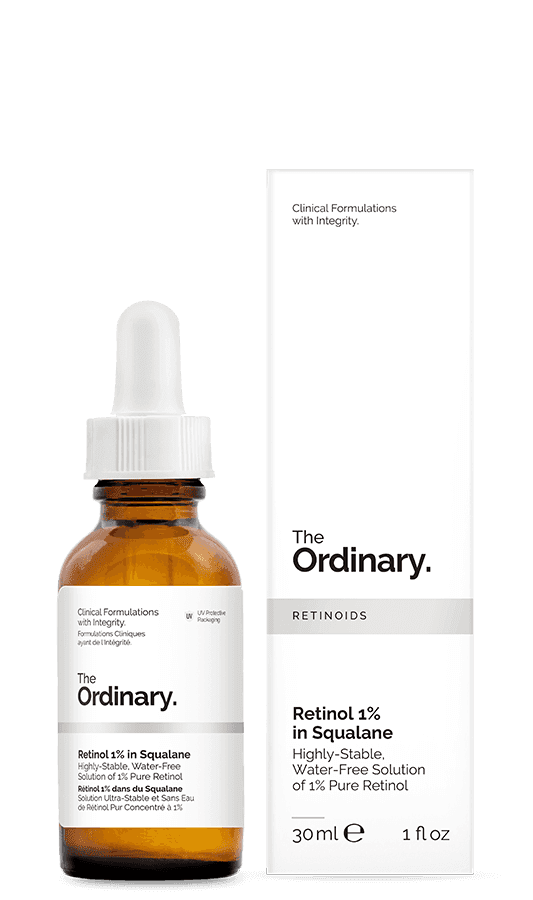
| Retinol in Squalane (0.2% to 1%) | Speeds up turnover so pigmented cells shed | Evening |
| Lactic Acid 5% or 10% + HA; Mandelic Acid 10% + HA | Shed pigmented surface cells | Evening, 1 to 2 nights a week |
Sunscreen isn't on that list because it comes from another brand in most UK routines, but it does more than any of them. UV light, and visible light on deeper skin tones, keeps dark marks dark. Without SPF 30 or higher every day, the rest is wasted effort.
The core routine
Morning
- Gentle cleanser
- Alpha Arbutin 2% + HA
- Natural Moisturizing Factors + HA
- SPF 30 or higher, broad spectrum. On brown and black skin, a tinted sunscreen with iron oxides adds protection against visible light.
Evening
- Gentle cleanser
- Niacinamide 10% + Zinc 1%
- Azelaic Acid Suspension 10%
- Moisturiser
This combination is effective and well tolerated by most skin, including skin that marks easily. Niacinamide and azelaic acid are compatible; see niacinamide and azelaic acid.
Free toolSkincare routine builderNot sure what order to use your products in?Open the routine builder →Adjust it to your type of pigmentation
Marks left by spots (post-inflammatory hyperpigmentation)
Use the core routine. Azelaic acid is the key product, because it treats spots as well as marks. If you still get breakouts, add Salicylic Acid 2% Solution two nights a week in place of azelaic acid on those nights. See post-inflammatory hyperpigmentation.
Sun spots and general uneven tone
- Morning: Ascorbyl Glucoside Solution 12% → moisturiser → SPF
- Evening: Alpha Arbutin 2% + HA → Retinol 0.2% in Squalane (two or three nights a week, building up) → moisturiser
A retinoid is the most useful addition here, since it helps with sun damage generally.
Melasma
Melasma is driven by hormones and light, and is stubborn. The core routine plus strict sun protection is a reasonable start, but it often needs prescription treatment. See a GP or dermatologist, and read melasma.
A fuller weekly plan
Once your skin is used to the core routine (after six to eight weeks), you can add a retinoid and a weekly exfoliant:
| Night | After cleansing |
|---|---|
| Monday | Niacinamide → Retinol → moisturiser |
| Tuesday | Niacinamide → Azelaic Acid → moisturiser |
| Wednesday | Niacinamide → Azelaic Acid → moisturiser |
| Thursday | Niacinamide → Retinol → moisturiser |
| Friday | Niacinamide → Azelaic Acid → moisturiser |
| Saturday | Lactic Acid 5% + HA or Mandelic Acid 10% + HA → moisturiser |
| Sunday | Moisturiser only |
Mornings stay the same: Alpha Arbutin (or a vitamin C), moisturiser, SPF.
Related guideThe Ordinary Products You Shouldn't Mix: A Conflict ChartWhich The Ordinary products not to use together: retinoids with acids, pure vitamin C with niacinamide or peptides, copper peptides with acids.Read the guide →Combinations to avoid
- Pure vitamin C with Niacinamide 10% + Zinc 1% in the same routine. Use them at opposite ends of the day, or use Ascorbyl Glucoside, which doesn't have this conflict.
- Retinol with lactic, mandelic or glycolic acid on the same night.
- AHA 30% + BHA 2% Peeling Solution if your skin marks easily. A burn from a peel leaves pigmentation that takes months to fade.
- More than three serums at once.
See The Ordinary products not to mix.
For brown and black skin
Hyperpigmentation is more common and lasts longer on deeper skin tones, and irritation is a frequent trigger. So:
- Choose the gentler options: azelaic acid, alpha arbutin, niacinamide, mandelic acid.
- Introduce retinol slowly, at 0.2%.
- Avoid strong peels at home.
- Use a tinted sunscreen daily.
How long does it take?
- 4 weeks: skin looks a little brighter overall.
- 8 to 12 weeks: individual marks begin to fade.
- 6 months: substantial improvement in surface pigmentation.
Take a photo each month in the same light. If nothing has changed after six months of consistent use with sunscreen, or a patch is getting darker or changing shape, see a GP.
What these products won't do
They won't remove deep, grey-blue pigmentation, raised or indented scars, or moles and other pigmented lesions. Any single dark spot that's new, growing, irregular or changing should be checked by a doctor.
More on the key products: The Ordinary Azelaic Acid 10%, alpha arbutin, and how to reduce dark spots.
References
Davis EC, Callender VD. Postinflammatory hyperpigmentation: a review of the epidemiology, clinical features, and treatment options in skin of color. J Clin Aesthet Dermatol. 2010;3(7):20-31. (https://pubmed.ncbi.nlm.nih.gov/20725554/)
Hakozaki T, Minwalla L, Zhuang J, et al. The effect of niacinamide on reducing cutaneous pigmentation and suppression of melanosome transfer. Br J Dermatol. 2002;147(1):20-31. (https://pubmed.ncbi.nlm.nih.gov/12100180/)
FAQs
Which The Ordinary product is best for hyperpigmentation?
Azelaic Acid Suspension 10% and Alpha Arbutin 2% + HA are the most direct. Use them with daily sunscreen.
Can I use alpha arbutin and niacinamide together?
Yes. They're compatible and work on pigment in different ways.
Can I use alpha arbutin with vitamin C?
Yes. The Ordinary sells them combined in one product.
How long does The Ordinary take to fade dark spots?
Expect 8 to 12 weeks for visible fading and up to 6 months for fuller results.
Do I need sunscreen with this routine?
Yes. Without it, dark marks won't fade.