Obviously Skincare
For ageing skin, three things have the strongest evidence: daily sunscreen, a retinoid, and a good moisturiser. An antioxidant serum in the morning, peptides and an occasional gentle exfoliant are useful extras. The Ordinary sells inexpensive versions of all of these, which makes it one of the cheapest ways to build an evidence-based anti-ageing routine.
Mature skin is often drier, thinner and more reactive than it used to be, so the most important rule is to introduce actives slowly. Every product named below was on The Ordinary's UK site when we checked in November 2026.
What actually slows skin ageing
| Step | Evidence | What it does |
|---|---|---|
| Daily sunscreen | Strong. In a 4.5-year randomised trial, people who used sunscreen daily showed no detectable increase in skin ageing, and 24% less ageing than those who used it when they chose to. | Prevents new sun damage, the main driver of wrinkles, sagging and age spots |
| A retinoid | Strong. 0.4% retinol significantly improved fine wrinkles in older adults over 24 weeks, and increased collagen-building activity in the skin. | Speeds cell turnover, boosts collagen, softens fine lines, evens tone |
| Moisturiser | Good. Improves comfort, plumps fine dehydration lines, supports the barrier. | Makes retinoids easier to tolerate |
| Vitamin C | Moderate. Antioxidant protection and brightening. | Helps against sun damage, fades dullness and uneven tone |
| Peptides | Limited, often manufacturer-funded. Some placebo-controlled trials show modest improvements in fine lines. | A gentle option for non-retinoid nights |
| Exfoliating acids | Moderate. Improve texture and dullness. | Optional, and easy to overdo on mature skin |
The two habits that matter as much as any product: not smoking, and staying out of strong sun. See why SPF matters.
Morning routine
- Squalane Cleanser, or rinse with water if your skin is dry.
- Vitamin C: choose by how sensitive your skin is.
- Ascorbyl Glucoside Solution 12%: the gentlest, a stable vitamin C derivative. Start here if your skin is reactive.
- Vitamin C Suspension 23% + HA Spheres 2%: pure vitamin C (L-ascorbic acid) at high strength. It's gritty and often stings, so it suits resilient skin.
- Multi-Antioxidant Radiance Serum: a blend of antioxidants, for those who prefer a lighter serum. See vitamin C.
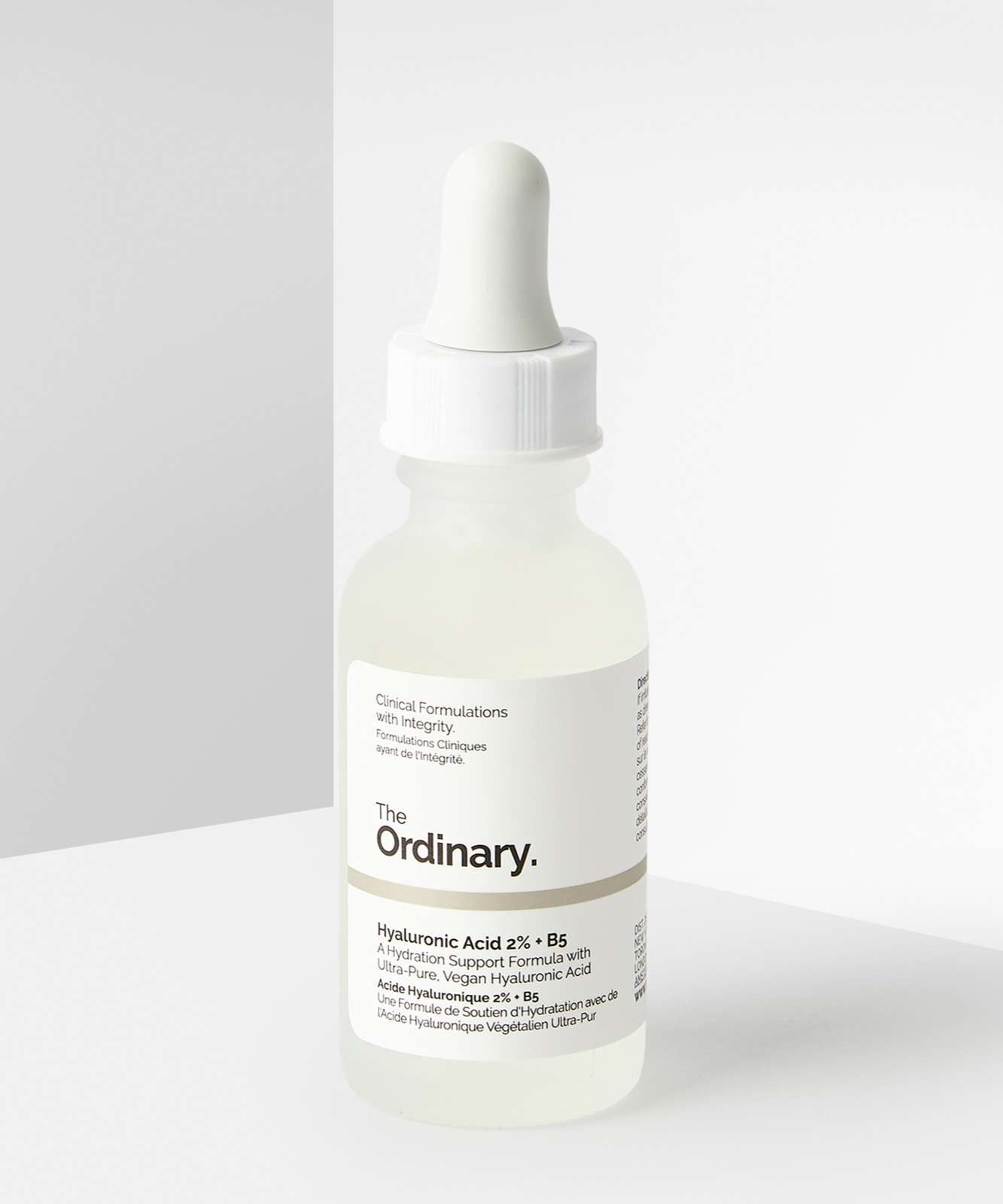
- Hyaluronic Acid 2% + B5 (with Ceramides) on damp skin, if your skin feels tight. See our review.
- Moisturiser: Natural Moisturizing Factors + HA for normal skin, or Natural Moisturizing Factors + PhytoCeramides for dry skin.
- SPF 30 or higher, every day, all year. The Ordinary's UV Filters SPF 45 Serum is one option. Any broad-spectrum SPF you'll wear daily works. Extend it to your neck, chest and the backs of your hands.
Evening routine
- Cleanse. Double cleanse with Squalane Cleanser if you wore SPF or makeup.
- A retinoid, two or three nights a week to start:
- Granactive Retinoid 2% Emulsion if your skin is sensitive or you're new to retinoids.
- Retinol 0.2% in Squalane, then Retinol 0.5% in Squalane once you tolerate it.
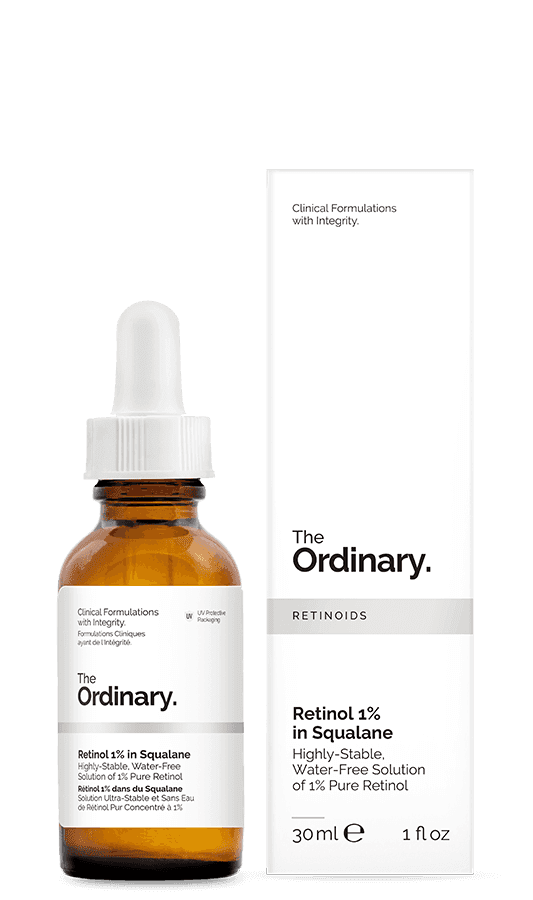
- Retinal 0.2% Emulsion if you've used retinol without problems and want something stronger. Retinal is closer to the active form and works faster, but can irritate more. See our Retinol 1% in Squalane review and how to start retinol.
- On non-retinoid nights: Multi-Peptide + HA Serum or Matrixyl 10% + HA. See what peptides do.
- Moisturiser. Apply your moisturiser before the retinoid instead if your skin gets irritated.
Optional, once a week
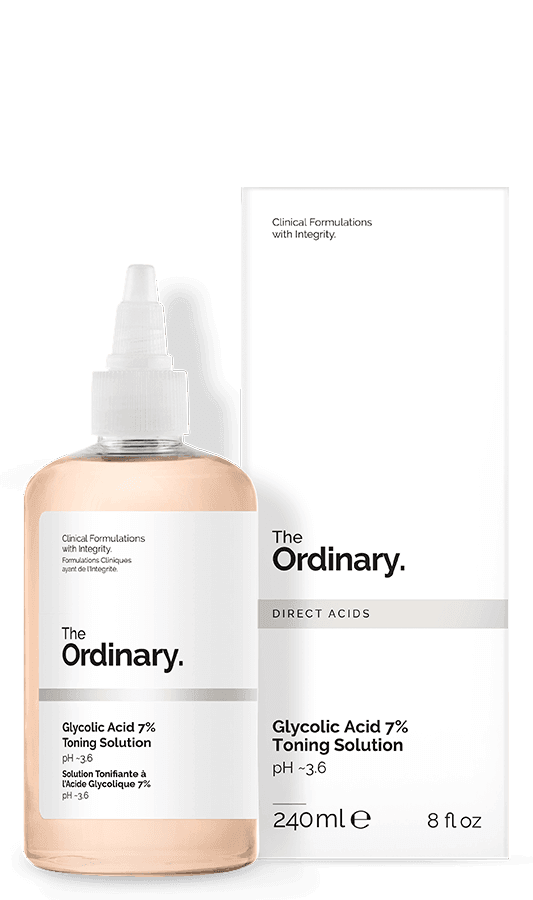
Lactic Acid 5% + HA or Glycolic Acid 7% Exfoliating Toner on a night without a retinoid, for dullness and rough texture. Skip it if your skin is dry or sensitive, or once you're using a retinoid most nights, because retinoids already exfoliate. See what AHAs do.
Related guideThe Ordinary Routine for Sensitive Skin: What to Use and What to AvoidThe Ordinary products that suit sensitive skin, the popular ones that don't, and a short routine that hydrates and supports the barrier without stinging.Read the guide →A sample week
| Morning | Evening | |
|---|---|---|
| Monday | Vitamin C, moisturiser, SPF | Retinoid |
| Tuesday | Vitamin C, moisturiser, SPF | Peptides |
| Wednesday | Vitamin C, moisturiser, SPF | Retinoid |
| Thursday | Vitamin C, moisturiser, SPF | Peptides |
| Friday | Vitamin C, moisturiser, SPF | Retinoid |
| Saturday | Vitamin C, moisturiser, SPF | Lactic acid (optional) |
| Sunday | Vitamin C, moisturiser, SPF | Moisturiser only |
After six to eight weeks without irritation, you can move to retinoid most nights and drop the acid.
Choosing a retinoid from The Ordinary
| Product | Strength | Best for |
|---|---|---|
| Granactive Retinoid 2% Emulsion | Gentle | Sensitive skin, beginners, rosacea-prone skin (with care) |
| Retinol 0.2% in Squalane | Low | First-time retinol users |
| Retinol 0.3% Emulsion | Low to moderate | Those who prefer a cream texture |
| Retinol 0.5% in Squalane | Moderate | The step up after 0.2% |
| Retinol 1% in Squalane | High | Experienced users with resilient skin |
| Retinal 0.2% Emulsion | High | Experienced users who want faster results |
Moving up isn't compulsory. A lower strength used consistently beats a strong one you can only tolerate once a week.
What to expect
| Change | Typical timeframe |
|---|---|
| Brighter, more even tone (vitamin C, SPF) | 4 to 8 weeks |
| Smoother texture | 4 to 8 weeks |
| Softer fine lines (retinoid) | 3 to 6 months, continuing for a year or more |
| Fewer new age spots (SPF) | Ongoing |
| Deep wrinkles, sagging, volume loss | Not changed by skincare |
For deep lines and sagging, skincare can't match professional treatments such as prescription tretinoin, lasers, microneedling or injectables. A dermatologist can advise.
Watch out for
- Retinoid irritation. Dryness, flaking and stinging are common in the first few weeks. Reduce to twice a week, apply moisturiser first, and avoid acids. See retinol burn.
- Mixing too much. Keep retinoids, acids and pure vitamin C on different nights or times of day. See ingredients you shouldn't mix.
- Sun sensitivity. Retinoids and AHAs make skin more sensitive to the sun. Daily SPF isn't optional.
- Pregnancy. Don't use retinoids if you're pregnant or trying to conceive.
- Neck and hands. They age too. Extend moisturiser, SPF and, carefully, your retinoid.
References
- Hughes MC, Williams GM, Baker P, et al. Sunscreen and prevention of skin aging: a randomized trial. Ann Intern Med. 2013;158(11):781-90. (https://pubmed.ncbi.nlm.nih.gov/23732711/)
- Kafi R, Kwak HS, Schumacher WE, et al. Improvement of naturally aged skin with vitamin A (retinol). Arch Dermatol. 2007;143(5):606-12. (https://pubmed.ncbi.nlm.nih.gov/17515510/)
- Mukherjee S, Date A, Patravale V, et al. Retinoids in the treatment of skin aging: an overview of clinical efficacy and safety. Clin Interv Aging. 2006;1(4):327-48. (https://pubmed.ncbi.nlm.nih.gov/18046911/)
- Pullar JM, Carr AC, Vissers MCM. The Roles of Vitamin C in Skin Health. Nutrients. 2017;9(8):866. (https://pubmed.ncbi.nlm.nih.gov/28805671/)
- Robinson LR, Fitzgerald NC, Doughty DG, et al. Topical palmitoyl pentapeptide provides improvement in photoaged human facial skin. Int J Cosmet Sci. 2005;27(3):155-60. (https://pubmed.ncbi.nlm.nih.gov/18492182/)
- Kaidbey K, Sutherland B, Bennett P, et al. Topical glycolic acid enhances photodamage by ultraviolet light. Photodermatol Photoimmunol Photomed. 2003;19(1):21-7. (https://pubmed.ncbi.nlm.nih.gov/12713551/)
FAQs
What's the best The Ordinary product for wrinkles?
A retinoid. Granactive Retinoid 2% Emulsion for sensitive skin, or Retinol 0.2% to 0.5% in Squalane for most people. Daily SPF is just as important.
Can I use The Ordinary retinol and peptides together?
Is The Ordinary good for mature skin?
Yes, if you choose gentle formulas and introduce them slowly.
Can I use vitamin C and retinol from The Ordinary together?
Which The Ordinary moisturiser is best for mature skin?
Natural Moisturizing Factors + PhytoCeramides is the richer option and suits drier, mature skin.
At what age should I start a retinoid?
There's no set age. Many people start in their late 20s or 30s, but it's never too late: the trial showing retinol improves fine lines was in people with an average age of 87.