
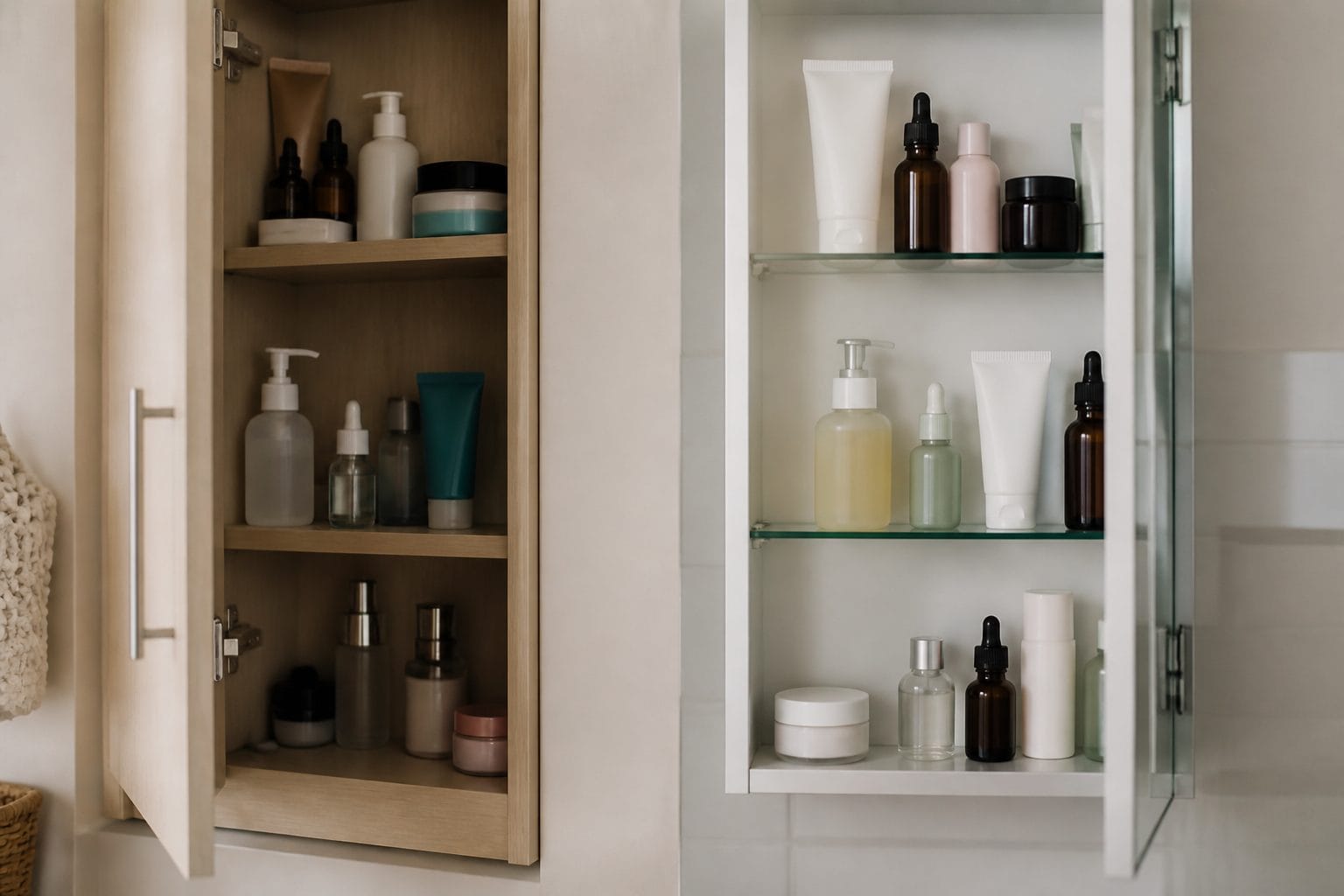
Should you copy an influencer's or celebrity's skincare routine, product for product? Almost always no. Their skin type isn't yours, their routine is often partly an advert, and the skin you're admiring is usually the result of things that never make it into the video: prescriptions, in-office procedures, genetics, lighting and a filter or two.
That doesn't mean other people's routines are useless. They're a decent source of ideas if you know how to filter them. But copying one wholesale is one of the most reliable ways to waste money and break out, and I want to walk through exactly why, because once you see the mechanics you'll never watch a "get ready with me" the same way again.
The shelfie era
When I first wrote this post back in 2019, the problem was celebrity routines in glossy magazines. It's escalated considerably since. Your feed now serves you an endless stream of TikTok routines, Instagram shelfies groaning with fifteen products, "everything I use for glass skin" videos, and morning routines that run longer than most people's commutes.
The influence is real and measurable. A single viral video can sell out a product globally within days, and researchers who've actually analysed skincare content on TikTok have found that the most popular advice is disproportionately produced by non-professionals, with accuracy to match. The platforms reward confidence and aesthetics, not correctness, and an immaculate bathroom shelf photographs beautifully whether or not anything on it suits your face.
Add the celebrity skincare brand boom, where half of Hollywood now has a line to sell you, and the incentive problem gets even sharper. The person showing you their routine is increasingly also the person profiting from it.
Why copying someone else's routine fails
Their skin type isn't yours
This is the fundamental problem and it can't be worked around. A routine built for dry, sensitive skin will sit heavy and clog an oily face; a routine built for oily, resilient skin will strip a dry one raw. Products aren't good or bad in the abstract, they're good or bad for a skin type, and following someone else's routine perfectly with different skin gets you their products and none of their results. Rich creams that look luxurious on camera are a common trigger for congestion on oilier skin; we've covered how skincare products themselves can cause acne.
You're often watching an advert
Sponsored posts are supposed to be disclosed in the UK, but disclosure rules are enforced unevenly and "gifted" products blur the line further. Even when everything is above board, a sponsored routine answers the question "which brands paid to be here this month?", not "what does this person actually use?". Routines from the same creator often rotate products with suspicious frequency, which tells you what you need to know. None of this makes creators villains; it makes their routines marketing material, and marketing material is a strange thing to copy into your bathroom.
The real work happens off camera
This is the part that genuinely misleads people. Celebrity and top-tier influencer skin is very rarely the product of the ten items on the shelf. Behind it you'll typically find some combination of prescription retinoids like tretinoin, regular dermatologist appointments, and in-office procedures: lasers, chemical peels, microneedling, injectables. A £30 serum gets the screen time; the £300 laser session doesn't get mentioned. When someone attributes professionally-maintained skin to a moisturiser, you're being shown the garnish and told it's the meal.
Genetics does a lot of quiet heavy lifting
Pore size, oil production, how readily you pigment or scar, and a good chunk of how skin ages are substantially inherited. Some people have skin that would look good on any halfway sensible routine. Copying their products doesn't copy their genes, and it's worth internalising that some portion of every enviable complexion was never for sale.
Filters, lighting and skin prep
Finally, the skin on your screen often doesn't exist. Ring lights flatten texture, foundation and "no-makeup makeup" hide plenty, and smoothing filters are now so subtle and so ubiquitous that you should assume some processing on any polished skincare video. You're comparing your real skin, seen at close range in a mirror, against a lit, prepped and filtered image. That comparison was rigged before the routine was even filmed.
How to borrow ideas from other people's routines safely
None of this means you should ignore skincare content. I find new products through other people constantly. The trick is treating routines as a menu of hypotheses to test, not instructions to follow. Here's the filter I use.
1. Know your own skin type first
Everything downstream depends on this. Work out whether your skin is oily, dry, combination or sensitive before you evaluate anyone's recommendation, because "is this a good product?" is unanswerable without it. If you're not sure, or your skin seems to have shifted over the years, we've written about how to tell if your skin type has changed. Once you know it, weight recommendations from people who share it far more heavily than recommendations from people who don't.
2. Check the ingredient list, not the endorsement
Before buying anything you saw online, look up the ingredient list and ask two questions: what is the active ingredient meant to do, and does that match a problem my skin actually has? A product recommendation is a claim about ingredients, and ingredients can be verified. If the exciting new serum is essentially glycerin and fragrance, you already own better. This habit alone filters out most impulse purchases.
3. Introduce one product at a time
Even a well-chosen product should enter your routine alone, trialled for six to eight weeks before you judge it or add anything else. Adopt a five-product routine overnight and you'll have no idea what's working, what's breaking you out, or which two ingredients are fighting each other. Some combinations genuinely conflict; here's our list of skincare ingredients you should never mix.
4. Patch test before it goes on your face
Two minutes of effort that prevents the worst outcomes. Apply the product to a small area, inner forearm or behind the ear, daily for several days before it goes anywhere near your face. We've covered how to patch test properly. Influencers with resilient skin can slather on anything for a video; you're the one who has to live with the reaction.
5. Steal the structure, not the shopping list
The genuinely useful thing to copy from a good routine isn't the products, it's the architecture: gentle cleanser, moisturiser, daily SPF, a small number of targeted actives. That skeleton is nearly universal; the flesh on it should be yours. If you want to build from first principles, start with our guide to building the perfect skincare routine and keep it lean, as we argue in our minimalist routine guide.
The bottom line
Other people's routines are inspiration, not instruction. The person on your screen has different skin, different incentives, and usually a dermatologist you'll never see mentioned. Watch the content, note the interesting products, then run everything through your own filter: your skin type, the ingredient list, one product at a time, patch tested. That's how you get the upside of skincare content without paying its tax.
References
Zheng DX, Ning AY, Levoska MA, Xiang L, Wong C, Scott JF. Acne and social media: A cross-sectional study of content quality on TikTok. Pediatr Dermatol. 2021;38(1):336-338.
Ross NA, Todd Q, Saedi N. Patient seeking behaviors and online personas: social media's role in cosmetic dermatology. Dermatol Surg. 2015;41(2):269-276.
Szeto MD, Mamo A, Afrin M, Militello M, Barber C. Social media in dermatology and an overview of popular social media platforms. Curr Dermatol Rep. 2021;10(4):97-104.
Frequently Asked Questions
Is it bad to copy a celebrity's skincare routine?
Copying it wholesale usually is, because their skin type, budget and off-camera treatments differ from yours. Their visible results often owe more to prescriptions, procedures and genetics than to the products being shown.
How do influencers get such good skin?
Typically a combination of genetics, prescription retinoids, professional treatments like lasers and peels, and favourable lighting, makeup and filters. The retail products in the video are usually the smallest contributor.
How can I tell if a skincare recommendation is sponsored?
Look for "ad", "sponsored" or "gifted" labels, which UK rules require, but treat frequent product rotation and brand-heavy captions as soft signals too. When in doubt, judge the product by its ingredient list rather than the endorsement.
What should I do before trying a product I saw online?
Confirm it suits your skin type, read the ingredient list to check it targets a problem you actually have, then patch test it for several days. Introduce it alone and give it six to eight weeks before judging results.
Can I use skincare videos to find new products?
Yes, they're genuinely useful for discovery. Just treat every recommendation as a hypothesis to verify against your own skin type and ingredient knowledge, not as an instruction to follow.