Obviously Skincare
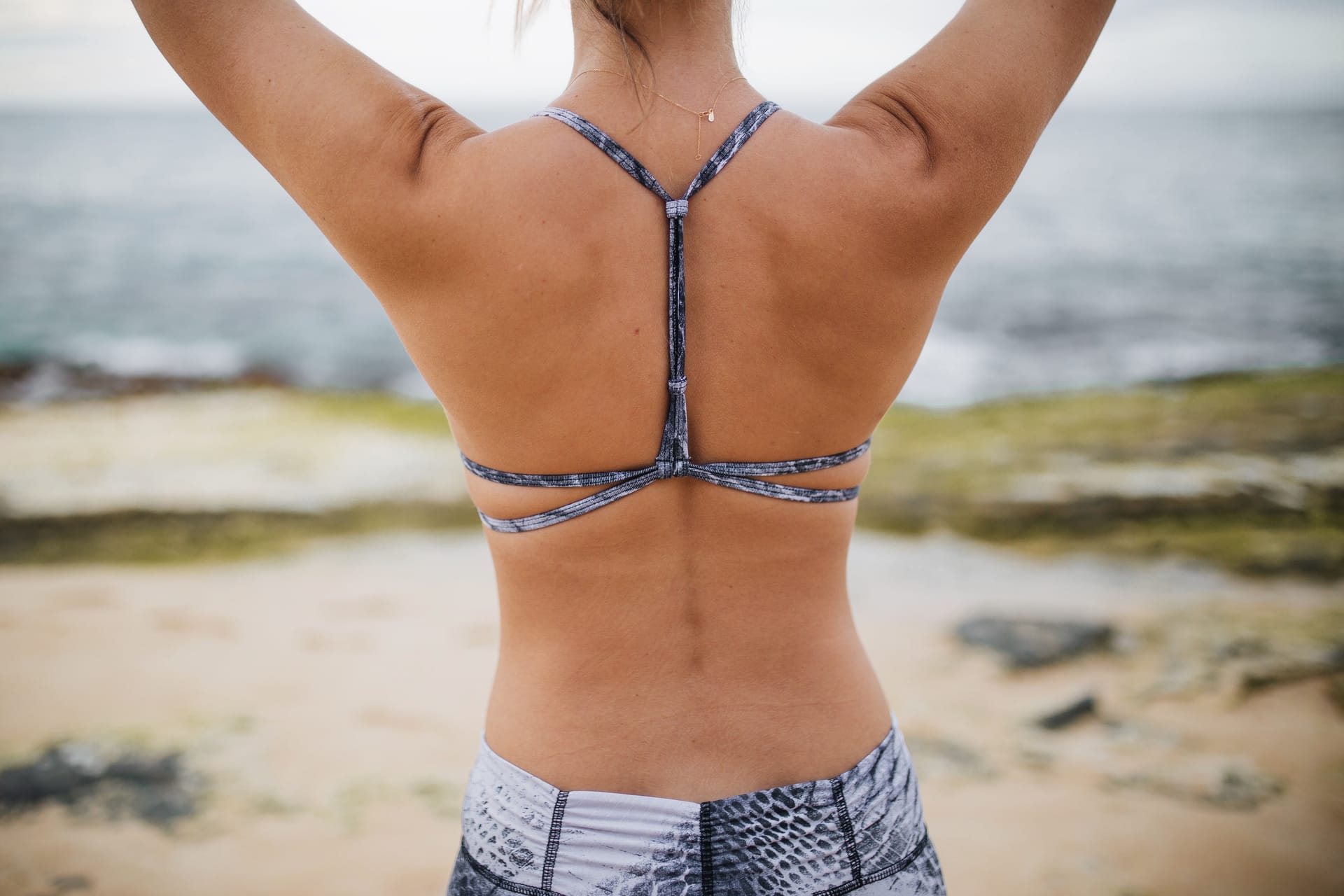
Back acne ("bacne") is common: many people with facial acne also get spots on their back, chest and shoulders, and some people only get it there. It responds to the same treatments as facial acne, but the back is harder to reach, the skin is thicker, and sweat and friction play a bigger part. It also sometimes isn't acne at all.
What causes it
The same four things that cause facial acne:
- Too much oil. The back and chest have plenty of oil glands, driven by hormones.
- Clogged pores, from skin cells shedding unevenly inside the pore.
- Acne bacteria (Cutibacterium acnes) multiplying in the blocked pore.
- Inflammation, which turns blocked pores into red spots and lumps.
Things that make back acne worse:
| Trigger | Why |
|---|---|
| Sweat left on the skin | Warm, damp conditions under clothes |
| Friction and pressure | Backpacks, bra straps, sports kit, tight synthetic tops, car seats (acne mechanica) |
| Heavy hair and body products | Conditioner and oils rinsing down the back can clog pores |
| Hormones | Puberty, the menstrual cycle, PCOS, testosterone and anabolic steroids |
| Some medicines | Steroids, lithium, some epilepsy drugs |
| Picking and scrubbing | More inflammation and marks |
Is it actually acne?
Several conditions look like back acne but need different treatment.
| Condition | Looks like | Clues | Treatment |
|---|---|---|---|
| Acne | Mix of blackheads, whiteheads, red spots, sometimes deep lumps | Different-sized spots; blackheads present | Benzoyl peroxide, salicylic acid, retinoids |
| Fungal acne (Malassezia folliculitis) | Small, uniform, very itchy bumps on the upper back, chest and shoulders | Itchy; all the same size; worse in heat and sweat; doesn't improve with acne treatments | Antifungal washes and creams, sometimes tablets |
| Folliculitis | Small pustules around hair follicles | Often after shaving, hot tubs or sweating | Antibacterial wash; see a GP if spreading |
| Keratosis pilaris | Tiny rough bumps | Mostly upper arms; feels like sandpaper; not itchy or inflamed | Urea or lactic acid creams |
| Heat rash | Tiny red or clear bumps | After heat; clears in days | Cool down. See heat rash. |
A recent review of fungal acne noted it's more common in people who also have acne, so the two can occur together. If your "back acne" is very itchy and made of identical small bumps, try an antifungal approach or ask a pharmacist or GP.
Free toolCan I use these together?Check whether two ingredients can be used together.Open the ingredient pair checker →Treatments that work
| Treatment | Best for | How to use | Notes |
|---|---|---|---|
| Benzoyl peroxide wash (4 to 10%) | Inflamed spots | Apply in the shower, leave 2 to 5 minutes, rinse | Bleaches towels, sheets and clothes |
| Salicylic acid wash or spray (0.5 to 2%) | Blackheads, congestion | Daily wash, or a leave-on spray or body serum | Gentle; good for maintenance |
| Adapalene 0.1% gel | Prevention, mixed acne | Thin layer at night, 2 to 3 times a week, building up | Available from pharmacies; can be drying |
| Azelaic acid | Spots, red and dark marks | Once or twice a day | Gentle |
| Prescription treatments | Moderate to severe, scarring, or unresponsive | From a GP or dermatologist | See below |
Benzoyl peroxide wash
The best first choice for red, inflamed back spots. A wash is easier than a cream on large areas. Leave it on for a few minutes before rinsing so it has time to work. In a large UK community trial on facial acne, benzoyl peroxide worked as well as antibiotic tablets and was the most cost-effective option. Use white towels and wash your back with it before you get dressed, because it bleaches fabric.
Salicylic acid
Good for blackheads and congestion, and for keeping skin clear once spots are under control. Body sprays and leave-on serums reach the back more easily than a wash alone. See salicylic acid.
Retinoids
Adapalene gel can be used on the back and chest. It's one of the most effective treatments for preventing new spots, but it's drying, so start slowly and moisturise. Newer prescription retinoids have been tested specifically on back and chest acne: in two large trials, trifarotene cream significantly improved both facial and truncal acne over 12 weeks compared with a plain cream.
Prescription treatment
See a GP if over-the-counter treatments haven't helped after three months, or if you have painful lumps, scarring or dark marks. Options include:
- Combination gels (for example adapalene with benzoyl peroxide).
- Prescription retinoids.
- Antibiotic tablets for a limited course, always with benzoyl peroxide or a retinoid.
- Hormonal treatment for women.
- Isotretinoin for severe or scarring acne.
A review of back and chest acne found it's often under-treated, and that scarring is common, so earlier treatment matters.
Daily habits that help
- Shower soon after exercise, and change out of sweaty clothes straight away. See exercise and your skin.
- Wash your hair first, then your body, so conditioner residue is rinsed off your back.
- Wear loose, breathable fabrics, especially for exercise.
- Change bedding regularly, and wash sportswear after every use.
- Use non-comedogenic body moisturisers and sunscreen on your back.
- Don't scrub or use loofahs hard on spots. Friction worsens inflammation.
- Don't pick or squeeze. Back acne scars easily.
- Reduce backpack and strap pressure where you can.
A simple back acne routine
| In the shower | After | |
|---|---|---|
| Most days | Benzoyl peroxide wash, left on 2 to 5 minutes, then rinse (alternate with a salicylic acid wash if dry) | Light, non-comedogenic body moisturiser |
| 2 to 3 nights a week | — | Adapalene on the back, if tolerated (not on benzoyl peroxide days if irritated) |
| Daytime outdoors | — | Non-comedogenic SPF on exposed areas |
How long it takes
Expect four to six weeks for noticeable improvement and two to three months for the full effect. Back skin is thicker, so it can take a little longer than the face. Keep going once it's clear, or spots tend to return.
Dark marks and scars
Back acne often leaves dark or red marks, especially on darker skin. They fade over months, faster with sun protection, azelaic acid and retinoids. Indented or raised scars need professional treatment. See the Ordinary routine for acne scars.
References
- Daniele SG, Kim SR, Grada A, et al. Truncal Acne and Scarring: A Comprehensive Review of Current Medical and Cosmetic Approaches to Treatment and Patient Experience. Am J Clin Dermatol. 2023;24(2):199-223. (https://pubmed.ncbi.nlm.nih.gov/36539678/)
- Reynolds RV, Yeung H, Cheng CE, et al. Guidelines of care for the management of acne vulgaris. J Am Acad Dermatol. 2024;90(5):1006.e1-1006.e30. (https://pubmed.ncbi.nlm.nih.gov/38300170/)
- Tan J, Thiboutot D, Popp G, et al. Randomized phase 3 evaluation of trifarotene 50 μg/g cream treatment of moderate facial and truncal acne. J Am Acad Dermatol. 2019;80(6):1691-1699. (https://pubmed.ncbi.nlm.nih.gov/30802558/)
- Ozolins M, Eady EA, Avery AJ, et al. Comparison of five antimicrobial regimens for treatment of mild to moderate inflammatory facial acne vulgaris in the community: randomised controlled trial. Lancet. 2004;364(9452):2188-95. (https://pubmed.ncbi.nlm.nih.gov/15610805/)
- Draelos ZD, Barbieri JS, Tanghetti EA, et al. Malassezia Folliculitis Presentation, Diagnosis, and Treatment: A Review of "Fungal Acne". J Drugs Dermatol. 2026;25(5):427-434. (https://pubmed.ncbi.nlm.nih.gov/42081639/)
FAQs
What causes back acne?
What's the best treatment for back acne?
How do I know if my back acne is fungal?
Can diet cause back acne?
Diet plays a smaller role than hormones and skin factors, but a lower-glycaemic diet has some evidence for reducing acne. See diet and acne.
Does benzoyl peroxide bleach clothes?
Should I exfoliate back acne?
Gently, with salicylic acid. Avoid harsh scrubs and loofahs, which worsen inflammation.