
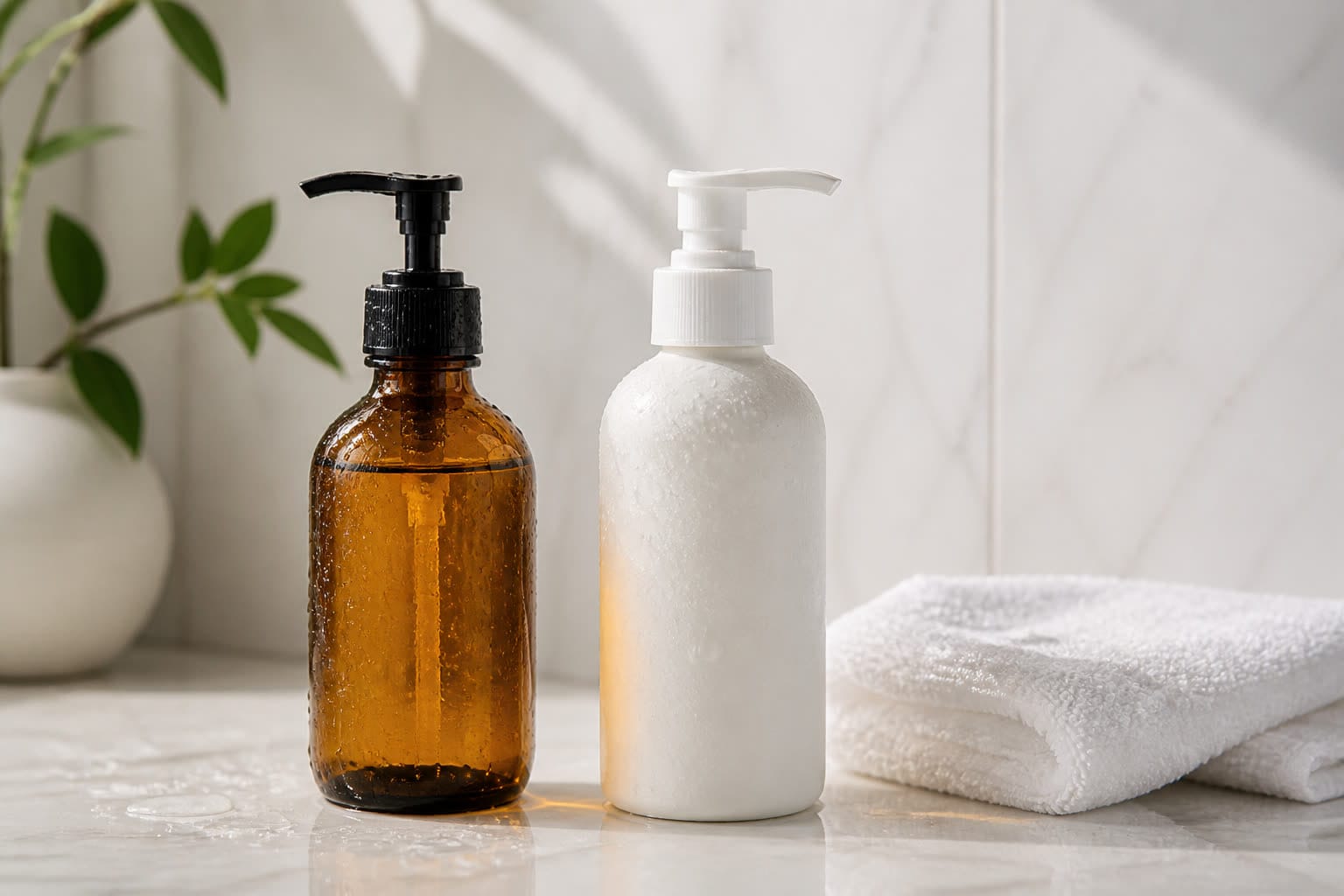
Double cleansing is the K-beauty habit that made it into every Western routine video, usually demonstrated with a seven-step ritual and two expensive bottles. The actual method is simpler than that, and you don't always need it.
It's two cleansers, used in a specific order: an oil or balm first to dissolve makeup, sunscreen and sebum, then a water-based cleanser to wash off the rest. That's the whole trick. Here's how to do it properly, which products are worth buying in the UK, and when you can skip it without your skin falling apart.
What double cleansing actually is
Oil dissolves oil. Makeup, most sunscreens and the sebum sitting in your pores are oil-based, so a water-only or foaming cleanser leaves a film behind, especially if you've worn SPF or foundation. An oil cleanser grabs that film. A second, water-based cleanser then removes sweat, pollution and whatever the oil loosened.
That's why the order matters. Oil first, on dry skin. Water-based second. Reverse it and you're just washing your face twice with the wrong tools.
It's a Korean method, and it's one of the few K-beauty ideas worth copying wholesale, alongside the "more hydration, less stripping" philosophy we covered in why Korean skincare is so effective. It is not a ten-step routine. It is two products at night.
Who actually needs to double cleanse
Do it at night if you wear sunscreen, makeup, or both. Modern sunscreens, especially water-resistant and hybrid formulas, are designed not to rinse off in the rain. That's the point of them, and it's also why a single foaming cleanser often leaves your face looking clean and still slightly waxy. If you wear SPF every day, which you should, an evening double cleanse is the most reliable way to get it off.
Do it if you wear long-wear makeup, waterproof mascara or tinted SPF. An oil or balm is simply better at this than micellar water rubbed with a cotton pad, which tends to smear rather than dissolve.
Oily and acne-prone skin often benefits, because leftover sunscreen and sebum sitting in pores overnight is a decent way to wake up more congested. Just keep both cleansers gentle. Stripping oily skin makes it oilier.
When you can skip it
Mornings. You do not need to double cleanse in the morning. Overnight you've produced some sebum and maybe a bit of sweat. A single gentle cleanser, or even lukewarm water if your skin is dry, is enough. Save the two-step for the evening.
If you haven't worn SPF or makeup. A day indoors with no sunscreen is a single-cleanse day. Double cleansing dry or sensitive skin when you don't need to is how people end up in our over-exfoliation and barrier repair articles.
If your skin is currently irritated, flaky or stinging. One cream cleanser, once a day, until things calm down. You can come back to the oil step later.
The test is simple: is there something oil-based on your face that water won't shift? If yes, double cleanse. If no, don't.
How to double cleanse, step by step
1. Start with a dry face
Don't wet your skin first. Oil cleansers work better on dry skin, because water gets in the way of the oil grabbing makeup and SPF.
2. Oil or balm, 30 to 60 seconds
Pump a 20p-sized amount of oil, or a small scoop of balm, into your hands. Rub to warm it, then massage over the whole face, including the hairline, sides of the nose and under the jaw. Spend a little longer on mascara, tinted SPF and the T-zone.
You're not scrubbing. If you feel you need to tug at makeup, you need more product or a few more seconds, not more pressure.
3. Emulsify, then rinse
Add a little water and keep massaging. A good oil cleanser will turn milky; a balm will melt into a light milk. That's the emulsifiers doing their job, and it's what stops a greasy film being left behind. Rinse thoroughly with lukewarm water.
4. Water-based cleanser second
Now wash as you normally would, with a gentle gel, cream or foam cleanser. This removes the oil residue plus sweat and dirt. Rinse, pat dry, and go into the rest of your evening routine.
The second cleanse should take about as long as a normal wash. If your face feels tight or squeaky afterwards, the second cleanser is too harsh, not the method.
Which products to buy
You need two things that don't fight each other: an oil or balm that rinses clean, and a second cleanser that doesn't strip.
Oil / balm (first cleanse)
- Banila Co Clean It Zero Original (around £15–£20) is the balm most people should start with. It melts makeup and SPF, rinses without a film, and is widely available in the UK. There's a more soothing version if you're sensitive.
- The Inkey List Oat Cleansing Balm is the cheaper, fragrance-conscious alternative, and a good pick if your skin is reactive.
- DHC Deep Cleansing Oil still works, with the caveat that it contains olive oil and fragrance, so skip it if you're congestion-prone or sensitive.
- Clinique Take The Day Off is the dermatologist-y option: unscented, effective on stubborn makeup, a bit more expensive.
Water-based (second cleanse)
- CeraVe Hydrating Cleanser if your skin is dry or normal.
- CeraVe Foaming Cleanser or a gentle gel if you're oily, as long as it doesn't leave you tight.
- Whatever mild cleanser you already like is fine. The first step is doing the heavy lifting.
You do not need a "double cleanse set". Any decent oil plus any decent gentle cleanser is the method. There's a longer list of UK-available options in our Korean skincare round-up.
Mistakes that make double cleansing worse
Using it twice a day. Night only, unless you've somehow worn a full face of SPF to breakfast.
A harsh second cleanser. If you strip the skin after dissolving the oil, you've cancelled the benefit and added irritation. Cream or gentle gel, not a squeaky-clean foam.
Skipping the emulsify step. If you rinse oil off without adding water first, you'll leave a residue that then clogs, which is the opposite of the point.
Treating it as exfoliation. Double cleansing is removal, not treatment. No scrubby particles, no acid cleanser as the second step every night. If you use a salicylic acid cleanser, keep it to a few evenings a week, not as your dedicated second cleanse.
Micellar water as a substitute for the oil step, then not rinsing. Micellar can take off light makeup, but most formulas want a rinse, and they don't replace a proper oil cleanser on sunscreen days.
The verdict
Double cleansing is a boring, effective way to get sunscreen and makeup off without scrubbing. Do it at night when you've worn SPF or makeup. Skip it in the morning, and skip it on days there's nothing oily to remove.
Two gentle products, a minute each. That's the routine. Everything beyond that is marketing.
FAQs
Do I need to double cleanse every day?
Only on days you've worn sunscreen or makeup. For most people that's every evening. You don't need to do it in the morning, and you don't need to do it if you've been indoors with a bare face.
Can double cleansing cause dryness?
Yes, if either cleanser is too harsh, or you do it twice a day. Keep the oil rinse-friendly and the second cleanser gentle, and stop if your skin starts feeling tight or looks flaky.
What is the best oil cleanser?
The best one is the one that rinses clean and doesn't clog you. Banila Co Clean It Zero and The Inkey List Oat Cleansing Balm are the two I'd start with in the UK. Fragrance-heavy olive oil cleansers are the ones I'd skip if you're breakout-prone.
Should I double cleanse in the morning?
No. Morning skin has overnight sebum, not SPF and makeup. One gentle cleanser, or water if you're dry, is enough.
Does double cleansing remove sunscreen?
That's the main reason to do it. An oil or balm on dry skin, emulsified and rinsed, then a water-based cleanser, is more reliable than a single wash for modern sunscreens.
Can I double cleanse if I have acne?
Yes, and it can help, because leftover SPF and makeup sitting in pores overnight doesn't do acne any favours. Use a non-comedogenic balm and a gentle second cleanser, not a harsh acne wash twice. Treatment products belong after cleansing, not in place of it. Our minimal acne routine covers what to put on afterwards.