
It's easy to build up a decent collection of skincare products. The confusing part is the order they should go on your face, because layering them wrongly is one of the quietest ways to waste money: a heavy cream applied too early can block the serum underneath from absorbing at all.
The golden rule is simple: thinnest to thickest. Watery formulas first, creams and oils last, SPF on top in the morning. Everything below is that rule applied step by step, with the exceptions worth knowing.
The correct order to layer skincare
Morning: cleanser, toner (optional), vitamin C serum, water-based serums, eye cream, moisturiser, SPF.
Night: cleanser, toner (optional), treatment serums or retinol, eye cream, moisturiser, face oil last if you use one.
That's the quick answer. Here's the reasoning behind each step, because knowing why makes it much easier to slot your own products in.
Step 1: Cleanser
Bit of a no-brainer. Cleansing comes before absolutely anything else, clearing away the dirt, oil and sunscreen residue that would otherwise sit between your skin and your products. Clean skin absorbs better, full stop.
Use a non-comedogenic cleanser (one that won't clog pores), and if you wear makeup or SPF, a proper cleanse at night matters more than any serum you'll apply afterwards. That usually means double cleansing: an oil or balm first, then your regular cleanser.
Step 2: Toner (optional)
If you use a toner, it goes immediately after cleansing, while it's the thinnest thing in your routine. Modern toners are really delivery systems for actives: a glycolic acid toner like The Ordinary's 7% Toning Solution exfoliates, a hydrating toner preps drier skin for what follows.
We say optional deliberately. If your toner isn't doing a specific job, you can drop the step entirely, and avoid anything with simple alcohols high on the ingredients list, which dry the skin out with regular use.
Step 3: Serums, thinnest first
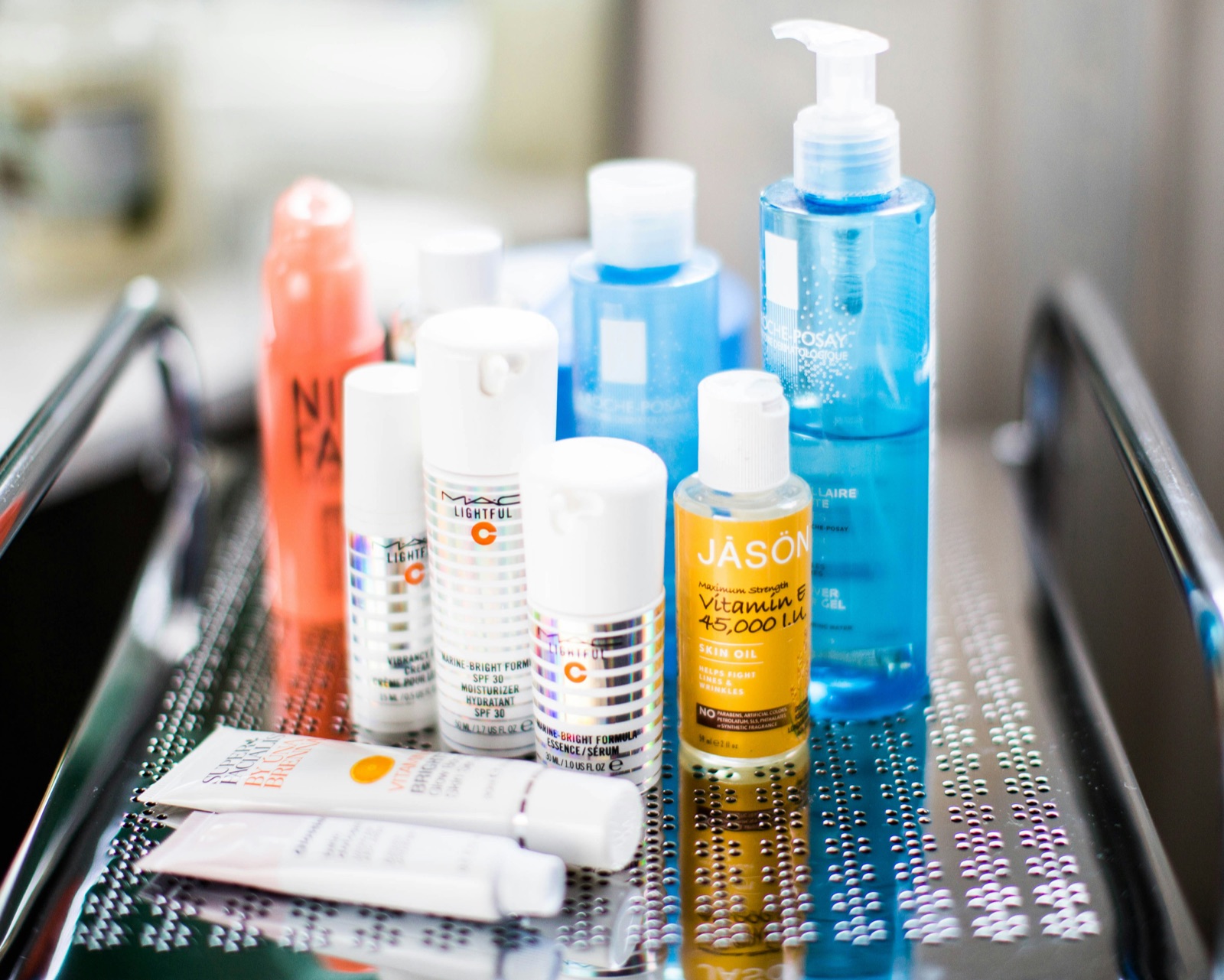
Serums carry your active ingredients: niacinamide for oil control, salicylic acid for congestion, hyaluronic acid for hydration. They go on before anything creamy, and if you use more than one, the thinnest goes first.
Two practical rules:
- Water-based serums (most niacinamide, glycolic and salicylic formulas) go on first.
- Follow with hyaluronic acid to put hydration back, since exfoliating acids can be drying. Apply it to slightly damp skin, which is the trick that makes hyaluronic acid actually work.
Oil-based serums are the exception: oil sits on top of the skin and blocks water-based products from absorbing through it, so anything in an oil base always goes after your water-based layers. If you're not sure what base a serum has, check the first few ingredients: "aqua" means water-based, squalane or another oil near the top means it goes later.
One warning while you're stacking serums: more isn't better, and some actives genuinely clash. We've covered the ingredients you should never mix separately.
Step 4: Vitamin C, in the morning
Vitamin C is an antioxidant that neutralises the free radical damage your skin picks up during the day, which is exactly why it belongs in your morning routine, layered under SPF. It brightens tone, softens dark spots and supports collagen.
Keep it away from your exfoliating acids in the same session. It's not that they cancel each other out, it's that stacking a low-pH vitamin C with an AHA or BHA raises the odds of irritation considerably. Acids at night, vitamin C in the morning is the easy split.
Step 5: Retinol, at night
Retinol is your evening treatment: it degrades in sunlight and increases sun sensitivity, so night-time use is non-negotiable. It boosts collagen production and cell turnover, which is why it remains the gold standard for fine lines and wrinkles.
Apply it to fully dry skin after cleansing, before moisturiser. If you're new to it, start two nights a week and buffer it by applying moisturiser first, which slows absorption and softens the adjustment period. And don't run retinol and strong acids on the same night; alternate them instead.
Step 6: Eye cream
Eye cream follows the thin-to-thick rule like everything else: if it's lighter than your moisturiser, it goes before; if it's richer, it goes after. Most are lighter, so before is the usual answer. A small amount patted (never rubbed) around the orbital bone is plenty, and it can help with puffiness and dark circles over time.
Step 7: Moisturiser
Moisturiser is the seal on everything underneath. It hydrates, and just as importantly it reduces transepidermal water loss, the constant evaporation of moisture from your skin into the air. Applied over your serums, it locks them in and stops them evaporating before they've done their job.
Yes, oily skin still needs this step. Skipping moisturiser tells oily skin to produce even more oil; a light gel formula is the answer, not going without.
Step 8: SPF, every morning, always last
Sunscreen is the final layer of every morning routine, no exceptions. SPF 30+ protects against the UVA and UVB damage that drives premature aging, and it's especially important on days you've used acids, retinol or vitamin C, all of which increase sun sensitivity.
SPF goes over moisturiser, under makeup. Don't mix it into your moisturiser to save a step; diluting it dilutes the protection.
Do you need to wait between layers?
Mostly no. A rough guide: give each layer 30 to 60 seconds to settle, or simply apply the next step once the previous one no longer feels wet. The two exceptions worth respecting are retinol (dry skin first, so a minute or two after cleansing) and SPF (give it a couple of minutes to form an even film before makeup).
Frequently asked questions
What order should I apply skincare products?
Thinnest to thickest: cleanser, toner, water-based serums, eye cream, moisturiser, then SPF in the morning or face oil at night. Vitamin C belongs in the morning routine, retinol at night.
Does the order of skincare really matter?
Yes. Thick, occlusive products form a film the thinner products can't penetrate, so a serum applied over moisturiser largely sits on top doing nothing. Order is the difference between paying for actives and actually getting them into your skin.
Can I layer retinol and vitamin C?
Not in the same session if you can avoid it; the combination is more irritating than either alone. The standard split works perfectly: vitamin C in the morning under SPF, retinol at night.
How many serums can I layer at once?
Two is a sensible ceiling for most people, three at the absolute most. Beyond that you're diluting each one, raising irritation risk and making it impossible to tell what's working. Pick serums for your top one or two concerns and be consistent instead.
To sum it up
Thin to thick, water before oil, vitamin C in the morning, retinol at night, SPF last every single day. Get the order right and every product in your routine finally earns its keep.