Obviously Skincare
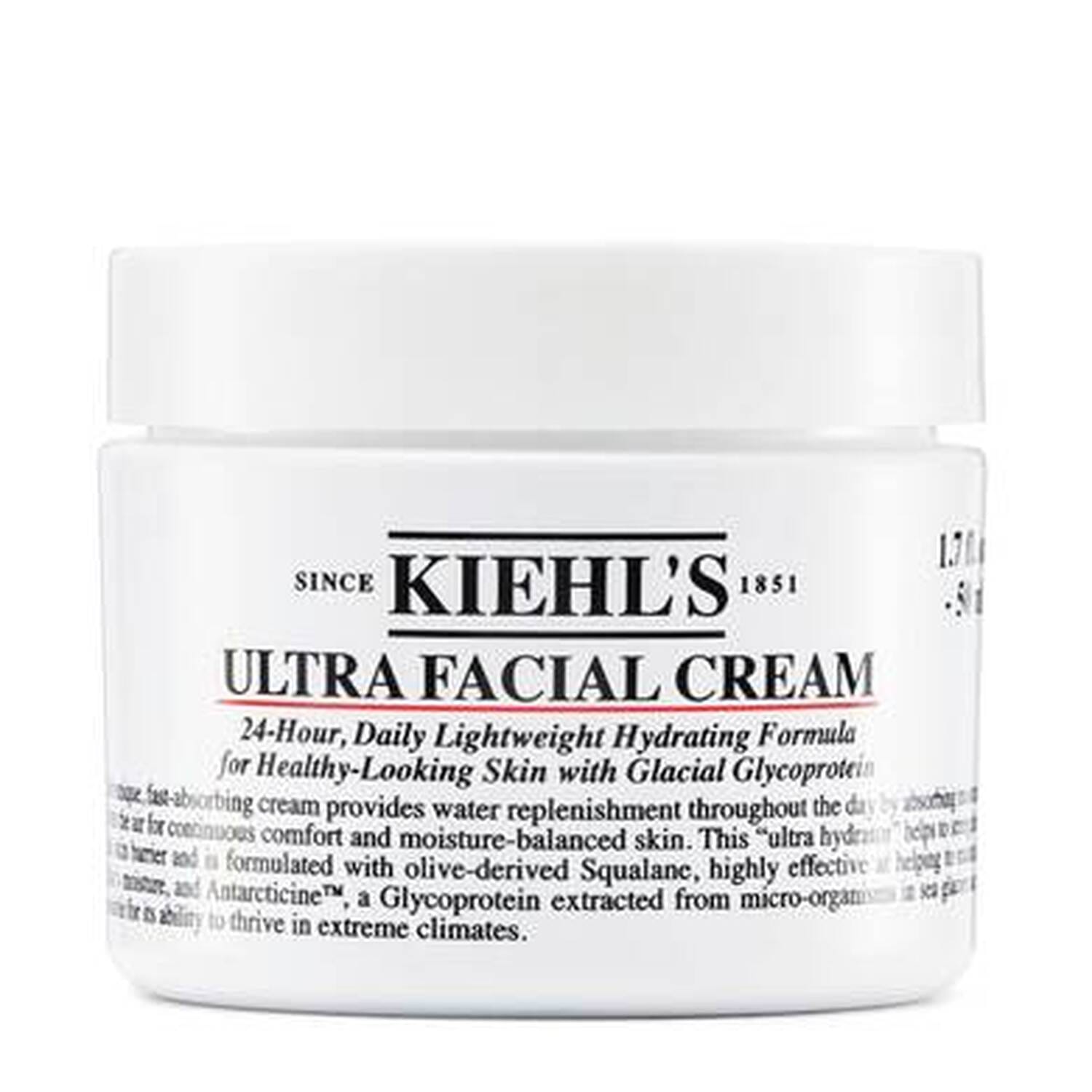
Kiehl's Ultra Facial Cream is a light, everyday moisturiser that suits most skin types. It's comfortable, layers well over serums, and our tester's skin never broke out with it. It isn't doing anything a well-made pharmacy moisturiser can't, so whether it's worth the price comes down to how much you like the texture.
We used it daily for over a year. Here's what's in it, how it held up, and how it compares with cheaper options.
Quick verdict
| What it is | A light, everyday face cream |
| Key ingredients | Glycerin, squalane, plant oils, a silicone for slip |
| Best for | Normal, combination and mildly dry skin; layering over actives |
| Not ideal for | Very dry or eczema-prone skin; tight budgets; tree nut sensitivity |
| Fragrance | No added fragrance |
| Price | Premium compared with pharmacy moisturisers |
| Also available | An SPF 30 version, an oil-free gel-cream, and refill pouches |
What's in it
The full ingredients list, from a UK retailer in November 2026:
Aqua/Water, Glycerin, Cyclohexasiloxane, Squalane, Bis-PEG-18 Methyl Ether Dimethyl Silane, Sucrose Stearate, Stearyl Alcohol, PEG-8 Stearate, Myristyl Myristate, Pentaerythrityl Tetraethylhexanoate, Prunus Armeniaca Kernel Oil/Apricot Kernel Oil, Phenoxyethanol, Persea Gratissima Oil/Avocado Oil, Glyceryl Stearate, Cetyl Alcohol, Oryza Sativa Bran Oil/Rice Bran Oil, Olea Europaea Fruit Oil/Olive Fruit Oil, Chlorphenesin, Stearic Acid, Palmitic Acid, Disodium EDTA, Acrylates/C10-30 Alkyl Acrylate Crosspolymer, Carbomer, Prunus Amygdalus Dulcis Oil/Sweet Almond Oil, Xanthan Gum, Ethylhexylglycerin, Sodium Hydroxide, Tocopherol, Glycine Soja Oil/Soybean Oil, Pseudoalteromonas Ferment Extract, Myristic Acid, Hydroxypalmitoyl Sphinganine, BHT, Salicylic Acid, Citric Acid
| Ingredient | What it does | Notes |
|---|---|---|
| Glycerin | Humectant that draws water into the skin | The main hydrator, and one of the best-studied moisturising ingredients |
| Cyclohexasiloxane | Volatile silicone | Gives the light, fast-absorbing feel, then evaporates. See silicones in skincare. |
| Squalane | Light, stable oil similar to the skin's own | Softens without greasiness. See squalane. |
| Stearyl, cetyl alcohol, fatty acids | Emollients and thickeners | Moisturising, not drying |
| Apricot kernel, avocado, rice bran, olive, sweet almond, soybean oils | Plant oils | Small amounts; add richness. Contain nut oils. |
| Pseudoalteromonas ferment extract | Kiehl's "glacial glycoprotein" | A marine bacterial ferment marketed for moisture retention; little independent evidence |
| Hydroxypalmitoyl sphinganine | A ceramide-related lipid | Small amount |
| Tocopherol | Vitamin E | Antioxidant, mostly protecting the oils |
| Salicylic acid | BHA | Very low in the list; likely a tiny amount, not enough to exfoliate |
Paste it into our ingredients list checker for the full breakdown.
What this tells you: it's a well-made, conventional moisturiser. The ingredients doing most of the work, glycerin, squalane and emollients, are the same ones you'll find in many cheaper creams. Moisturisers like this work by drawing water in and slowing its escape, which helps the skin barrier.
Free toolSkincare cost-per-use calculatorCompare what two products really cost per use.Open the cost-per-use calculator →Our tester's year with it
Our tester has combination skin: oily on the T-zone, drier on the cheeks.
| Timeframe | What happened |
|---|---|
| First use | Very light, sinks in quickly. Moisturised the cheeks without feeling heavy on the nose and forehead. |
| After four weeks | No dry patches, and it sat well over every serum we used with it, without pilling. That's rarer than it should be. |
| After six months | Still comfortable through winter, though on cold, windy days the cheeks needed a little extra at night. |
| After a year | Still our default moisturiser. Light enough in summer. Combined with a niacinamide serum, our tester's skin felt more balanced: less oily in the T-zone, less dry on the cheeks. |
What it didn't do: anything beyond moisturising. That's fine, as that's its job. It didn't clog our tester's pores, though individual reactions vary.
Who it suits
Good for:
- Normal, combination and mildly dry skin.
- Oily skin that wants a light cream rather than a gel.
- Anyone who wants a moisturiser that layers well over actives like retinol, vitamin C or niacinamide.
- Use under makeup.
Less good for:
- Very dry or eczema-prone skin. It's too light on its own. See the best moisturisers for dry skin, or use it under a richer balm at night.
- Very sensitive skin that reacts to plant oils. Patch test first. See patch testing.
- People with tree nut or soy allergies. It contains sweet almond, apricot kernel and soybean oils. Refined oils are unlikely to cause reactions, but check with your doctor if you have a severe allergy.
- Tight budgets. Pharmacy creams do the same core job for less.
How to use it
- Cleanse.
- Apply any serums or treatments.
- Smooth a fingertip-sized amount over face and neck.
- In the morning, follow with sunscreen.
It works under makeup and over retinoids. At night, dry skin can add a few drops of squalane or a thin layer of balm on top.
What about the SPF 30 version?
There's an Ultra Facial Cream with SPF 30. It's convenient, but a dedicated sunscreen usually gives better protection, because few people apply enough moisturiser to get the SPF on the label. You'd need about half a teaspoon for the face and neck. See how much sunscreen to use and why SPF matters.
How it compares
| Kiehl's Ultra Facial Cream | CeraVe Daily Moisturising Lotion | La Roche-Posay Toleriane Double Repair Moisturiser | |
|---|---|---|---|
| Texture | Light cream | Light lotion | Light cream |
| Key ingredients | Glycerin, squalane, plant oils | Ceramides, hyaluronic acid, glycerin | Ceramide-3, niacinamide, glycerin |
| Fragrance | None added | None | None |
| Plant oils | Yes, including nut oils | No | No |
| Best for | Combination, normal skin who like the feel | Most skin types on a budget | Sensitive skin |
| Price | Premium | Budget | Mid-range |
For oily skin, see the best moisturisers for oily skin. For a broader comparison, see CeraVe vs La Roche-Posay.
Is it worth the money?
If you love the texture and it suits your skin, yes, and a 50ml jar lasts a long time at a fingertip a day. Refill pouches cut the cost and packaging. If you're buying it expecting better results than a cheaper moisturiser, no. What you pay extra for is feel and finish, not a stronger effect.
Verdict
A well-made, pleasant, light moisturiser that layers beautifully. It does the moisturiser job well, but no better than good pharmacy alternatives. Buy it for the texture, not for miracles.
References
- Lodén M. Role of topical emollients and moisturizers in the treatment of dry skin barrier disorders. Am J Clin Dermatol. 2003;4(11):771-88. (https://pubmed.ncbi.nlm.nih.gov/14572299/)
- Draelos ZD, DiNardo JC. A re-evaluation of the comedogenicity concept. J Am Acad Dermatol. 2006;54(3):507-12. (https://pubmed.ncbi.nlm.nih.gov/16488305/)
FAQs
Is Kiehl's Ultra Facial Cream good for oily skin?
Is Kiehl's Ultra Facial Cream good for dry skin?
For mildly dry skin, yes. Very dry skin will need something richer.
Does Kiehl's Ultra Facial Cream clog pores?
It didn't clog our tester's, and it's marketed as non-comedogenic. Individual reactions vary.
Can I use it under makeup?
Yes. It sinks in quickly and doesn't pill.
Does Kiehl's Ultra Facial Cream have fragrance?
No added fragrance is listed.
Can I use it with retinol?
Yes. It's a good moisturiser to use after a retinoid.
Is the Ultra Facial Cream SPF 30 enough sun protection?
Only if you apply a generous amount. A separate sunscreen is more reliable.