Obviously Skincare
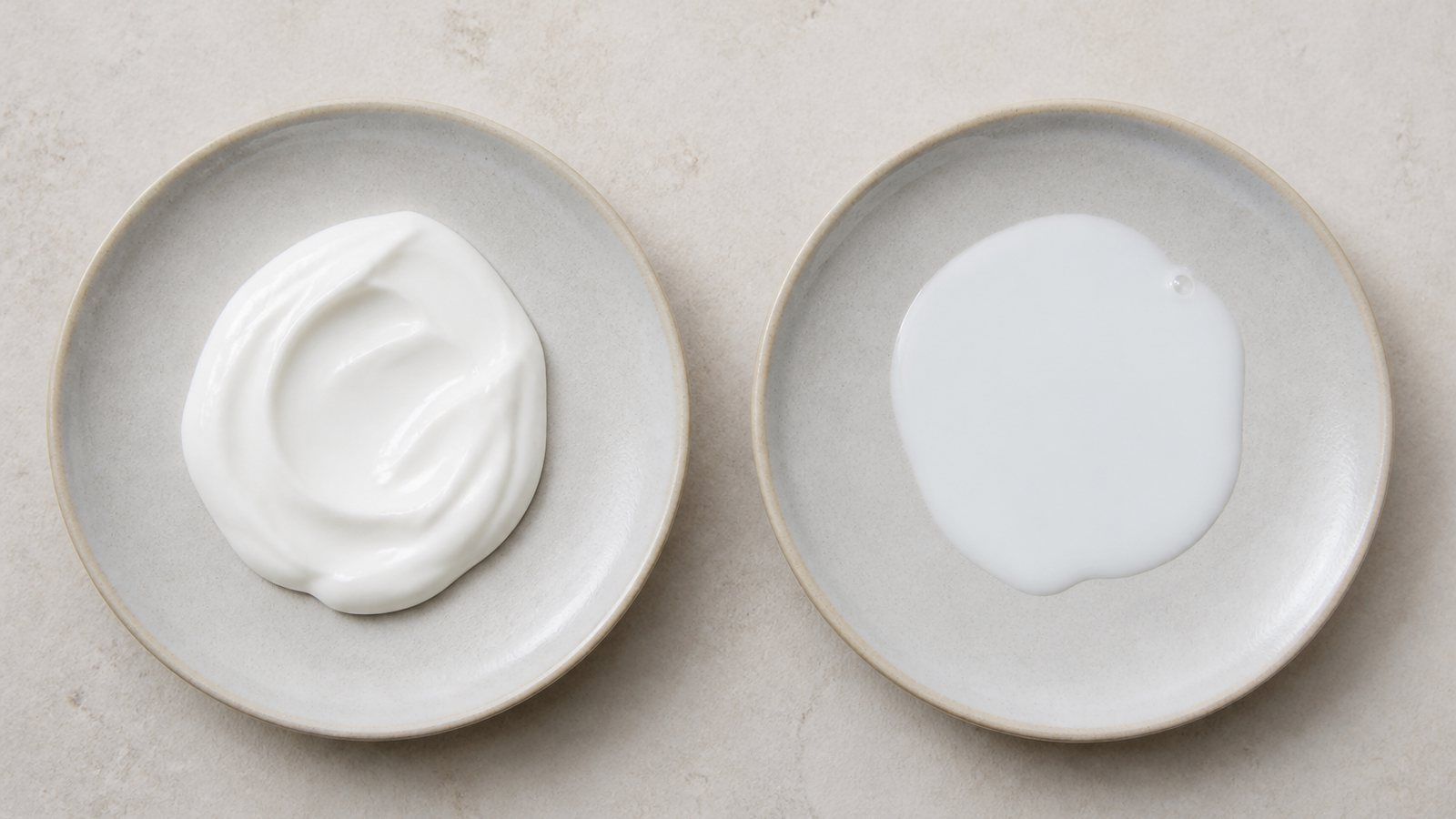
The difference between a gel and a cream moisturiser is oil. Gels are mostly water and humectants: they add hydration and feel weightless. Creams contain more oils and waxes: they add hydration and also seal it in. Oily skin generally does better with a gel, dry skin with a cream, and many people need one in summer and the other in winter.
At a glance
| Gel | Gel-cream | Lotion | Cream | |
|---|---|---|---|---|
| Base | Water | Water with a little oil | Water with some oil | More oil; richer |
| Feel | Weightless, cooling | Light, slightly cushioned | Light, fluid | Rich, comforting |
| Finish | Matte to natural | Natural | Natural | Dewy |
| Adds water (humectants) | Yes | Yes | Yes | Yes |
| Seals water in (occlusives) | Very little | Some | Moderate | Yes |
| Best for | Oily, acne-prone | Combination, normal | Normal, slightly dry | Dry, mature, sensitive |
| Best season | Summer; humid weather | Year-round | Year-round | Winter; dry air |
What a moisturiser has to do
Skin needs three kinds of ingredient to stay hydrated:
- Humectants draw water into the outer layer: glycerin, hyaluronic acid, urea, panthenol.
- Emollients fill the gaps between skin cells and make skin feel smooth: squalane, fatty alcohols, plant oils, ceramides.
- Occlusives form a film that slows water evaporating from the skin: petrolatum, dimethicone, shea butter, waxes.
A gel is mostly the first. A cream has all three. That's the whole difference, and it tells you which you need.
Free toolSkincare ingredient checkerCheck whether two ingredients can be used together.Open the ingredient checker →Gel moisturisers
How they work: a water base, thickened into a gel, loaded with humectants. Some contain a small amount of silicone to give a little hold.
Good for
- Oily skin, which makes its own oil and needs water, not more oil
- Acne-prone skin; gels are less likely to feel heavy or contribute to congestion
- Hot, humid weather
- Under sunscreen and makeup, where they don't pill or slide
- People who dislike the feel of cream
Limits
- In dry air, without something to seal it, the water a gel provides can evaporate, leaving skin tight again within hours.
- Not enough alone for dry skin or a damaged barrier.
- Some gels contain alcohol for a quick-drying feel. Avoid those if your skin is sensitive.
Cream moisturisers
How they work: an emulsion of water and oil, with humectants, emollients and occlusives. The richer the cream, the more oil and wax.
Good for
- Dry skin, which lacks oil
- Mature skin, which produces less oil
- Sensitive skin and damaged barriers; creams with ceramides help rebuild
- Cold weather and central heating
- Night-time
- Skin dried out by retinoids or acne treatment
Limits
- Can feel heavy or greasy on oily skin
- Rich creams may contribute to breakouts in acne-prone skin
- Can make sunscreen and makeup slide in hot weather
The in-between: gel-creams and lotions
Most people aren't purely oily or dry, and neither are most moisturisers. A gel-cream has a gel's lightness with some emollients. A lotion is a thinner cream. For combination skin and for normal skin, these middle textures are usually the best fit.
By skin type
- Oily: gel. Look for niacinamide and glycerin.
- Acne-prone: gel or gel-cream, labelled non-comedogenic. See non-comedogenic.
- Combination: gel-cream or lotion. Or a gel all over with a cream on the dry areas.
- Normal: lotion or gel-cream; a cream in winter.
- Dry: cream, with ceramides, shea butter or squalane.
- Dehydrated but oily: a gel with plenty of humectants. See dry vs dehydrated skin.
- Sensitive: a fragrance-free cream or lotion with ceramides.
- Mature: cream.
- Eczema-prone: a rich cream or ointment. Gels won't do enough.
Not sure which you are? Take the skin type quiz.
Switching with the seasons
Skin loses more water in cold, dry air and under central heating, and produces more oil in heat and humidity. It's normal to need:
- A lighter texture in summer: cream to lotion, lotion to gel.
- A richer one in winter: gel to gel-cream, lotion to cream.
The same applies when you travel, and when you start a drying treatment such as a retinoid.
Using both
- Gel in the morning, cream at night. A light layer under sunscreen and makeup, a richer one overnight.
- Zoning. Gel on the T-zone, cream on the cheeks.
- Layering. A hydrating gel first, a thin layer of cream on top to seal it. Useful for dehydrated skin in winter.
How to tell you've chosen wrong
| Sign | Meaning | Change |
|---|---|---|
| Tight or flaky a few hours after applying | Too light | Move to a gel-cream, lotion or cream |
| Shiny, greasy or congested | Too rich | Move to a lighter texture |
| Makeup slides or pills | Too rich, or too much product | Lighter texture; use less |
| Stinging | An ingredient doesn't suit you | Switch to fragrance-free, alcohol-free |
| Fine in summer, tight in winter | Seasonal change | Go one step richer |
Does oily skin need moisturiser at all?
Yes. Oil isn't water. Oily skin can be dehydrated, particularly when it's being treated with drying acne products or washed too often. A light gel keeps the barrier in good order, and skin that isn't stripped tends to behave better. See the best moisturiser for oily skin.
Reading the label
Texture names aren't regulated. "Water cream", "aqua gel", "hydro boost", "sorbet" and "emulsion" are marketing. Check the first five or six ingredients:
- Water, glycerin, humectants, a thickener: a gel.
- Water plus oils, butters or fatty alcohols near the top: a cream.
- Dimethicone high up: a silky, light feel with some sealing ability.
For product suggestions, see the best moisturisers for dry skin and why ceramides matter.
References
Verdier-Sévrain S, Bonté F. Skin hydration: a review on its molecular mechanisms. J Cosmet Dermatol. 2007;6(2):75-82. (https://pubmed.ncbi.nlm.nih.gov/17524122/)
FAQs
Is gel or cream moisturiser better?
Is gel moisturiser good for dry skin?
Is gel moisturiser better for acne?
Usually. It's lighter and less likely to feel heavy on spot-prone skin.
Can I use a gel in the morning and a cream at night?
Yes. That's a common and sensible approach.
What is a gel-cream?
A hybrid: lighter than a cream, with more emollients than a gel. It suits combination and normal skin.
Should I change my moisturiser in winter?
If your skin feels tight or flaky, yes. Go one step richer.