

If you want a skincare routine that works but don't want it to take over your bathroom shelf, this is the guide. Four steps, a few minutes a day, and it covers everything male skin actually needs. I'll also explain how men's skin genuinely differs from women's (there's real science here, not marketing), and cover the thing most men's skincare articles inexplicably skip: shaving, which for a lot of men causes more skin problems than anything else.
Do men need different skincare products?
Short answer: no, not really. Skin is skin. A good cleanser, moisturiser or sunscreen works the same on a man's face as a woman's. The "for men" label on a black bottle usually means a different fragrance and a higher price, not a different formula.
What men do have is a different starting point. Male skin is on average thicker, oilier and more collagen-dense, and most men shave their face several times a week, which is essentially daily exfoliation whether you intend it or not. So while you don't need men's products, it makes sense to choose products suited to oilier, frequently shaved skin. That's what the routine below does.
How men's skin actually differs
This part is worth understanding because it explains why the routine is built the way it is.
Male skin is thicker. Measurements comparing male and female skin show men's skin is thicker across the face and body, by up to around 25%, with the biggest differences around the neck and lower cheek (Bailey et al., 2012). Thicker skin is more resilient and shows fine lines slightly later.
Male skin produces more oil. Androgens, primarily testosterone, drive the sebaceous glands. Research going back to Pochi and Strauss (1974) shows men produce more sebum and have larger pores than women, and a comprehensive review by Rahrovan et al. (2018) confirms the pattern across studies. More sebum means a natural moisture advantage, but also a greater tendency towards shine, clogged pores and breakouts, which is why acne often runs longer and harder in men.
Male skin has higher collagen density. Collagen is the protein that gives skin its structure and bounce, and men start with more of it per unit of skin. Combined with the extra oil, this is why men often age more gradually, at least in theory.
In practice, the theoretical advantage gets squandered. Men are far less likely to wear sunscreen, and UV exposure is the single biggest driver of visible ageing. Thicker, oilier skin doesn't protect you from sun damage. Which brings us to the routine.
The 4-step skincare routine for men
Morning: steps 1, 3 and 4. Evening: steps 1, 2 and 3. Total time, maybe three minutes.
Step 1: Cleanse
Wash your face twice a day, morning and evening, with an actual cleanser rather than a bar of soap or whatever's in the shower. Soap and body wash are too alkaline for facial skin and strip it, which paradoxically makes oily skin produce even more oil.
Because male skin tends towards oiliness, a gel or foaming cleanser usually suits best. It should remove oil and grime without leaving your face feeling tight or squeaky. Something like Cetaphil's gentle cleanser is a reliable, cheap starting point that works for almost everyone. Use lukewarm water, not hot; hot water strips your skin and leaves it tight and irritated.
Step 2: Treat (serum)
This is the optional step, and the one you add once the basics are habit. A serum is a lightweight product applied after cleansing that delivers a concentrated active ingredient to target a specific problem:
- Breakouts and clogged pores: salicylic acid, a few nights a week. It gets inside the pore and clears it out, and it doubles as your shave-bump treatment (more on that below).
- Oiliness, visible pores, redness: niacinamide regulates sebum and calms skin, and it's gentle enough for daily use.
- Ageing concerns: retinol at night is the best-evidenced ingredient there is for fine lines. Start low and slow.
If you're not sure where to begin, our guide to skincare serums walks through the options. But to be clear: cleanse, moisturise and SPF done consistently will do more for your skin than any serum done sporadically.
Step 3: Moisturise
Even oily skin needs moisturiser. When skin gets dehydrated, the sebaceous glands compensate by producing more oil, so skipping this step often makes shine worse, not better. Moisturiser also keeps your skin barrier intact, which is what stops razor burn and irritation getting a foothold.
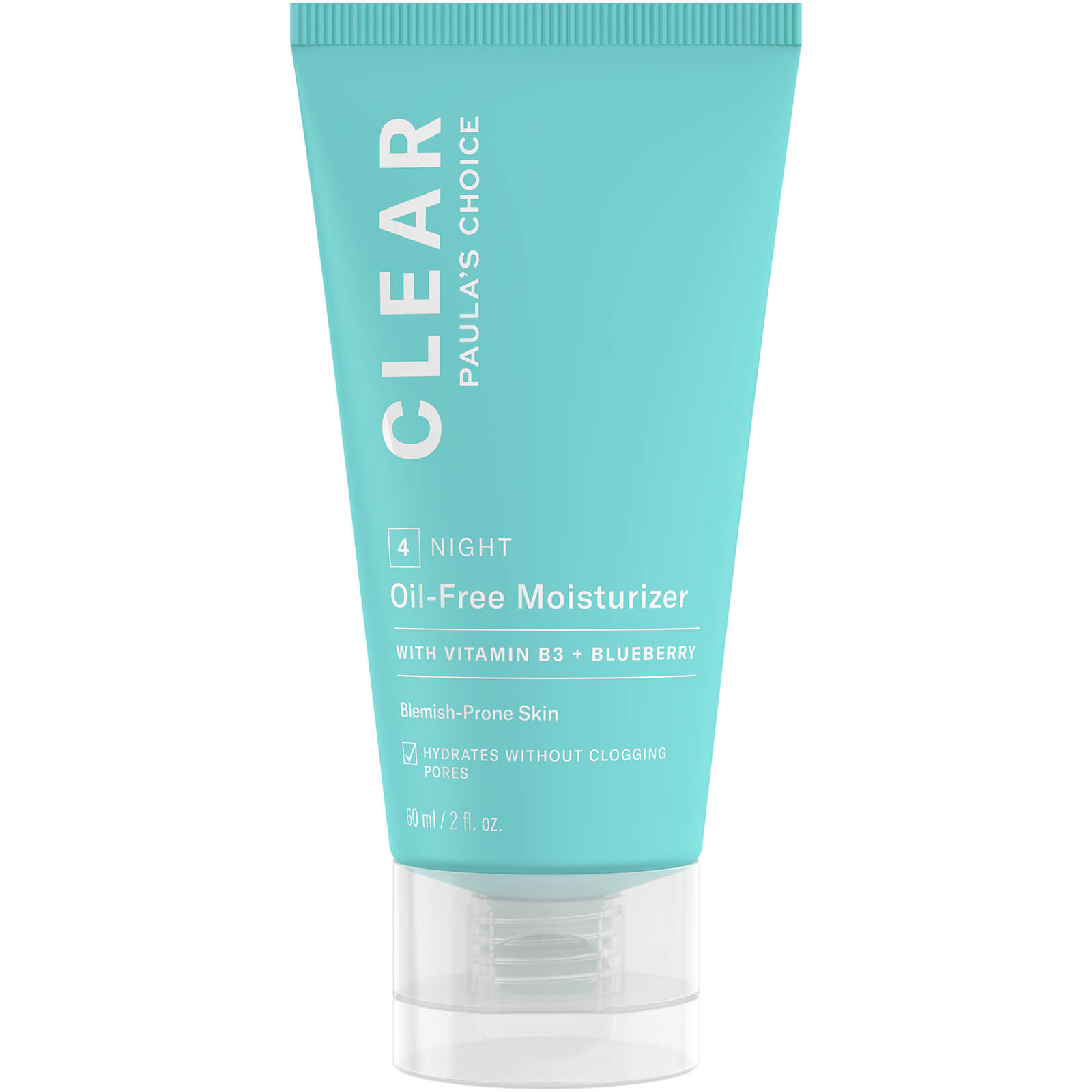
Pick something labelled oil-free and non-comedogenic (won't clog pores). Lightweight gel or lotion textures sink in fast and don't leave a film, which is usually the reason men abandon moisturiser after a week. Paula's Choice's oil-free moisturiser (pictured) is a good example: light, fast-absorbing, with niacinamide built in. Apply morning and evening to a just-cleansed face.
Step 4: Sunscreen
The step most men skip, and the one that matters most. UV radiation breaks down collagen and elastin, causes pigmentation and coarse texture, and drives skin cancer risk. All that natural collagen density men are born with counts for nothing against years of unprotected sun exposure. SPF is genuinely non-negotiable if you care how your skin looks in ten years.
Use a broad-spectrum SPF 30 or higher every morning, all year round, as the last step of your routine. Modern formulas are nothing like the greasy beach sunscreen you're imagining; there are excellent light options for oily skin that disappear on the face. If you truly want to minimise steps, a moisturiser with SPF 30+ can combine steps 3 and 4 in the morning, just apply it generously.
Shaving: the step most routines ignore
If you shave regularly, your razor affects your skin more than any product does. Every pass removes hair plus a thin layer of skin cells, which is why shaving areas are so often red, bumpy and irritated.
Razor burn is that hot, tight, red irritation right after shaving. It comes from too-aggressive technique: dull blades, dry skin, pressing too hard, going against the grain. Fixes: shave after a warm shower when the hair is soft, use a sharp blade and a proper shave cream or gel, shave with the grain, and moisturise immediately afterwards. If your skin is sensitive, an unscented balm rather than an alcohol-heavy aftershave, since alcohol-based products sting and dry the skin exactly when it's most vulnerable.
Ingrown hairs and shave bumps happen when a cut hair curls back and grows into the skin instead of out of it, creating an inflamed bump that looks like a spot. Men with coarse or curly hair get them worst. Prevention beats picking: don't shave too close (a very close shave leaves the hair tip below the skin surface), and use a chemical exfoliant two to three times a week. Salicylic acid is ideal here because it clears the dead skin trapping the hair and calms the inflammation at the same time. This is the one place a serum earns its spot in a minimal routine.
Whatever you do, don't dig ingrowns out with tweezers or squeeze the bumps; you'll trade a bump for a scar. The same logic applies as why you shouldn't pop pimples.
Common mistakes to avoid
- Using body soap on your face. It's too harsh, and it's usually the root cause of "my skin is oily and tight at the same time".
- Scrubbing hard. Aggressive physical scrubs plus daily shaving is a recipe for a wrecked barrier. If your skin is red, flaky and stings, you may already be over-exfoliating.
- Skipping SPF because it's cloudy. UVA penetrates cloud and glass, all year.
- Buying five products at once. Add one thing at a time so you know what works and what breaks you out.
Consistency is the whole game. The four steps take less time than making a coffee, and after a couple of weeks you won't think about them any more than brushing your teeth.
References
Bailey SH, Oni G, Brown SA, Kashefi N, et al. The use of non-invasive instruments in characterizing human facial and abdominal skin. Lasers Surg Med. 2012;44(2):131-142. doi:10.1002/lsm.21147
Rahrovan S, Fanian F, Mehryan P, Humbert P, Firooz A. Male versus female skin: What dermatologists and cosmeticians should know. Int J Womens Dermatol. 2018;4(3):122-130. doi:10.1016/j.ijwd.2018.03.002
Pochi PE, Strauss JS. Endocrinologic control of the development and activity of the human sebaceous gland. J Invest Dermatol. 1974;62(3):191-201. doi:10.1111/1523-1747.ep12676783
Frequently Asked Questions
Do men really need a skincare routine?
Yes, if you want your skin to look good and stay healthy, though it only needs to be a few minutes a day. Cleanser, moisturiser and daily SPF cover the essentials; everything else is optional refinement.
Are men's skincare products different from women's?
Mostly no. The formulas that work, cleansers, moisturisers, sunscreens and actives, work regardless of who's using them. "For men" branding usually just changes the fragrance and packaging, so buy based on your skin type, not the label.
What order should men apply skincare products?
Thinnest to thickest: cleanser first, then any serum, then moisturiser, then sunscreen in the morning. At night, drop the SPF and finish with moisturiser.
How do I stop razor bumps and ingrown hairs?
Shave with the grain using a sharp blade on warm, softened skin, and don't chase an ultra-close shave. Add a salicylic acid product two to three times a week to keep dead skin from trapping regrowing hairs, and moisturise straight after shaving.
Should men use anti-ageing products?
Daily sunscreen is the most effective anti-ageing product there is, so start there. Once that's a habit, retinol at night is the best-evidenced ingredient for fine lines and skin texture.