
Serums are where skincare stops being about cleanliness and starts being about results. They're also where most people waste the most money, because the market is enormous and the marketing is relentless. This guide cuts through it: what a serum actually is, what each of the major active ingredients genuinely does, who each one is for, and how to choose a single serum to start with rather than buying five.
I've rewritten this guide substantially since it first went up in 2020, most notably to add niacinamide, an ingredient I now consider one of the most useful in skincare and which the original version inexplicably left out.
What is a serum?
A serum is a lightweight, concentrated treatment designed to deliver active ingredients into the skin. It goes on after cleansing and before moisturiser, and its job is targeted: brightening, exfoliating, hydrating, or slowing visible ageing, depending on the active inside.
The concentration is the point. A moisturiser might contain a token amount of an ingredient; a serum is built around a meaningful dose of it. That's why serums produce results moisturisers can't, and also why they demand more respect: patch testing, gradual introduction, and not mixing the wrong ones together.
Here are the actives actually worth your money.
AHAs (glycolic and lactic acid): surface exfoliation and glow
Alpha hydroxy acids are water-soluble exfoliants that loosen the bonds holding dead cells to the surface of your skin. Shedding that dull outer layer is what produces the "glow" people chase: brighter tone, smoother texture, softened fine lines, and better absorption of everything applied afterwards. Glycolic acid is the strongest and most studied; lactic acid is the gentler, more hydrating option.
Who it's for: dullness, rough texture, uneven tone, and early signs of ageing. Lactic acid if you're on the sensitive side.
Cautions: AHAs increase sun sensitivity significantly, so daily SPF is mandatory. Start once or twice a week; overdoing acids is the fastest way to over-exfoliate and damage your skin.
Honest recommendation: The Ordinary Lactic Acid 10% + HA. Effective, cheap, and far more forgiving than a strong glycolic for a first acid.
BHA (salicylic acid): the pore-clearer
Where AHAs work on the surface, salicylic acid is oil-soluble, so it travels into the pore and exfoliates the lining from the inside. That makes it the single best active for blackheads, congestion and oily-skin breakouts. It's also mildly anti-inflammatory, so it calms red, angry spots while it clears them. I've compared the two acid families properly in AHA vs BHA: what are the differences.
Who it's for: oily and combination skin, blackheads, clogged pores, mild to moderate acne.
Cautions: drying if overused, and like all exfoliants it demands daily SPF. Avoid it on a damaged barrier, and stick to two or three uses a week initially.
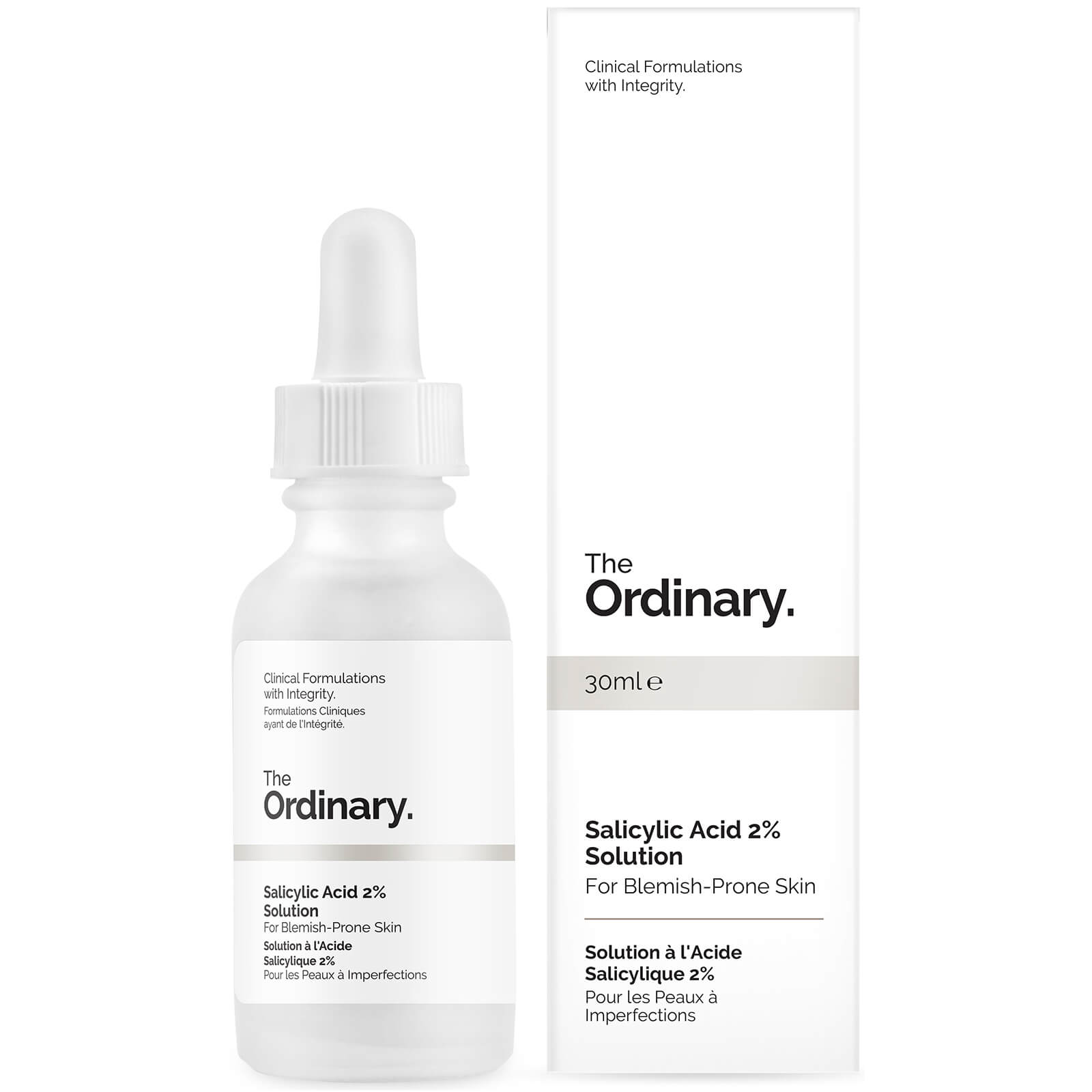
Honest recommendation: The Ordinary Salicylic Acid 2% Anhydrous Solution. I tested it for 45 days and it cleared blackheads nothing else had touched; read the full review.
Retinoids and retinol: the anti-ageing gold standard
Retinoids are vitamin A derivatives, and they're the most evidence-backed anti-ageing ingredient in existence. They speed up cell turnover, stimulate collagen production, fade pigmentation and keep pores clear, which is why the same ingredient treats both wrinkles and acne. Over-the-counter retinol is the accessible version; prescription tretinoin is the stronger clinical one.
Who it's for: anyone concerned with fine lines, uneven tone or persistent breakouts. Most people benefit from starting a retinoid by their late twenties or thirties.
Cautions: the adjustment period is real. Expect some dryness and flaking in the first few weeks, start with two nights a week, use it in the evening only, and never skip morning SPF. Not for use during pregnancy.
Honest recommendation: The Ordinary Granactive Retinoid 2% Emulsion for beginners, or The Ordinary Retinol 1% in Squalane once your skin has adapted. Both are on The Ordinary's site.
Hyaluronic acid: hydration, not exfoliation
Despite the name, hyaluronic acid isn't an exfoliating acid at all. It's a humectant that occurs naturally in your skin and can bind many times its own weight in water. As a serum it draws moisture into the upper layers, plumping the skin and temporarily softening fine lines. Your natural stores decline with age, which is why it earns a place in most routines.
Who it's for: everyone, honestly. Dehydrated, dry and ageing skin benefit most, but even oily skin tolerates it well because it hydrates without any oil.
Cautions: almost none, which is rare. Apply it to damp skin and seal it in with moisturiser, otherwise in very dry air it can pull water out of your skin instead of into it.
Honest recommendation: The Ordinary Hyaluronic Acid 2% + B5 remains the best-value option I've used, and there's little reason to pay ten times more for the same molecule.
Vitamin C: brightening and antioxidant protection
Vitamin C does three jobs: it's an antioxidant that neutralises the free-radical damage caused by UV and pollution, it interferes with excess pigment production to fade dark spots and even skin tone, and it supports collagen synthesis. Used in the morning under sunscreen, it meaningfully boosts your daily protection.
Who it's for: dullness, dark spots and post-blemish marks, uneven tone, and anyone who wants a preventative antioxidant layer.
Cautions: pure L-ascorbic acid at high strengths can sting sensitive skin, and it degrades quickly with light and air, so buy small bottles in opaque packaging and don't hoard them. Derivatives like ascorbyl glucoside are gentler and more stable, at the cost of some potency.
Honest recommendation: Geek & Gorgeous C-Glow (15% L-ascorbic acid) if you want a properly formulated pure vitamin C without the luxury markup; The Ordinary's Ascorbyl Glucoside Solution 12% if your skin is sensitive.
Niacinamide: the underrated all-rounder
Niacinamide (vitamin B3) didn't appear in the original version of this guide, which was a genuine omission, because it might be the most broadly useful serum ingredient of all. It regulates sebum production, visibly reduces the appearance of enlarged pores, strengthens the skin barrier by boosting your skin's own ceramide production, and helps fade blotchiness and dark marks. It does nothing dramatically, but it improves almost everything steadily.
Who it's for: oily and blemish-prone skin especially, but it suits nearly everyone, including sensitive skin that can't tolerate acids or retinoids.
Cautions: very few. Some people find very high concentrations (20%+) irritating; 5-10% is the sweet spot and there's little evidence more is better. Here's how to work it into your routine.
Honest recommendation: The Ordinary Niacinamide 10% + Zinc 1%. I've reviewed it in full, and it's still the product I recommend most often to people with oily skin on a budget.
Peptides: worth knowing about, briefly
Peptides are short chains of amino acids that act as messengers, signalling skin to produce more collagen and elastin. The evidence base is thinner than for retinoids, but they're extremely well tolerated, which makes them a sensible anti-ageing option for skin that can't handle vitamin A. The Ordinary's Multi-Peptide + HA Serum ("Buffet") is the affordable way to try them. Think of peptides as a gentle supporting act rather than a headline ingredient.
How to choose one (and only one)
The biggest serum mistake isn't picking the wrong active, it's picking four at once. Layering multiple new actives means you can't tell what's working, and stacking exfoliants with retinoids is a reliable way to end up with a wrecked barrier and a face that stings.
Do it this way instead:
- Pick your single biggest concern. Congestion and blackheads: salicylic acid. Oiliness and visible pores: niacinamide. Dullness and dark spots: vitamin C. Fine lines: a retinoid. Dehydration: hyaluronic acid.
- Introduce one new active at a time, patch tested, starting two or three times a week.
- Give it six to eight weeks. That's roughly one full skin cycle, and it's the minimum honest window for judging any active. Anything promising results in days is marketing.
- Then, if you want, add a second that doesn't conflict with the first. Niacinamide and hyaluronic acid play nicely with everything; strong acids and retinoids need careful layering or alternating nights.
A cleanser, one well-chosen serum, moisturiser and SPF will outperform a ten-step routine of half-doses. If you're building from scratch, start with how to build the perfect skincare routine and add a serum once the basics are habit.
References
Mukherjee S, Date A, Patravale V, Korting HC, Roeder A, Weindl G. Retinoids in the treatment of skin aging: an overview of clinical efficacy and safety. Clin Interv Aging. 2006;1(4):327-348. (https://www.ncbi.nlm.nih.gov/pmc/articles/PMC2699646/)
Draelos ZD, Matsubara A, Smiles K. The effect of 2% niacinamide on facial sebum production. J Cosmet Laser Ther. 2006;8(2):96-101. (https://pubmed.ncbi.nlm.nih.gov/16766489/)
Arif T. Salicylic acid as a peeling agent: a comprehensive review. Clin Cosmet Investig Dermatol. 2015;8:455-461. (https://www.ncbi.nlm.nih.gov/pmc/articles/PMC4554394/)
Pullar JM, Carr AC, Vissers MCM. The roles of vitamin C in skin health. Nutrients. 2017;9(8):866.
Papakonstantinou E, Roth M, Karakiulakis G. Hyaluronic acid: a key molecule in skin aging. Dermatoendocrinol. 2012;4(3):253-258.
Frequently Asked Questions
What order do serums go in a routine?
Serums go after cleansing and before moisturiser. If you use more than one, apply the thinnest, most watery texture first. In the morning, vitamin C sits under sunscreen; in the evening, exfoliating acids or retinoids go on clean, dry skin.
Which serum should a beginner start with?
Niacinamide or hyaluronic acid. Both are effective, cheap, and gentle enough that mistakes won't wreck your skin. Once you're comfortable, add a targeted active like salicylic acid or a retinoid based on your main concern.
Can I use vitamin C and niacinamide together?
Yes. The old claim that they cancel each other out came from studies on unstable, decades-old formulations. Modern versions of both are stable together, and plenty of well-formulated products now combine them deliberately.
How long does a serum take to work?
Hydrating serums like hyaluronic acid work within days. Actives that change skin behaviour, such as niacinamide, acids, vitamin C and retinoids, need six to eight weeks of consistent use before you can fairly judge the results.
Do I need more than one serum?
No. One well-chosen serum targeting your biggest concern beats a stack of them. Add a second only after the first has proven itself over six to eight weeks, and make sure the two don't conflict.