Obviously Skincare
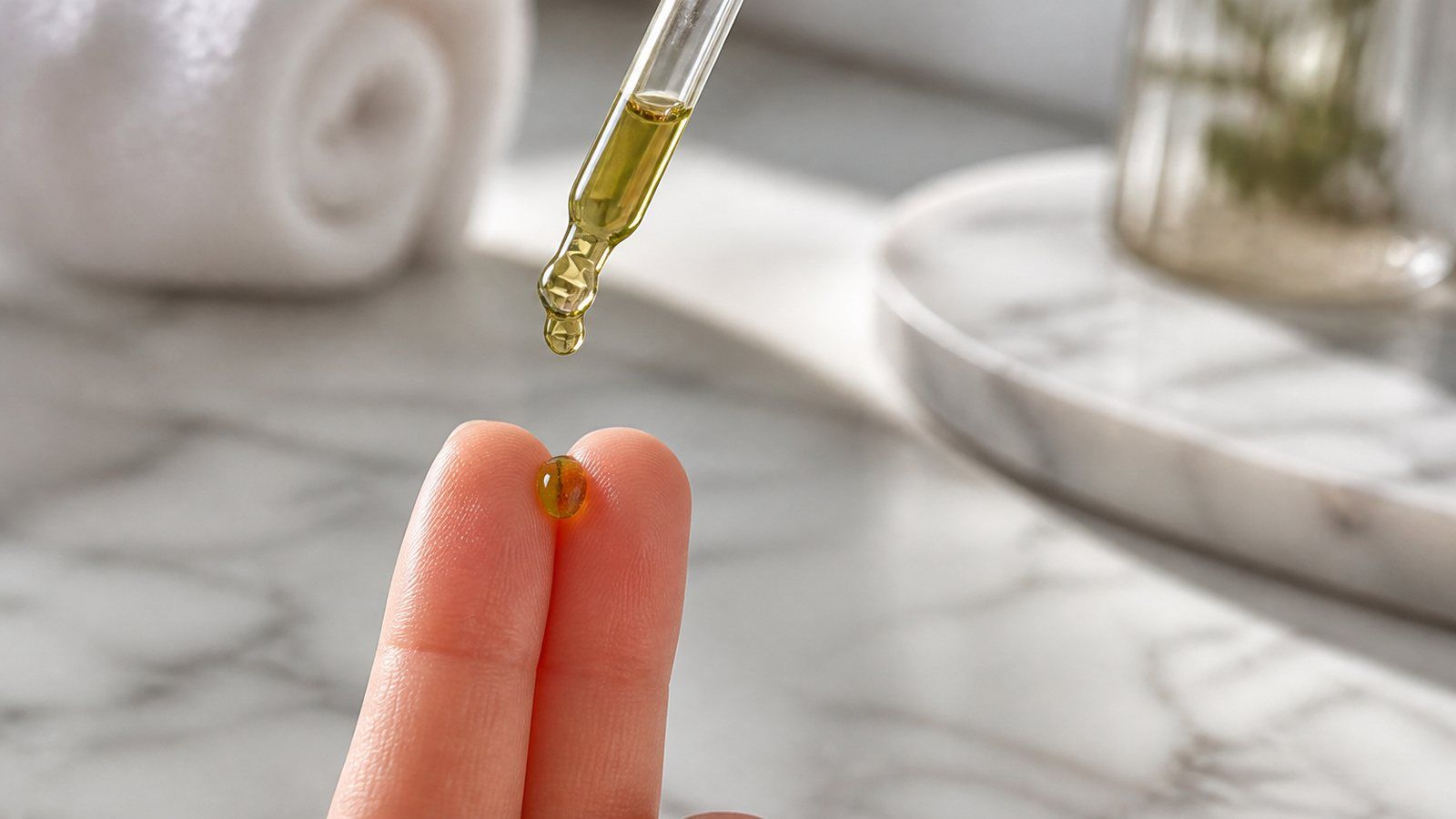
Rosehip oil is pressed from the seeds of wild rose bushes, usually Rosa canina or Rosa rubiginosa. It's a light, fast-absorbing face oil, popular for dry skin, scars and uneven tone. It's a good moisturising oil. The bigger claims made for it, that it's a natural retinol or that it fades scars, rest on thin evidence.
What's in it
- Linoleic acid (omega-6) and alpha-linolenic acid (omega-3): essential fatty acids that make up most of the oil. Linoleic acid is a building block of the skin's barrier.
- Carotenoids, including beta-carotene, which give unrefined oil its amber-orange colour.
- Vitamin E (tocopherols) and other antioxidants.
- Trace amounts of trans-retinoic acid have been reported in some cold-pressed oils. The quantity is tiny and varies from batch to batch; it isn't comparable to a retinol serum.
What it does
Moisturises and softens
An oil's main job is to reduce water loss from the skin and soften its surface, and rosehip oil does that. It doesn't add water. It helps keep in what's there.
May support the skin barrier
A review of plant oils applied to the skin describes their potential to reduce inflammation, act as antioxidants, promote wound healing and help repair the barrier, and includes rosehip oil among those studied. Oils high in linoleic acid are generally considered the more barrier-friendly ones, in contrast to oils high in oleic acid, such as olive oil.
Scars and marks: limited evidence
Rosehip oil is widely used on scars and stretch marks. There are a few small studies suggesting it may improve the look of surgical scars, but they're small and not well controlled. It may help mainly by keeping healing skin moisturised, which any suitable moisturiser also does.
Lines and uneven tone: unproven
Its antioxidants and carotenoids have some theoretical benefit. There's no good trial evidence that the oil reduces wrinkles or fades pigmentation.
| Claim | Verdict |
|---|---|
| Moisturises dry skin | Yes |
| Supports the barrier | Plausible |
| Fades scars | Weak evidence |
| A natural retinol | No. Any retinoid content is trace |
| Brightens dark spots | Unproven |
| Reduces wrinkles | Unproven |
| Treats acne | No |
Who it suits
- Dry and normal skin, as a final sealing step
- Dehydrated skin needing something over a hydrating serum
- Mature skin that has become drier
- Combination skin, in small amounts, on drier areas
- Sensitive skin that tolerates oils, since it's unfragranced when pure
Does it clog pores?
Rosehip oil is light, and oils high in linoleic acid are often said to suit oily and acne-prone skin better than heavier oils. That's a theory based partly on the finding that acne-prone skin's oil is lower in linoleic acid. It hasn't been proven that applying the oil helps.
In practice some acne-prone people get on well with it and some break out. If you're acne-prone, test it on a small area for a couple of weeks, and don't expect it to treat spots.
Related guideKojic Acid for Skin: Benefits, Side Effects and How to Use ItKojic acid is a pigment-reducing ingredient made by fungi, used for dark spots and melasma.Read the guide →How to use it
- When: evening is easiest. It can be used in the morning under sunscreen if it doesn't make your sunscreen slide.
- Order: last, or mixed with your moisturiser. Oils go after water-based products.
- How much: two or three drops for the whole face. Warm between your palms and press in.
Evening routine
- Cleanse
- Serum (hyaluronic acid, niacinamide, or your treatment)
- Moisturiser
- Rosehip oil
On damp skin or over a hydrating serum it spreads further and feels less greasy.
With other products
- With retinoids: fine. Apply the retinoid first, then moisturiser, then the oil. It helps with dryness.
- With vitamin C, niacinamide, acids: fine. Apply the oil last.
- With sunscreen: apply oil before sunscreen and let it absorb, or keep oil for the evening. Oils can break up some sunscreen films.
- In pregnancy: rosehip oil is generally regarded as fine to use. It's often used on stretch marks, though no oil has been shown to prevent them. See stretch marks.
Choosing and storing it
Rosehip oil goes rancid quickly because its fatty acids oxidise easily.
- Choose cold-pressed, unrefined oil in a dark glass bottle. A golden-orange to amber colour is normal; a very pale oil has probably been refined.
- Buy small bottles.
- Store it cool and dark, lid tight. A fridge extends its life.
- Use within about six months of opening.
- Bin it if it smells sharp, fishy or like old paint. Rancid oil irritates skin.
The unrefined oil can leave a slight orange tint on pale skin or pillowcases. Use less.
Rosehip oil vs other face oils
| Rosehip | Squalane | Jojoba | Marula or argan | |
|---|---|---|---|---|
| Weight | Light | Very light | Light to medium | Medium |
| Stability | Poor; goes rancid | Excellent | Good | Good |
| Suits acne-prone skin | Sometimes | Usually | Usually | Less often |
| Antioxidants | Yes | No | Some | Yes |
If you want an oil that never goes off and almost never causes breakouts, choose squalane. See squalane.
Side effects
Uncommon with fresh oil: occasional breakouts or irritation. Allergy to rose-family plants is rare. Patch test if your skin is reactive.
The bottom line
Rosehip oil is a pleasant, light moisturising oil for dry skin. Buy it for that. For scars, lines and pigmentation, proven treatments (sunscreen, retinoids, azelaic acid, vitamin C) do far more.
References
Lin TK, Zhong L, Santiago JL. Anti-inflammatory and skin barrier repair effects of topical application of some plant oils. Int J Mol Sci. 2017;19(1):70. (https://pubmed.ncbi.nlm.nih.gov/29280987/)
FAQs
What does rosehip oil do for your face?
It moisturises, softens and may support the skin barrier.
Does rosehip oil contain retinol?
Only trace amounts of a related compound, in some oils. It isn't a substitute for retinol.
Does rosehip oil clog pores?
It's light and many people tolerate it, but some acne-prone skin breaks out. Test it first.
Can I use rosehip oil every day?
Yes, once or twice a day.
Does rosehip oil fade scars?
The evidence is weak. It keeps skin moisturised, which helps healing.
Do I apply rosehip oil before or after moisturiser?
After, as the last step.