Obviously Skincare
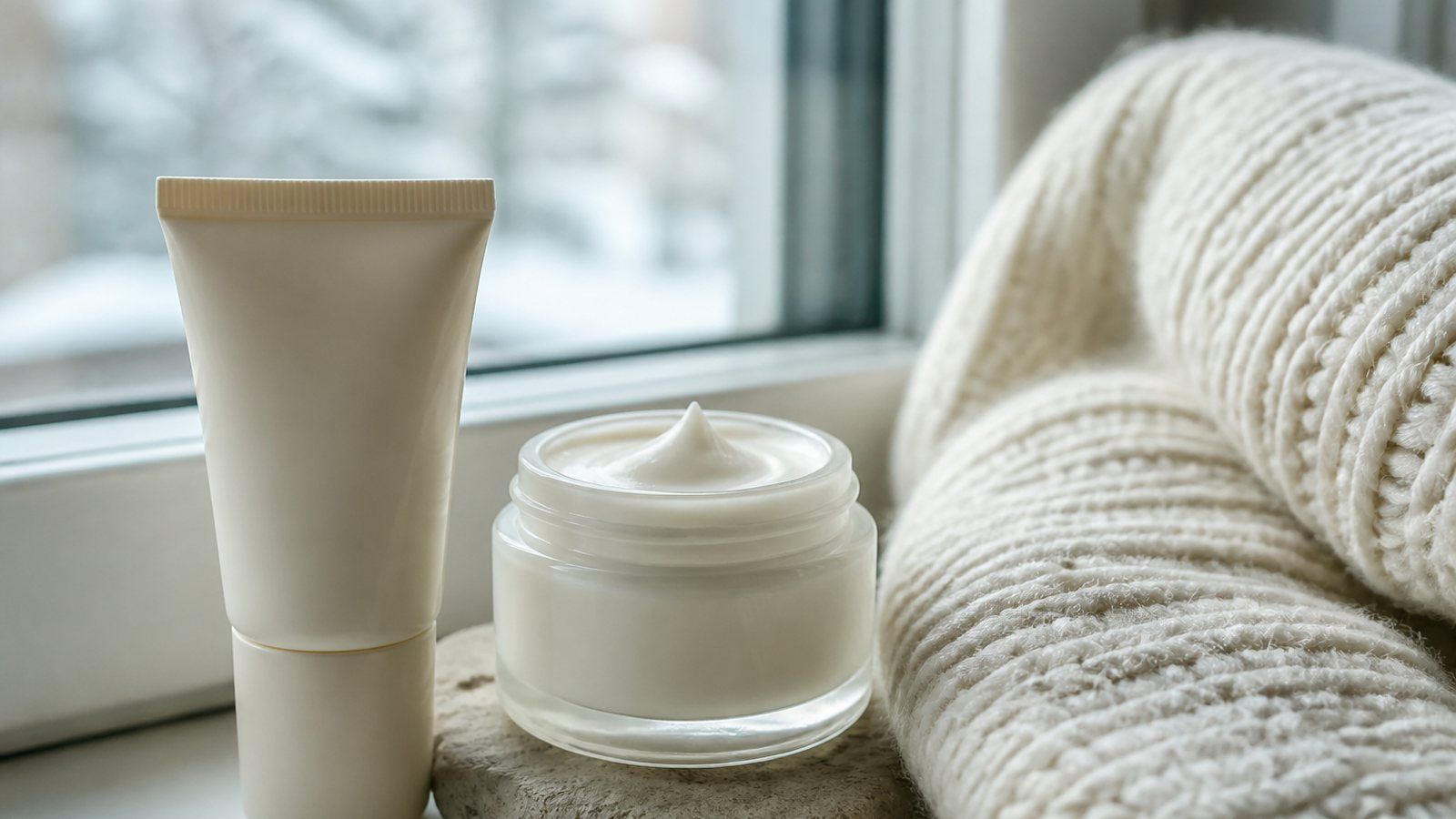
Urea is one of the most effective ingredients for dry, rough skin, and one of the least advertised. It's a natural part of your skin's own moisturising system. In a cream, it does two different jobs depending on strength: at 10% or below it's a moisturiser, and above 10% it also breaks down hard, built-up skin. Choosing the right percentage is most of what you need to know.
The urea in skincare is made synthetically. It's odourless, and has no connection to urine.
What each strength does
| Strength | Effect | Use for |
|---|---|---|
| 2% to 5% | Hydration | Face; mildly dry body skin; sensitive skin |
| 10% | Strong hydration; mild smoothing | Dry and very dry body skin; rough hands; eczema-prone dryness |
| 20% to 30% | Hydration plus breaking down of rough skin | Keratosis pilaris; thick, scaly patches; rough elbows, knees and heels |
| 40% and above | Strong breakdown of hard skin | Calluses, cracked heels, thickened nails. Use as directed |
A review of the clinical evidence puts the line at 10%: at or below it, urea acts as a moisturiser; above it, it has a keratolytic action, meaning it loosens and sheds thickened skin.
How it works
As a moisturiser. Urea is a humectant and a component of the skin's natural moisturising factor. It draws water into the outer layer and helps hold it there. Dry skin and eczema-prone skin tend to have less urea than normal skin.
As an exfoliant. At higher strengths it loosens the bonds in keratin, the protein that makes up the tough outer layer, so thick, rough skin softens and sheds. It does this without the stinging low pH of an acid.
As a penetration enhancer. Urea helps other ingredients get into the skin. Useful in medical creams; worth knowing if you layer it with strong actives, because it can increase their irritation too.
Free toolSkincare routine builderNot sure what order to use your products in?Open the routine builder →What the evidence covers
A systematic review of 81 publications found urea effective for a wide range of dry and scaly skin conditions, including very dry skin, eczema, psoriasis and ichthyosis, and described it as safe and well tolerated, with mild irritation the most common side effect.
For keratosis pilaris, the rough bumps on upper arms and thighs, a small four-week study of a 20% urea cream used once a day found smoother skin. See keratosis pilaris.
On the body
This is where urea is most useful.
- Everyday dry skin: 5% to 10% lotion after showering.
- Very dry, flaky legs and arms: 10%.
- Keratosis pilaris and strawberry legs: 10% to 20%. See strawberry legs.
- Hands: 5% to 10% hand cream.
- Feet and cracked heels: 10% for maintenance; 25% and above for hard skin, usually at night.
Apply to slightly damp skin for best effect.
Related guideHyaluronic Acid: What It Does for Skin, and How to Use It ProperlyWhat hyaluronic acid actually does for skin, what the '1,000 times its weight' claim means, why applying it to damp skin matters, and what it can't do for wrinkles.Read the guide →On the face
Urea is safe on the face at low strengths, typically 5%. It suits:
- dry or dehydrated skin
- flaky patches
- dryness from retinoids or acne treatment
- mature skin
Things to know:
- It can sting, particularly on sensitive, broken or freshly exfoliated skin, and more at higher strengths. This usually fades with use. If it doesn't, use a lower strength or a different humectant.
- Don't use body-strength urea (10% and above) on the face unless it's a product made for facial use.
- Take care layering it with retinoids or acids. It may increase how much of them gets in. Use them at different times of day if your skin is sensitive.
- Keep it away from the eyes.
Where it stings
Urea is uncomfortable on:
- broken, cracked or weeping skin
- freshly shaved or waxed skin
- active eczema flares
- skin with a damaged barrier
Wait until the skin has settled, or use a plain emollient there.
How to use it
- Apply once or twice a day to clean, slightly damp skin.
- For rough areas, use nightly for two to four weeks, then reduce to maintenance.
- On feet, apply at night and wear cotton socks.
- Follow with sunscreen on exposed areas. Smoother, thinner skin burns more easily.
Results: softer skin within days; rough bumps and hard skin in two to four weeks.
What to pair it with
- Works well with: ceramides, glycerin, lactic acid (commonly combined in body lotions), shea butter, panthenol.
- With care: salicylic acid and glycolic acid on the body can be combined with urea in the same product, but irritation is more likely.
- Separate from: strong retinoids and acids on the face.
Side effects and safety
Mild stinging, itching or redness, usually temporary. True allergy is rare. Urea isn't absorbed into the body in meaningful amounts and is considered safe in pregnancy and for children's dry skin at low strengths; for babies and young children, ask a pharmacist first.
Urea vs other ingredients for rough skin
| Urea | Lactic acid | Salicylic acid | |
|---|---|---|---|
| Hydrates | Strongly | Yes | No |
| Exfoliates | At 10% and above | Yes | Yes |
| Stings on broken skin | Yes | Yes | Yes |
| Best for | Very dry, thick, rough skin | Dry, bumpy skin | Bumpy, oily or congested skin |
Where to find it
Pharmacy brands with urea ranges are widely sold in the UK, at 5%, 10% and higher strengths, and pharmacies stock own-brand urea heel balms. Look for the percentage on the front of the pack.
For more on dry skin, see the best ingredients for dry skin and the best moisturisers for dry skin.
References
Celleno L. Topical urea in skincare: a review. Dermatol Ther. 2018;31(6):e12690. (https://pubmed.ncbi.nlm.nih.gov/30378232/)
Pan M, Heinecke G, Bernardo S, Tsui C, et al. Urea: a comprehensive review of the clinical literature. Dermatol Online J. 2013;19(11):20392. (https://pubmed.ncbi.nlm.nih.gov/24314769/)
McCormick E, Nussbaum D, Friedman A, et al. Evaluation of a moisturizing cream with 20% urea for keratosis pilaris. J Drugs Dermatol. 2024;23(1):1274-1277. (https://pubmed.ncbi.nlm.nih.gov/38206153/)
FAQs
What does urea do for skin?
It hydrates at low strengths and softens and sheds rough, thick skin at higher ones.
Can I use urea cream on my face?
Yes, at around 5%, in a product made for the face.
What percentage of urea should I use?
5% for the face, 10% for dry body skin, 20% and above for rough bumps and hard skin.
Is urea an exfoliant?
Above 10%, yes.
Why does urea cream sting?
It stings on broken, shaved or very sensitive skin. Use a lower strength or wait for the skin to heal.
Can I use urea every day?
Yes.