Obviously Skincare
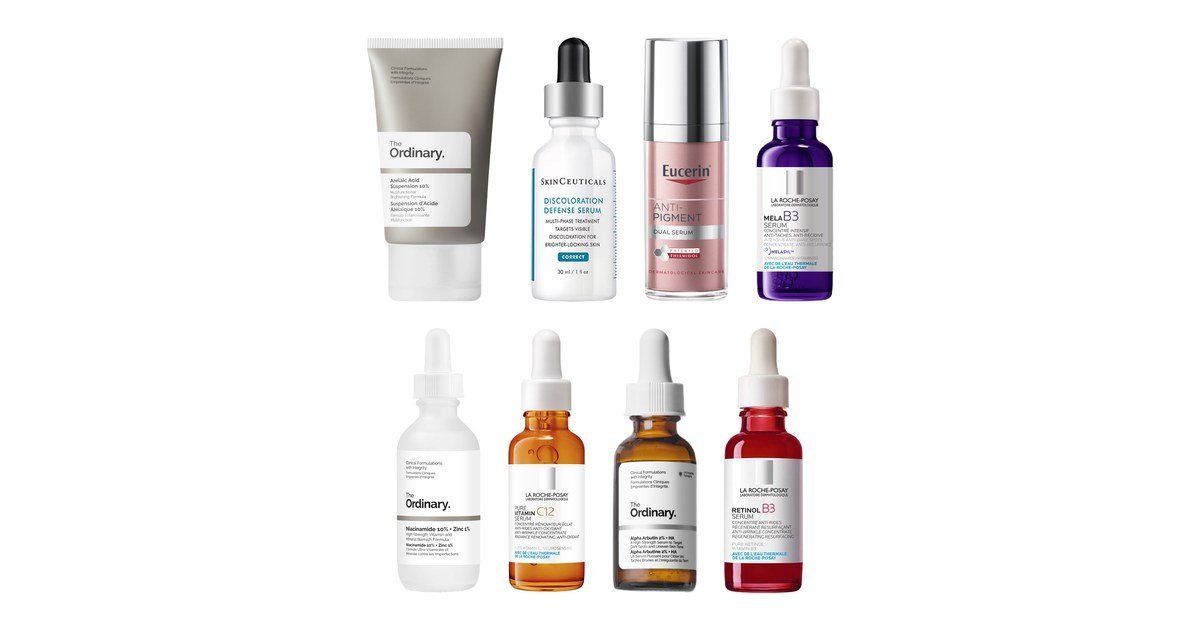
The best serum for hyperpigmentation is the one whose active matches the cause of your marks. For dark marks left by spots, azelaic acid (The Ordinary Azelaic Acid Suspension 10%) is the best-value start. For melasma, look for tranexamic acid (SkinCeuticals Discoloration Defense) or thiamidol (Eucerin Anti-Pigment Dual Serum), both of which have held their own against 4% hydroquinone in trials. Every one of them needs daily sunscreen to work.
How these were chosen: each pick contains an active with clinical trial evidence for pigmentation, at a strength the brand states where it states one. Every product here was checked against brand pages, UK retailer listings and published ingredient lists on 28 November 2026. We have not tested them, and no brand paid to be included. For treatment plans, see how to reduce dark spots.
Our picks at a glance
- For acne marks on a budget: The Ordinary Azelaic Acid Suspension 10%, £11.10 at Escentual
- For melasma, money no object: SkinCeuticals Discoloration Defense, £114 at SkinCeuticals UK
- For melasma and stubborn patches: Eucerin Anti-Pigment Dual Serum, £24.00, usually £48.00, at Escentual
- For mixed pigmentation, with trial data on this exact serum: La Roche-Posay Mela B3 Serum, £38.40, usually £48.00, at Escentual
- Cheapest pigment serum: The Ordinary Niacinamide 10% + Zinc 1%, £5.00 at Escentual
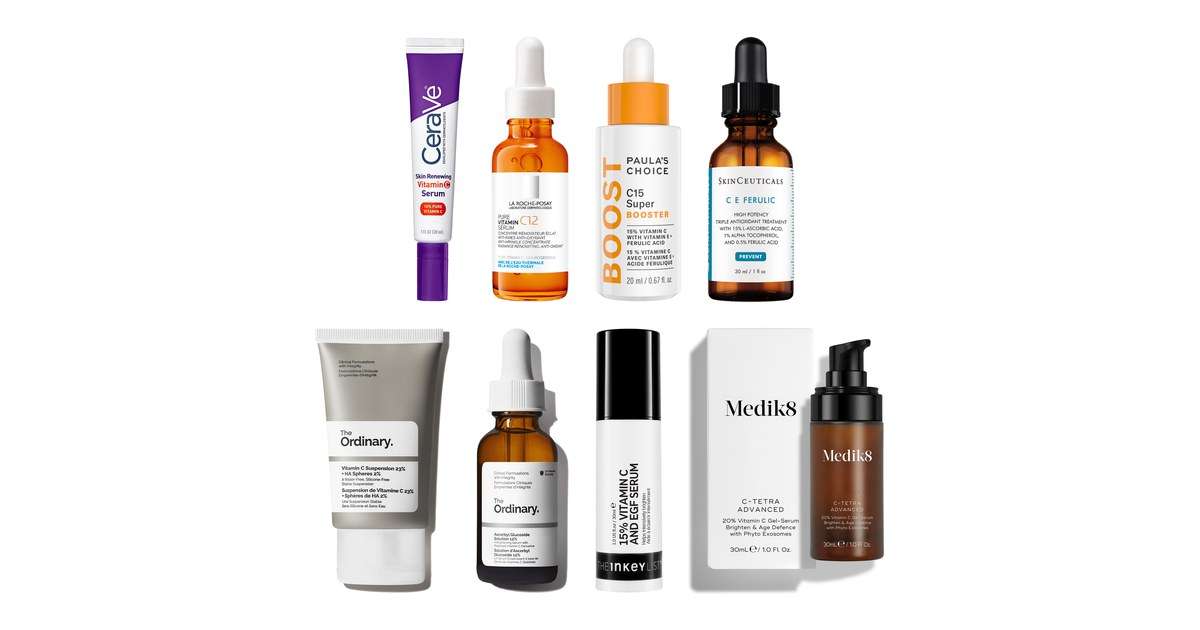
- For sun spots and dullness: La Roche-Posay Pure Vitamin C12 Serum, £36.00, usually £45.00, at Escentual
- Gentle add-on for any type: The Ordinary Alpha Arbutin 2% + HA, £10.50 at Escentual
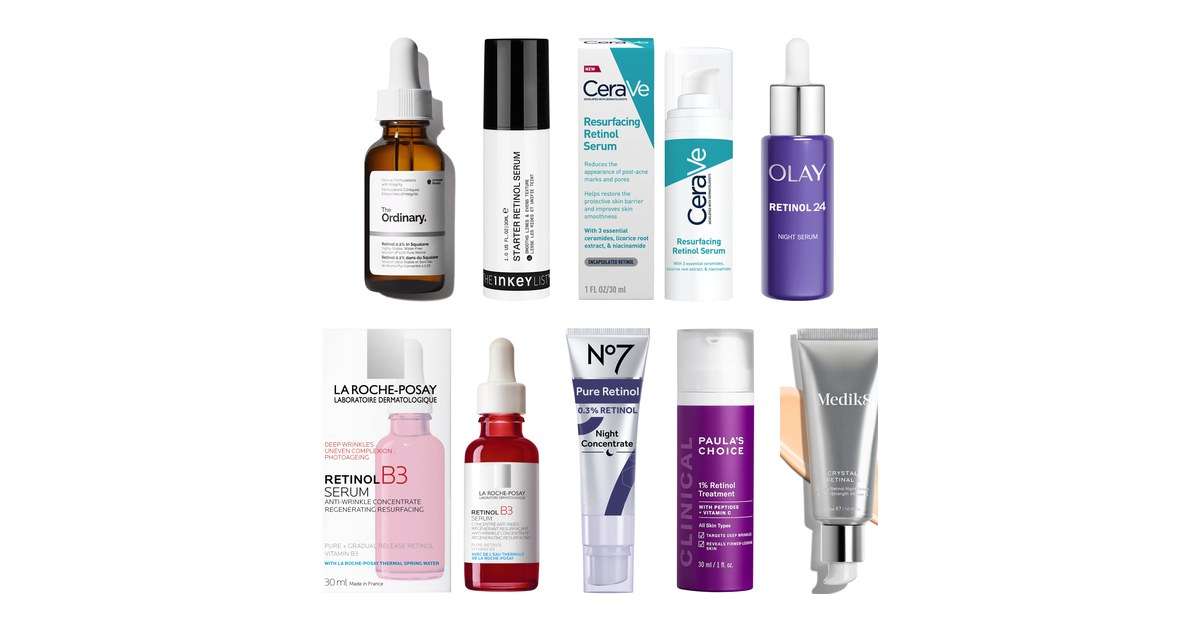
- Night-time retinoid: La Roche-Posay Retinol B3 Serum, £38.40, usually £48.00, at Escentual
The best serums for hyperpigmentation
Azelaic acid: The Ordinary Azelaic Acid Suspension 10%
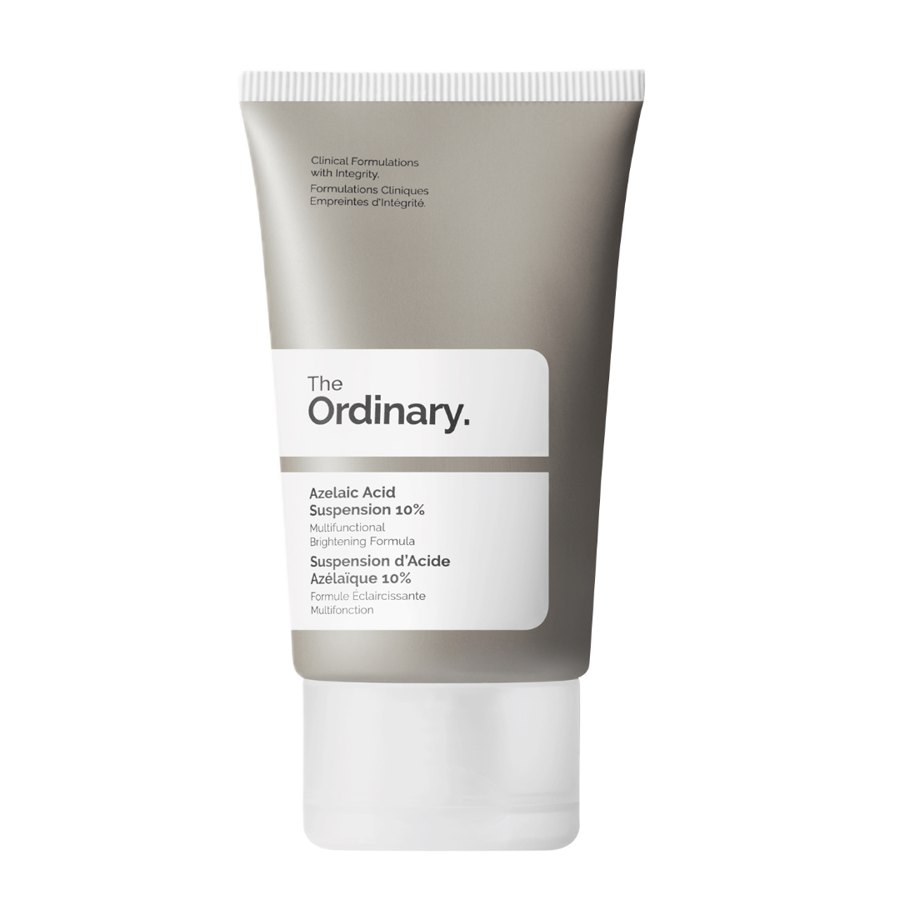
Azelaic acid calms the inflammation behind acne and slows pigment production, so it treats the spot and the mark it leaves. The trials used stronger prescription versions: a 15% gel reduced both acne and post-acne marks in a 16-week pilot study (Kircik, 2011), and in 329 women with melasma a 20% cream did as well as 4% hydroquinone over 24 weeks (Baliña and Graupe, 1991). This 10% cream is half the strength used in that melasma trial. It is a cream rather than a thin serum, and can tingle at first. 30ml, £11.10 (£0.37/ml); 100ml is £27.40. More in the product review.
Buy: The Ordinary Azelaic Acid Suspension 10% at Escentual
Tranexamic acid: SkinCeuticals Discoloration Defense
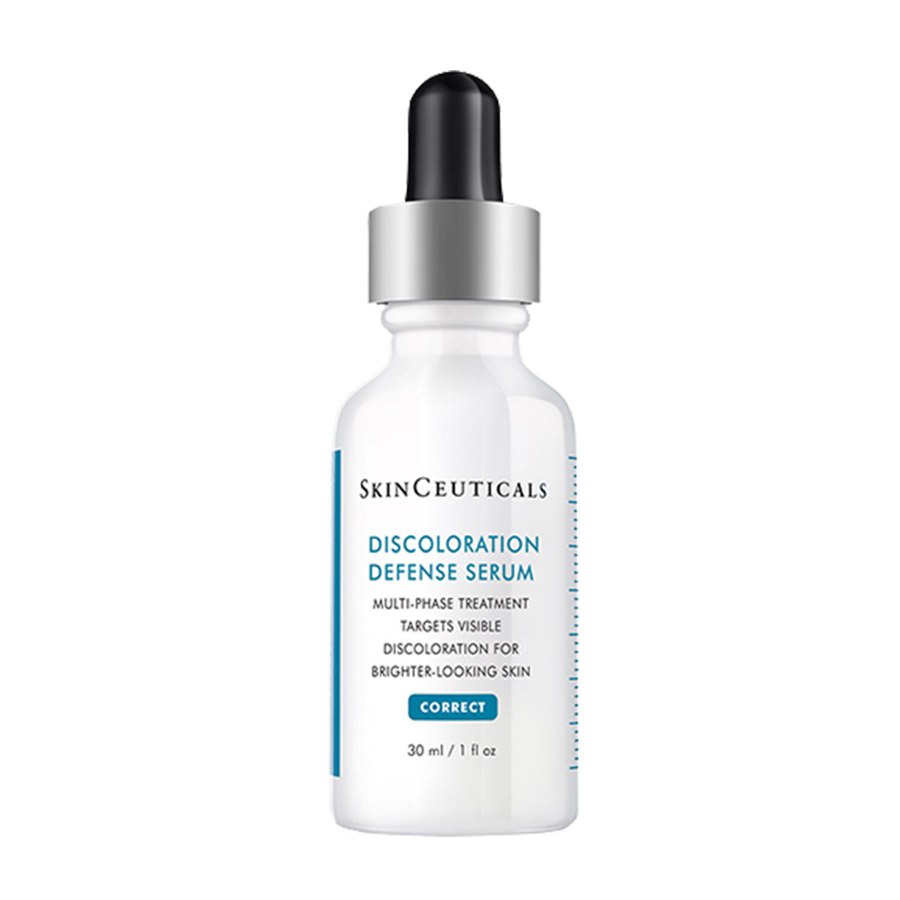
SkinCeuticals states 1.8% tranexamic acid, 5% niacinamide and 5% HEPES, a mild exfoliant. The ingredient list also includes kojic acid. A review of randomised trials gave tranexamic acid a strong recommendation for melasma (Austin et al., 2019), and in a split-face trial in 20 people, a 3% cream did as well as 4% hydroquinone over eight weeks (Yasnova et al., 2024). Note this serum has less than that 3%. Fragrance-free. 30ml, £114 (£3.80/ml), the most expensive here by far. Background in what tranexamic acid does.
Buy: SkinCeuticals Discoloration Defense at SkinCeuticals UK
Thiamidol: Eucerin Anti-Pigment Dual Serum
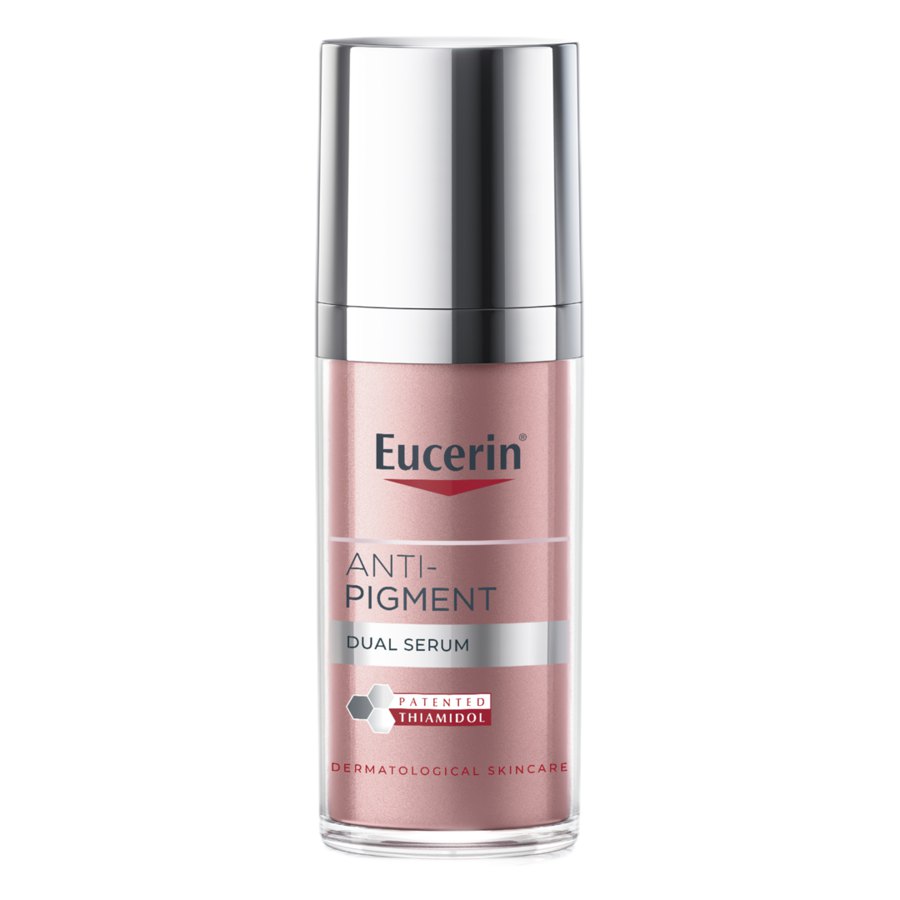
Thiamidol (isobutylamido thiazolyl resorcinol) is Eucerin's own tyrosinase blocker, and it has been tested head to head against hydroquinone. In a trial of 50 women with melasma, 0.2% thiamidol cut melasma scores by 43% over 90 days against 33% for 4% hydroquinone, a difference that was not statistically significant (Lima et al., 2021). Two of the thiamidol users (8%) developed allergic contact dermatitis. Eucerin does not state the strength in this serum. It also contains vitamin C (sodium ascorbyl phosphate), alcohol and parfum. 30ml, £24.00, usually £48.00 (£0.80/ml).
Buy: Eucerin Anti-Pigment Dual Serum at Escentual
Niacinamide plus Melasyl: La Roche-Posay Mela B3 Serum
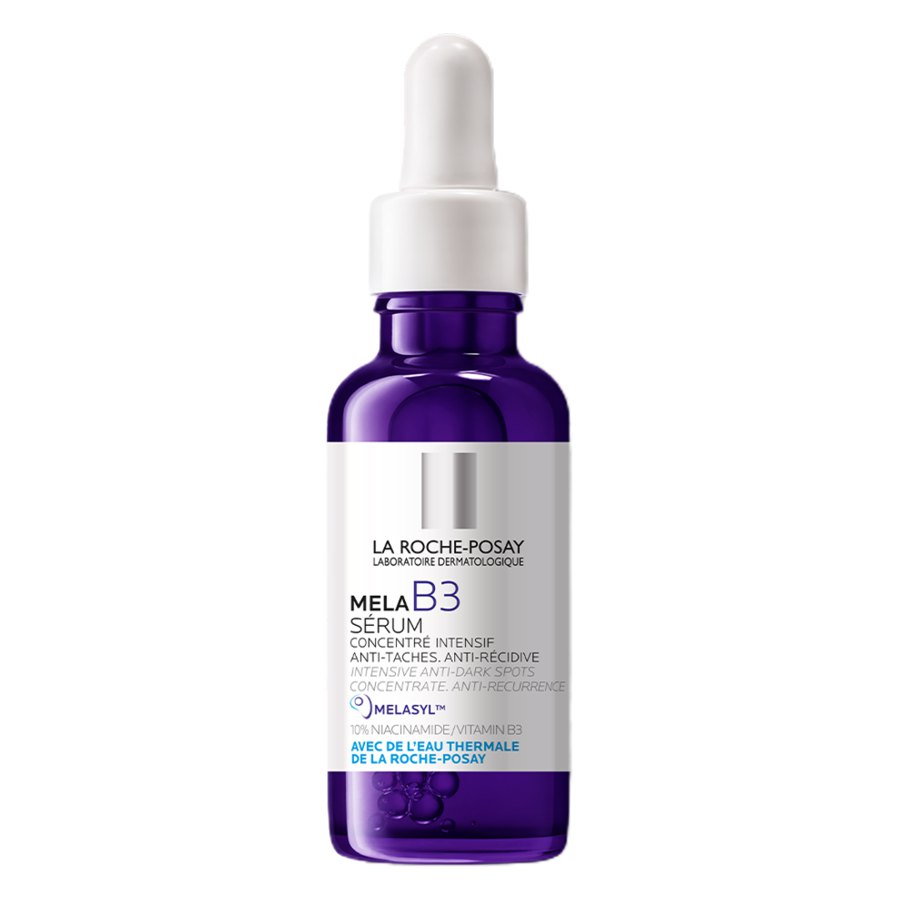
La Roche-Posay states 10% niacinamide alongside Melasyl (2-mercaptonicotinoyl glycine), its own ingredient, which the brand says traps excess melanin. This exact serum has been trialled: in 109 women with melasma, it did no worse than 4% hydroquinone over three months, with fewer skin reactions at four weeks (6.0% against 21.4%) (Passeron et al., 2025). Most of the authors work for La Roche-Posay or L'Oréal. Niacinamide has its own evidence too: in a split-face trial of 27 people with melasma, 4% niacinamide lightened pigment with no colorimetric difference from 4% hydroquinone, and fewer side effects (18% against 29%) (Navarrete-Solís et al., 2011). It also lists retinyl palmitate, a mild retinoid. The brand calls it alcohol-free and suitable for sensitive skin, though the ingredient list ends with parfum. 30ml, £38.40, usually £48.00 (£1.28/ml).
Buy: La Roche-Posay Mela B3 Serum at Escentual
Niacinamide on a budget: The Ordinary Niacinamide 10% + Zinc 1%
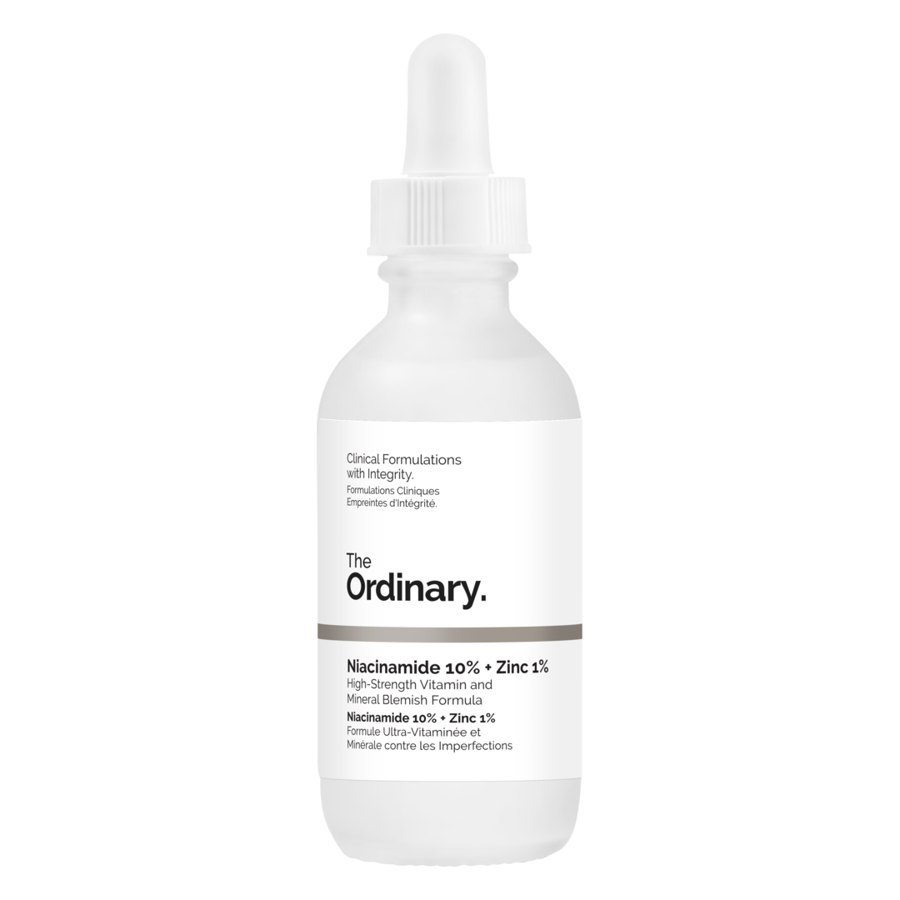
The same 10% niacinamide without Melasyl, plus zinc for oil control, which makes it a good fit if the marks come with breakouts. It layers well with azelaic acid (how to pair them). 30ml, £5.00 (£0.17/ml), the cheapest per ml here.
Buy: The Ordinary Niacinamide 10% + Zinc 1% at Escentual
Vitamin C: La Roche-Posay Pure Vitamin C12 Serum
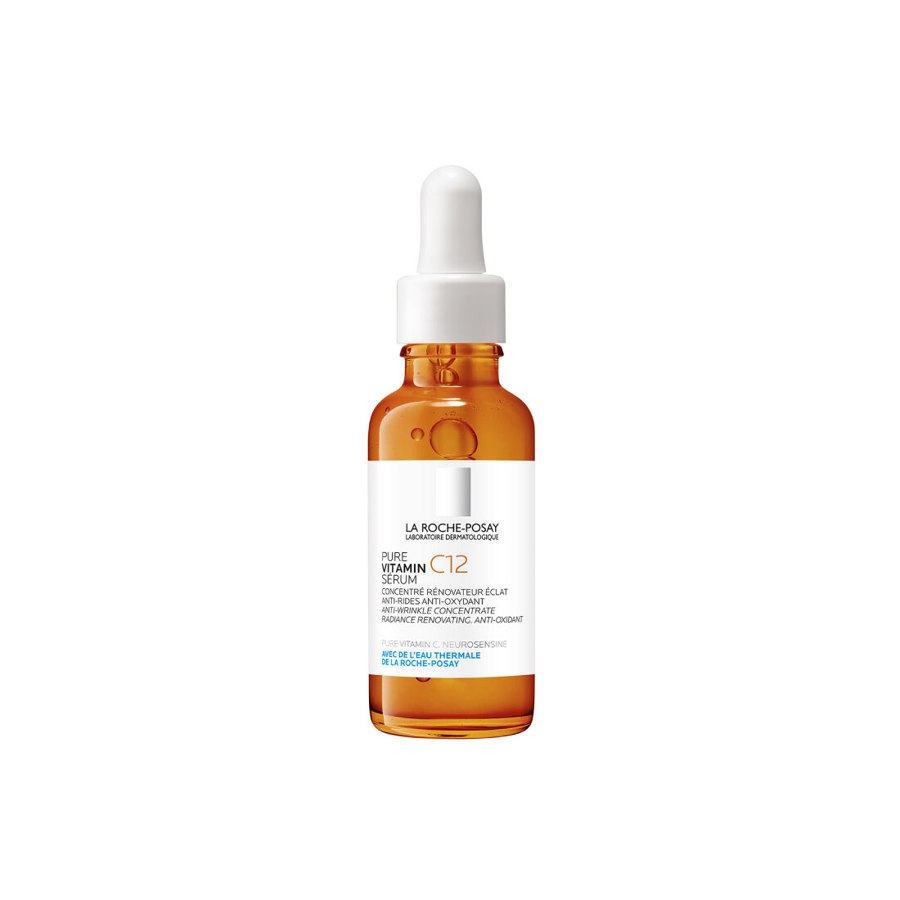
The brand states 12% pure vitamin C (L-ascorbic acid), the form with the most evidence. In a 16-week split-face trial in 16 women with melasma, 5% ascorbic acid did less well than 4% hydroquinone on patients' own ratings, but colorimetry found no difference, and side effects were far rarer (6.2% against 68.7%) (Espinal-Perez et al., 2004). A review of seven trials found it lightens pigment, but slowly (Correia and Magina, 2023). It suits sun spots and dullness best, worn in the morning under SPF. It contains parfum and 0.45% salicylic acid. 30ml, £36.00, usually £45.00 (£1.20/ml). Seven more options, compared by price per 10% of vitamin C, are in the best vitamin C serums.
Buy: La Roche-Posay Pure Vitamin C12 Serum at Escentual
Alpha arbutin: The Ordinary Alpha Arbutin 2% + HA
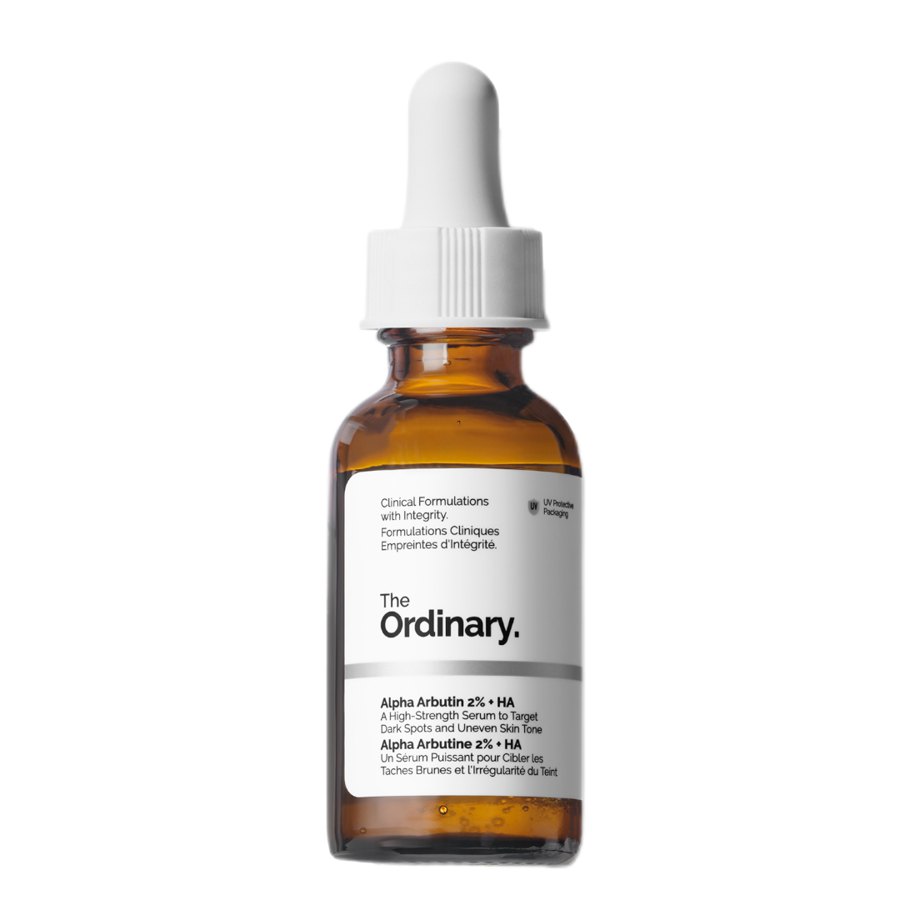
Alpha arbutin blocks tyrosinase, the enzyme that makes pigment, but its evidence is the thinnest here: a 2021 review said larger, high-quality trials are still needed (Saeedi et al., 2021). Use it as a gentle add-on to azelaic acid or niacinamide, not a lone treatment. Short, fragrance-free formula. 30ml, £10.50 (£0.35/ml). See alpha arbutin and alpha arbutin vs vitamin C.
Buy: The Ordinary Alpha Arbutin 2% + HA at Escentual
Retinoid: La Roche-Posay Retinol B3 Serum
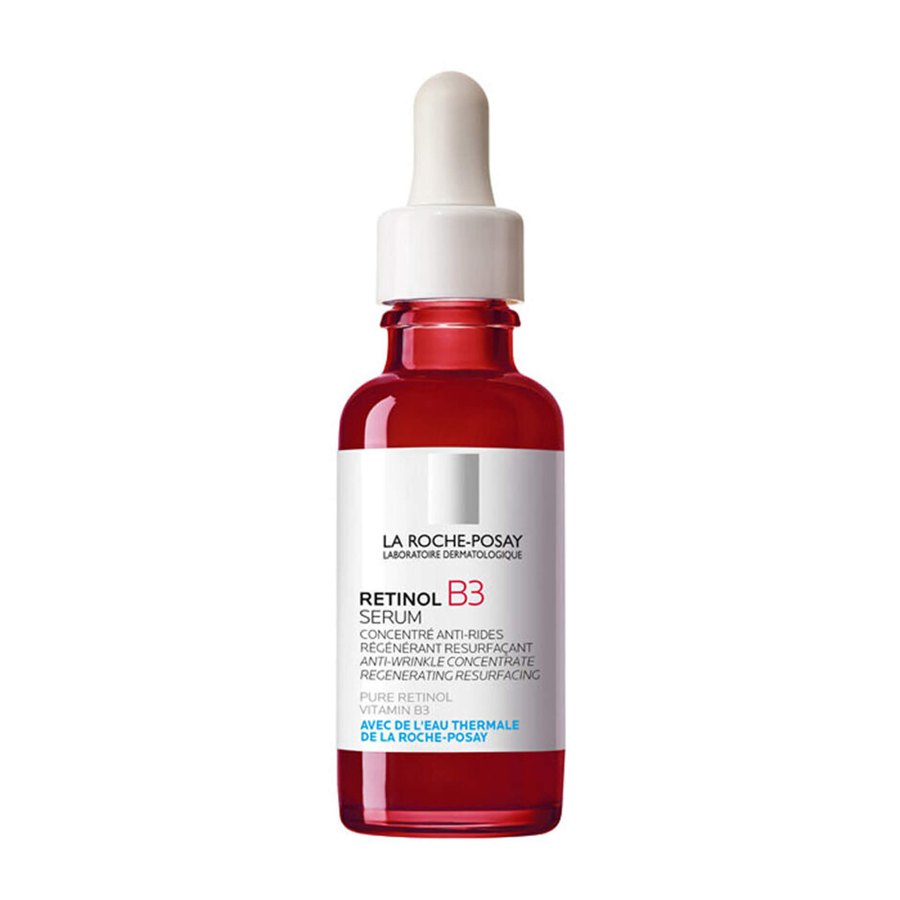
The brand states 0.3% retinol, with niacinamide. The pigment evidence is for prescription tretinoin: in a 40-week trial in 54 Black patients, 0.1% tretinoin lightened post-inflammatory marks by 40% against 18% with a placebo cream, though half the users had retinoid dermatitis (Bulengo-Ransby et al., 1993). Retinol is weaker and gentler, so expect slower results. Night only, and not in pregnancy. 30ml, £38.40, usually £48.00 (£1.28/ml). More choices in the best retinol serums.
Buy: La Roche-Posay Retinol B3 Serum at Escentual
Free toolSkincare routine builderNot sure what order to use your products in?Open the routine builder →Comparison
| Product | Main active, as the brand states it | Best for | Size | Price, 28 Nov 2026 | Per ml |
|---|---|---|---|---|---|
| The Ordinary Azelaic Acid Suspension 10% | Azelaic acid 10% | Acne marks, acne | 30ml | £11.10 | £0.37 |
| SkinCeuticals Discoloration Defense | Tranexamic acid 1.8%, niacinamide 5%, kojic acid | Melasma | 30ml | £114.00 | £3.80 |
| Eucerin Anti-Pigment Dual Serum | Thiamidol (strength not stated) | Melasma, stubborn patches | 30ml | £24.00, usually £48.00 | £0.80 |
| La Roche-Posay Mela B3 Serum | Niacinamide 10%, Melasyl | Mixed pigmentation, melasma | 30ml | £38.40, usually £48.00 | £1.28 |
| The Ordinary Niacinamide 10% + Zinc 1% | Niacinamide 10% | Budget, oily skin | 30ml | £5.00 | £0.17 |
| La Roche-Posay Pure Vitamin C12 Serum | L-ascorbic acid 12% | Sun spots, dullness | 30ml | £36.00, usually £45.00 | £1.20 |
| The Ordinary Alpha Arbutin 2% + HA | Alpha arbutin 2% | Gentle add-on | 30ml | £10.50 | £0.35 |
| La Roche-Posay Retinol B3 Serum | Retinol 0.3% | Acne marks, sun damage | 30ml | £38.40, usually £48.00 | £1.28 |
Prices change often.
Which active for which kind of pigmentation
| Cause | What it looks like | Best-matched actives | Read more |
|---|---|---|---|
| Post-inflammatory hyperpigmentation | Flat brown or grey marks where spots, eczema or cuts were | Azelaic acid, niacinamide, a retinoid | PIH guide |
| Melasma | Symmetrical patches on cheeks, forehead or upper lip, linked to hormones and light | Tranexamic acid, thiamidol, azelaic acid, niacinamide | Melasma guide |
| Sun spots (solar lentigines) | Defined brown spots on the face and hands after years of sun | Vitamin C, a retinoid; lasers do more | Age spots |
Set expectations. A review of 41 studies on post-inflammatory hyperpigmentation found that topical treatments brought partial improvement for 72.4% of patients but full clearance for only 5.4% (Kashetsky et al., 2024). For sun spots, a review of 41 trials found lasers the most effective option, and the best-performing cream combined mequinol with prescription tretinoin (Mardani et al., 2025). For melasma, a review of 35 randomised trials gave tranexamic acid a strong recommendation (Austin et al., 2019). Most trials ran 8 to 24 weeks, so allow at least 8 to 12 before judging a serum.
Related guideHow to Reduce Dark Spots and Dark Marks on SkinHow to fade dark spots and dark marks on skin: vitamin C, retinoids and azelaic acid, what causes hyperpigmentation, timelines, and when to see a professional.Read the guide →How many UK serums contain these actives?
Most serums sold for dark spots contain at least one of these actives, but a quarter don't. In the Obviously Skincare UK skincare ingredients analysis, which covers the published ingredient lists of products sold by LOOKFANTASTIC and Space NK in November 2026, 677 products from 172 brands are named as serums (eye, lip, body, hair, sun, mask and kit products excluded).
| In 677 serums | Products | Share (95% interval) |
|---|---|---|
| Niacinamide | 241 | 35.6% (32.1–39.3%) |
| Retinol, retinal or hydroxypinacolone retinoate | 71 | 10.5% (8.4–13.0%) |
| L-ascorbic acid | 67 | 9.9% (7.9–12.4%) |
| Azelaic acid | 19 | 2.8% (1.8–4.3%) |
| Tranexamic acid | 18 | 2.7% (1.7–4.2%) |
| Alpha arbutin | 8 | 1.2% (0.6–2.3%) |
| Kojic acid | 6 | 0.9% (0.4–1.9%) |
| Hydroquinone | 0 | 0% |
Of the 58 serums whose names promise to tackle dark spots, pigment or uneven tone, or to brighten, 15 (25.9%, interval 16.3–38.4%) list none of the actives above or thiamidol. Most rely on vitamin C derivatives, liquorice or plant extracts with thinner trial records. Check the ingredient list, not the name.
What does not belong in a serum
Hydroquinone. Most of the trials above use it as the benchmark, but in the UK it can only be prescribed by doctors, and the British Association of Dermatologists says to use it for a few weeks at a time under medical supervision. UK cosmetics rules allow it only in professional artificial nail systems, so a face serum that lists it is not legal to sell. None of the 677 serums in our sample listed it.
Too many strong actives at once. Irritation causes pigmentation of its own, especially on darker skin. Don't layer a retinoid, an exfoliating acid and strong vitamin C on the same night (what not to mix with retinol).
In pregnancy, skip retinol and retinyl palmitate; azelaic acid and niacinamide are the usual choices. See pregnancy-safe skincare.
Any spot that is new, growing, changing colour or shape, or bleeding needs a GP, not a serum.
References
Baliña LM, Graupe K. The treatment of melasma. 20% azelaic acid versus 4% hydroquinone cream. Int J Dermatol. 1991;30(12):893-5. (https://pubmed.ncbi.nlm.nih.gov/1816137/)
Kircik LH. Efficacy and safety of azelaic acid (AzA) gel 15% in the treatment of post-inflammatory hyperpigmentation and acne: a 16-week, baseline-controlled study. J Drugs Dermatol. 2011;10(6):586-90. (https://pubmed.ncbi.nlm.nih.gov/21637899/)
Yasnova N, Sirait SP, Rahmayunita G. The effectiveness and safety of 3% tranexamic acid cream vs. 4% hydroquinone cream for mixed-type melasma in skin of color: a double-blind, split-face, randomized controlled trial. Acta Dermatovenerol Alp Pannonica Adriat. 2024;33(2):83-88. (https://pubmed.ncbi.nlm.nih.gov/38918942/)
Lima PB, Dias JAF, Cassiano DP, et al. Efficacy and safety of topical isobutylamido thiazolyl resorcinol (Thiamidol) vs. 4% hydroquinone cream for facial melasma: an evaluator-blinded, randomized controlled trial. J Eur Acad Dermatol Venereol. 2021;35(9):1881-1887. (https://pubmed.ncbi.nlm.nih.gov/33988887/)
Navarrete-Solís J, Castanedo-Cázares JP, Torres-Álvarez B, et al. A double-blind, randomized clinical trial of niacinamide 4% versus hydroquinone 4% in the treatment of melasma. Dermatol Res Pract. 2011;2011:379173. (https://pubmed.ncbi.nlm.nih.gov/21822427/)
Espinal-Perez LE, Moncada B, Castanedo-Cazares JP. A double-blind randomized trial of 5% ascorbic acid vs. 4% hydroquinone in melasma. Int J Dermatol. 2004;43(8):604-7. (https://pubmed.ncbi.nlm.nih.gov/15304189/)
Correia G, Magina S. Efficacy of topical vitamin C in melasma and photoaging: a systematic review. J Cosmet Dermatol. 2023;22(7):1938-1945. (https://pubmed.ncbi.nlm.nih.gov/37128827/)
Passeron T, Kerob D, Le Dantec G, et al. Efficacy and tolerability of a new facial 2-mercaptonicotinoyl glycine-containing depigmenting serum versus hydroquinone 4% over 3-month treatment of facial melasma. Dermatol Ther (Heidelb). 2025;15(9):2379-2390. (https://pubmed.ncbi.nlm.nih.gov/40586974/)
Saeedi M, Khezri K, Seyed Zakaryaei A, Mohammadamini H. A comprehensive review of the therapeutic potential of α-arbutin. Phytother Res. 2021;35(8):4136-4154. (https://pubmed.ncbi.nlm.nih.gov/33724594/)
Bulengo-Ransby SM, Griffiths CE, Kimbrough-Green CK, et al. Topical tretinoin (retinoic acid) therapy for hyperpigmented lesions caused by inflammation of the skin in black patients. N Engl J Med. 1993;328(20):1438-43. (https://pubmed.ncbi.nlm.nih.gov/8479462/)
Kashetsky N, Feschuk A, Pratt ME. Post-inflammatory hyperpigmentation: a systematic review of treatment outcomes. J Eur Acad Dermatol Venereol. 2024;38(3):470-479. (https://pubmed.ncbi.nlm.nih.gov/37843491/)
Mardani G, Nasiri MJ, Namazi N, et al. Treatment of solar lentigines: a systematic review of clinical trials. J Cosmet Dermatol. 2025;24(4):e70133. (https://pubmed.ncbi.nlm.nih.gov/40145274/)
Austin E, Nguyen JK, Jagdeo J. Topical treatments for melasma: a systematic review of randomized controlled trials. J Drugs Dermatol. 2019;18(11):1156-1171. (https://pubmed.ncbi.nlm.nih.gov/31741361/)
British Association of Dermatologists. Melasma: patient information leaflet. (https://www.skinhealthinfo.org.uk/condition/melasma/)
Regulation (EC) No 1223/2009, Annex III, as it applies in Great Britain, entry 14 (hydroquinone). legislation.gov.uk, checked 28 November 2026. (https://www.legislation.gov.uk/eur/2009/1223/annex/III)
FAQs
What is the best serum for dark spots in the UK?
For marks left by spots, The Ordinary Azelaic Acid Suspension 10% at £11.10. For melasma, Eucerin Anti-Pigment Dual Serum on a mid budget or SkinCeuticals Discoloration Defense at the top end. For sun spots, a pure vitamin C serum such as La Roche-Posay Pure Vitamin C12.
Which is better for pigmentation, niacinamide or vitamin C?
Both have small melasma trials against 4% hydroquinone with fewer side effects. Niacinamide is gentler and more stable; vitamin C adds daytime antioxidant protection, so many people use vitamin C in the morning and niacinamide at night. See niacinamide vs vitamin C.
Can I buy hydroquinone in the UK?
Only on prescription. It is not allowed in UK cosmetics for use on the skin, so a cream or serum sold as a cosmetic cannot legally contain it.