
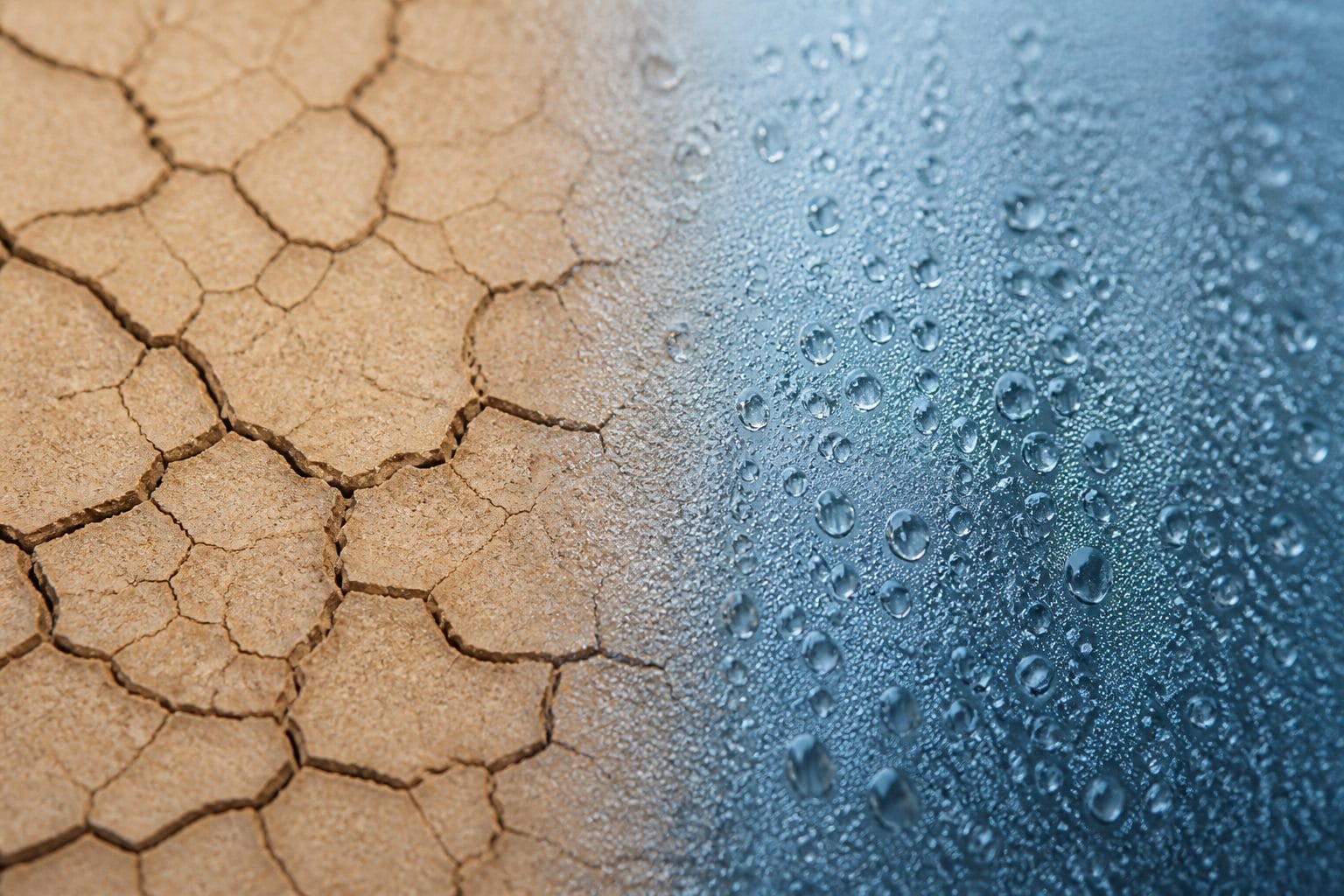
Dry and dehydrated skin can both feel tight, look dull and show fine lines, but they are not the same. Dry skin lacks oil and is a skin type; dehydrated skin lacks water and is a temporary condition.
Dry skin usually needs more lipids and occlusion. Dehydrated skin needs water-binding ingredients and a barrier that keeps water in. You can have both at once: or oily skin that is dehydrated.
I've seen people respond to a tight, shiny face with a stronger cleanser because the shine says "oil". That is often exactly the wrong move.
Dry vs dehydrated skin: the practical difference
Sebum is oil made by sebaceous glands. Naturally dry skin produces less of it, usually across most of the face and often the body. The pattern is fairly consistent, though winter and age make it more obvious.
Water keeps the outer skin layers flexible. Dehydration happens when it falls or escapes too quickly. Low humidity, hot showers, harsh cleansers, over-exfoliation and barrier damage contribute. Any skin type can become dehydrated.
The skin barrier links both problems. Its ceramides, cholesterol and fatty acids slow water loss. When those lipids are missing naturally or stripped by products, water escapes more readily. This is why combining hyaluronic acid and ceramides makes more sense than treating hydration as a serum-only job.
Signs your skin is dry
Dry skin usually shows a broad, persistent pattern:
- It produces little visible oil, even late in the day.
- It feels rough, tight or flaky across most areas.
- Pores may look small and the surface can appear matte.
- Rich creams and facial oils feel comfortable rather than greasy.
- Your hands, arms or legs may be dry as well.
- The pattern returns even when your routine is gentle.
Genetics, age, eczema, medication and weather play a role. Our guide to skin dryness causes and solutions covers them. Persistent itchy, cracked or inflamed patches may be dermatitis and need medical advice.
Signs your skin is dehydrated
Dehydration often appears as a change from your normal:
- Skin feels tight after cleansing but may become shiny later.
- Fine surface lines look more obvious, particularly around the eyes.
- Makeup catches on small flakes or looks patchy.
- The face looks dull and feels less springy.
- Products suddenly sting.
- Oiliness and small breakouts may increase after an aggressive routine.
The popular "pinch test" is not a reliable facial diagnosis. Skin recoil also reflects age and elasticity. Judge your recent routine, environment and pattern instead.
If moisturiser stings and redness accompanies the tightness, move beyond hydration hacks and follow a skin barrier repair routine.
Why oily skin can feel dry and tight
Oil and water are separate measurements. An oily face can produce abundant sebum while losing too much water through its outer layer. This is common after foaming cleansers, alcohol-heavy toners, daily acids or skipping moisturiser.
The result is the contradictory oily skin dry feeling: shiny across the forehead, yet tight after washing and flaky around blemishes. The claim that skin "overproduces oil to compensate" is too confident; sebum is strongly driven by genetics and hormones. What we can say is that stripping does not cure oiliness and does worsen water loss.
Use a gentle cleanser, light lotion and fewer exfoliating nights. The best serums for oily skin include water-based options, but serum still needs moisturiser over it.
How to fix dry skin
Dry skin benefits from adding oil-like barrier components and reducing their removal.
Morning routine for dry skin
- Rinse with lukewarm water or use a creamy, fragrance-free cleanser if needed.
- Apply a hydrating serum to damp skin, using glycerin or hyaluronic acid. The benefits of hyaluronic acid are useful but routinely exaggerated: it binds water near the surface; it does not permanently transform skin.
- Use a rich moisturiser with ceramides, fatty acids or squalane. CeraVe Moisturising Cream and La Roche-Posay Toleriane Dermallergo Cream are UK options. Read why ceramides matter, then compare moisturisers for dry skin.
- Finish with broad-spectrum SPF 30 or 50.
Evening routine for dry skin
Use a cleansing balm for makeup or water-resistant SPF, then a gentle cream cleanser. Apply moisturiser while the face is slightly damp. On stubborn dry patches, a thin layer of petrolatum over cream reduces overnight water loss.
Glycerin and hyaluronic acid attract water; ceramides and fatty acids replenish lipids; petrolatum and dimethicone slow evaporation. Our best ingredients for dry skin guide explains those jobs.
How to fix dehydrated skin
First, remove the likely cause. Pause scrubs and strong acids, stop using hot water, and replace any cleanser that leaves you tight. If you have recently increased a retinoid, reduce the frequency until your skin is comfortable.
Then use a simple routine:
- Gentle cleanser at night; water may be enough in the morning.
- A glycerin, panthenol or hyaluronic acid serum on slightly damp skin.
- A moisturiser suitable for your underlying skin type.
- Sunscreen every morning.
For dehydrated oily skin, choose a light lotion such as CeraVe Facial Moisturising Lotion or La Roche-Posay Toleriane Sensitive Fluide. For dehydrated dry skin, use a cream and consider an occlusive layer at night. The hydration step can be similar; the amount of oil and occlusion changes.
Do not spray water over your face and leave it to evaporate. Without moisturiser, misting gives a temporary sensation. Drinking normally supports health, but extra litres do not fix a cleanser-damaged barrier.
How long does recovery take?
Mild dehydration can feel better within several days after removing a harsh product and moisturising consistently. A damaged barrier usually takes a few weeks, not one sheet mask. Dry skin is a type to manage rather than cure; the right routine keeps it comfortable but does not permanently change sebaceous gland output.
Track comfort, flaking and tightness rather than expecting a pore scanner or hydration gadget to deliver a definitive label. If a simple routine has not helped after four to six weeks, or skin is itchy, painful or inflamed, seek medical advice.
References
Verdier-Sévrain S, Bonté F. Skin hydration: a review on its molecular mechanisms. J Cosmet Dermatol. 2007;6(2):75-82. (https://pubmed.ncbi.nlm.nih.gov/17524122/)
Coderch L, López O, de la Maza A, Parra JL. Ceramides and skin function. Am J Clin Dermatol. 2003;4(2):107-129. (https://pubmed.ncbi.nlm.nih.gov/12553851/)
Papakonstantinou E, Roth M, Karakiulakis G. Hyaluronic acid: A key molecule in skin aging. Dermatoendocrinol. 2012;4(3):253-258. (https://www.ncbi.nlm.nih.gov/pmc/articles/PMC3583886/)
FAQs
What is the main difference between dry and dehydrated skin?
Dry skin lacks sebum and is a skin type. Dehydrated skin lacks water and is a temporary condition caused or worsened by environment, products and barrier damage. A person can have either problem or both.
Can oily skin be dehydrated?
Yes. Sebum does not guarantee adequate water in the outer skin. Oily, dehydrated skin often looks shiny while feeling tight, dull or flaky, particularly after harsh cleansing or too much exfoliation.
What are the signs your skin is dry?
Persistent low oil, roughness, flaking, tightness and a generally matte surface point towards dry skin. Dryness elsewhere on the body is another clue. Itchy or inflamed patches may indicate eczema or dermatitis and need medical advice.
Does hyaluronic acid fix dehydrated skin?
It can help bind water in the outer skin, especially when applied to damp skin, but it is not a complete fix. Use moisturiser over it and address harsh cleansing, over-exfoliation or low humidity that caused the water loss.
How can I fix dry skin quickly?
Switch to a gentle cleanser, apply a rich ceramide-based moisturiser twice daily and use a thin occlusive layer on very dry patches at night. Avoid hot water and exfoliation. Comfort may improve quickly, but barrier recovery takes consistent care.