
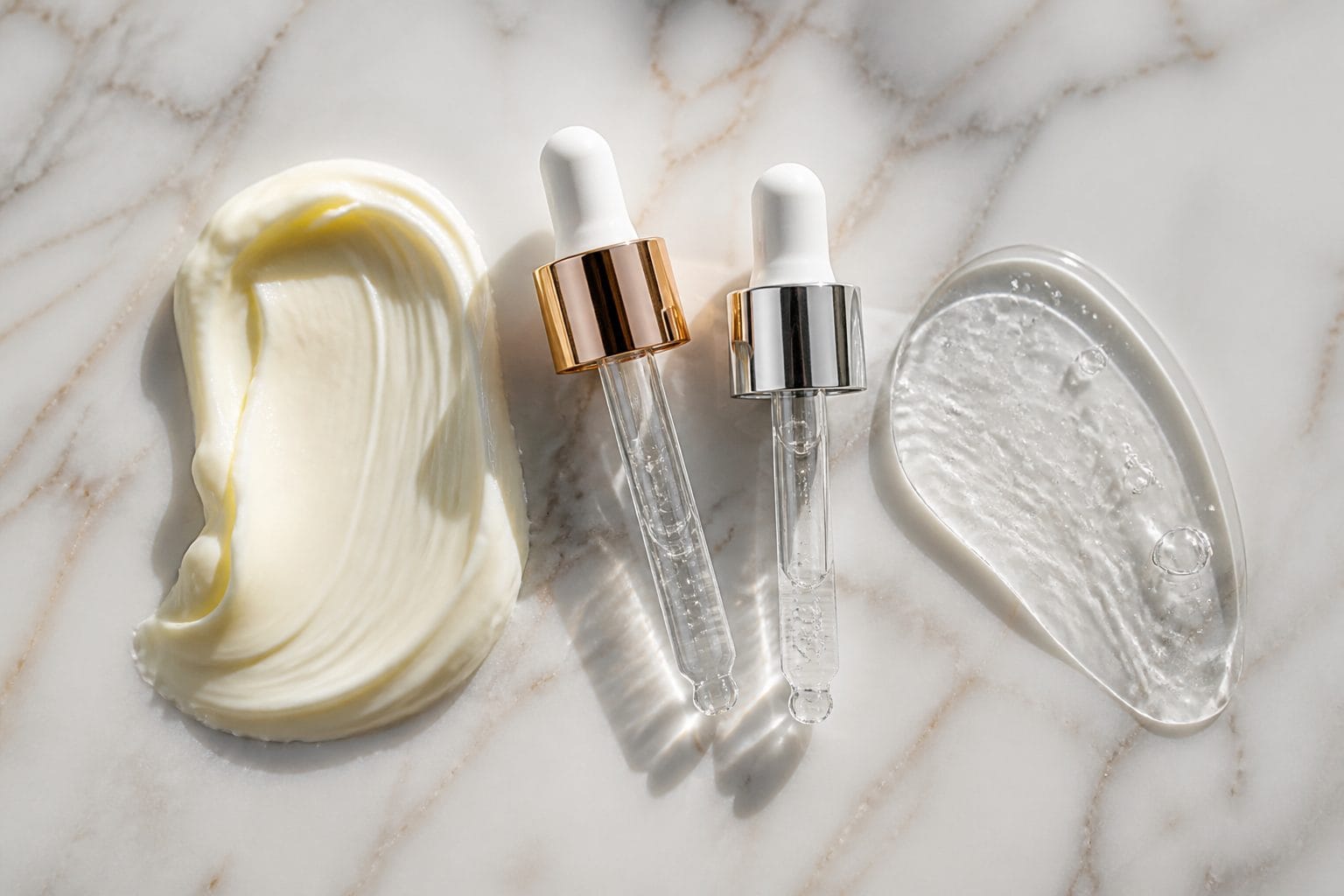
Combination skin is awkward because routines assume your whole face wants the same thing. Your forehead and nose shine by lunch, while your cheeks feel tight after cleansing.
The solution is not to choose whether you are an oily or dry skin type. It is to stop treating your face as one uniform surface. I use zoning: keep the basic routine gentle everywhere, then apply oil-control products only to the T-zone and richer moisturiser only where it is needed.
What combination skin actually looks like
The classic pattern is an oily T-zone, forehead, nose and chin, with normal or dry cheeks. The centre may have blackheads and visible pores while the sides feel rough or tight.
If your face was comfortable until a strong cleanser made it tight and shiny, you may be dehydrated rather than naturally combination. The distinction between dry and dehydrated skin matters because removing oil will not fix a lack of water.
Climate, hormones and age can shift the balance. My own routine would not be identical through a humid summer and a centrally heated British winter. Skin is allowed to change; our guide to whether skin type changes explains what is temporary and what is more fundamental.
If you are still unsure, start with skin types explained or take the skin type quiz before buying separate products for every square inch.
The zoning method for oily and dry skin
Zoning sounds more complicated than it is. Apply neutral, barrier-friendly essentials across the whole face, then adjust treatment and texture by area.
- Put salicylic acid on the oily, congested T-zone, not automatically on dry cheeks.
- Use a light lotion all over, adding a richer cream only to areas that remain tight.
- Apply clay masks to the nose and forehead only, if you enjoy them. They are temporary oil absorbers, not a required treatment.
- Keep strong retinoids and exfoliants away from irritated patches until those patches recover.
You do not need two separate routines. One cleanser, one sunscreen and two moisturiser textures are usually enough. Follow the order in our guide to building a skincare routine, changing placement rather than adding steps.
Morning combination skin routine
1. Cleanse without stripping the cheeks
Use a mild gel, cream or lotion cleanser with lukewarm water. CeraVe Hydrating Cream-to-Foam Cleanser and Cetaphil Gentle Skin Cleanser are widely available UK options. Massage mostly where oil collects and do not scrub the cheeks.
If your cheeks are dry on waking, rinse with water and cleanse at night. A squeaky T-zone is not worth a damaged barrier.
2. Add a targeted serum
For shine, a 4–5% niacinamide serum can go across the T-zone or whole face if tolerated. It may modestly improve oil appearance while supporting barrier function. The Ordinary's 10% formula is popular but not compulsory; a lower strength can be more comfortable. Compare it with other serums for oily skin before assuming the highest number is best.
On dry cheeks, a simple glycerin, panthenol or hyaluronic acid serum can add water. This is optional if your moisturiser already leaves them comfortable.
3. Moisturise by zone
Start with a lightweight, fragrance-free lotion across the whole face. CeraVe Facial Moisturising Lotion or La Roche-Posay Toleriane Sensitive Fluide are sensible examples. If the cheeks still pull or flake, press a small amount of richer cream over them.
CeraVe Moisturising Cream and La Roche-Posay Toleriane Dermallergo Cream are richer choices. The guide to moisturisers for dry skin includes more. Keep heavy cream off the nose if it is not needed.
4. Use SPF 30 or 50 everywhere
Sunscreen is the one step I would not zone. Apply a broad-spectrum SPF evenly over face, ears and neck. A fluid texture usually suits a mixed face better than a very matte, alcohol-heavy formula, which can exaggerate dry patches.
If sunscreen dries the cheeks, put moisturiser under them and use the same SPF everywhere. That is easier to apply evenly than joining two formulas down the middle.
Evening combination skin routine
1. Cleanse once, or twice when needed
Remove makeup and water-resistant sunscreen with a balm or cleansing oil, then follow with your gentle cleanser. If you wore neither, one cleanse is enough. Concentrate the first cleanser around the nose and hairline without repeatedly washing dry areas.
2. Treat only the oily T-zone
Use a 1–2% salicylic acid product on the forehead, nose and chin two evenings a week. It can enter the oily pore lining and help with blackheads and closed clogs. Keep it off flaky cheeks.
After a few comfortable weeks, increase to three times if needed. Do not add a scrub, glycolic toner and retinoid. A focused routine beats copying an oily skin routine across dry areas.
3. Support the dry zones
On non-acid areas, look for glycerin, ceramides, squalane and fatty acids. Our guide to the best ingredients for dry skin explains what each one contributes. You can apply a hydrating serum across the face, but seal the cheeks with a richer cream.
If the sides of your nose are both oily and flaky, pause BHA there. Flaking is not a clog to exfoliate away; it often signals irritation.
Common combination skin mistakes
Treating the entire face as oily. A harsh foaming cleanser and mattifying toner may improve shine briefly while making dry cheeks worse. Start neutral and target the centre.
Treating the entire face as dry. A thick balm everywhere can feel greasy and may make a congested T-zone less comfortable. Richness belongs where there is a lipid deficit.
Trying to erase every bit of shine. Skin is supposed to have sebum. Blotting paper during the day is fine, but chasing a completely matte forehead often leads to over-cleansing.
Changing everything with the weather. Add cream to the cheeks in winter or use less in summer. You rarely need to replace the whole routine.
Confusing irritation with skin type. Tight, burning skin that becomes shiny can be dehydration from an aggressive routine. Stop exfoliating and restore comfort before deciding what your baseline type is.
Give a new combination skin routine six weeks, changing one product at a time. If dry patches itch, crack or repeatedly return, or if central breakouts are inflamed and scarring, ask a GP or dermatologist to rule out eczema, dermatitis or acne that needs treatment.
References
Youn SW. The role of facial sebum secretion in acne pathogenesis: facts and controversies. Clin Dermatol. 2010;28(1):8-11. (https://pubmed.ncbi.nlm.nih.gov/20082943/)
Baumann L. Understanding and treating various skin types: the Baumann Skin Type Indicator. Dermatol Clin. 2008;26(3):359-373. (https://pubmed.ncbi.nlm.nih.gov/18555952/)
FAQs
What is the best routine for combination skin?
Use a gentle cleanser, light moisturiser and SPF across the whole face. Apply salicylic acid only to a congested T-zone two or three nights weekly, and add richer moisturiser only to dry cheeks.
Should combination skin use two moisturisers?
It can, but it does not have to. Start with one lightweight lotion everywhere. If the cheeks remain tight, layer a richer cream there. Using different amounts of one product may also be enough.
Can combination skin be oily and dehydrated?
Yes. Your T-zone can produce plenty of sebum while the skin lacks water, particularly after harsh cleansing or over-exfoliation. Tightness plus unusual shine is a common clue. Use gentler cleansing and consistent moisturiser.
Where should I apply salicylic acid on combination skin?
Apply a thin layer only over oily, clogged areas such as the forehead, nose and chin. Avoid dry, flaky or irritated cheeks. Start twice weekly and increase only if your skin stays comfortable.
Does combination skin change with the seasons?
Often. Heat and humidity can increase shine, while cold air and central heating make cheeks drier. Keep the routine structure and adjust cleanser frequency or moisturiser richness rather than replacing every product.