
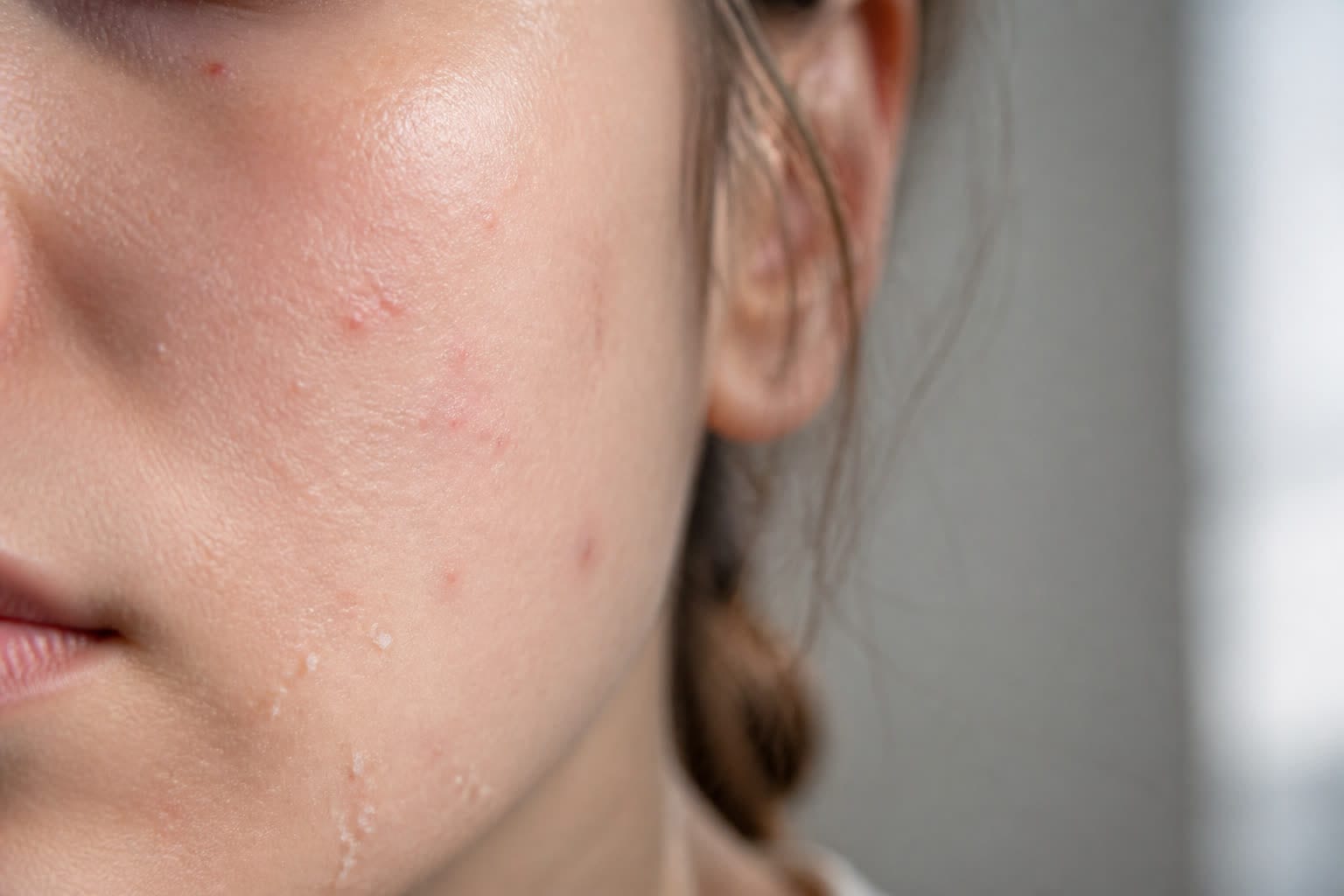
You start a new retinoid or acid. A week later your face is worse. The internet says "that's just purging, push through." Sometimes that's true. Sometimes the product is clogging you, irritating you, or you have hormonal acne that was going to flare anyway, and "purging" is a useful story for not stopping.
Here's the honest split: what a purge actually is, how to tell it from a breakout, and when to quit.
What purging actually is
Purging is a short-term worsening of acne caused by increased cell turnover. Ingredients that speed up how fast skin sheds will bring existing microcomedones (clogged pores you couldn't see yet) to the surface faster. You were going to get those spots. You're getting them now, in a cluster, instead of spread over the next couple of months.
That only happens with ingredients that increase turnover. It does not happen because a moisturiser is "detoxing" you. If a brand uses purge language for a cream with no retinoid, acid or similar, they're covering for irritation or congestion.
Which ingredients can cause a purge
The usual list:
- Retinoids: retinol, retinal, adapalene, tretinoin
- AHAs: glycolic, lactic, mandelic (what AHAs are)
- BHAs: salicylic acid
- Benzoyl peroxide, to a lesser extent
- Chemical peels and prescription-strength vitamin A
Niacinamide, hyaluronic acid, peptides, ceramides, most vitamin C derivatives and plain moisturisers do not purge. If those coincide with a breakout, look at the formula (oils, heavy occlusives, fragrance) or coincidence, not a purge.
Purging vs breaking out: the practical test
Use all three checks. One on its own is not enough.
1. Timing. A purge starts within the first few days to two weeks of a new turnover active, or a jump in strength/frequency. A breakout from a clogging product can start any time, including after months, and it continues for as long as you use it.
2. Location. Purging shows up where you already get spots. If your usual zone is the chin and that's what's erupting, that's consistent with a purge. New cystic spots on the cheeks, temples or hairline you never break out in is much more likely a breakout, an irritant reaction, or pore-clogging products.
3. Type and duration. Purging spots tend to come to a head and resolve faster than your usual acne, because turnover is up. A typical purge lasts four to six weeks, sometimes up to eight with tretinoin. Past that, or if spots are getting deeper, more widespread and not cycling through, it's not a purge.
Irritation muddies this. Stinging, peeling, tightness and diffuse redness is a barrier problem, not a purge. If the skin is raw, you don't "push through." You drop frequency or stop.
What to do if you think it's a purge
- Keep using the active, but don't increase it. Stay at the dose that triggered the flare until things settle.
- Moisturise more, not less. A simple ceramide cream is the usual fix for retinoid dryness.
- Don't add other exfoliants. One turnover product is enough. Stacking acids on a retinoid turns a purge into a damaged barrier.
- Don't pick. Purged spots scar like any other spots.
- Wear SPF. Turnover actives make you more sun-sensitive, and UV makes leftover marks stick around. See why SPF matters.
If you recently started tretinoin, the sandwich method (moisturiser, then tretinoin, then moisturiser) is how most people stay on it through the ugly weeks.
When to stop
Stop the new product if:
- Spots appear in new areas you don't usually break out
- They're cystic, very painful, or scarring
- You're past eight weeks with no improvement
- The skin is burning, swelling or weeping, not just a bit flaky
- The product has no turnover active in it
Then go back to a bland routine (gentle cleanser, moisturiser, SPF) until the barrier feels normal. Reintroduce actives one at a time. Patch test the next new thing.
The verdict
Purging is real, and it's limited: turnover ingredients, usual breakout zones, four to six weeks. Everything else called a purge is usually a breakout, irritation, or timing. If you're unsure and the spots are deep, treat it as a breakout and simplify. You can always restart the active later. You can't uns-car a "wait and see."
References
Leyden J, Stein-Gold L, Weiss J. Why topical retinoids are mainstay of therapy for acne. Dermatol Ther (Heidelb). 2017;7(3):293-304.
Zaenglein AL, Pathy AL, Schlosser BJ, et al. Guidelines of care for the management of acne vulgaris. J Am Acad Dermatol. 2016;74(5):945-973.e33.
FAQs
How long does skin purging last?
Usually four to six weeks, occasionally up to eight with prescription retinoids. If it's still getting worse after that, it isn't a purge.
How do I know if I'm purging or breaking out?
Purging happens after starting a retinoid or acid, in places you already break out, and it runs a faster cycle. New areas, cysts, or a product with no turnover active points to a breakout.
Does niacinamide cause purging?
No. Niacinamide doesn't speed cell turnover. A flare after starting it is more likely the rest of the formula, irritation, or coincidence.
Should I stop retinol if I'm purging?
Not automatically. If the spots are in your usual zones and the skin isn't raw, hold the same frequency and moisturise. Stop if it's spreading, cystic, or you're past two months with no let-up.
Can moisturiser cause a purge?
No. A moisturiser can clog pores or irritate. That's a breakout or a reaction, and the fix is to change the product, not wait it out as a purge.