Obviously Skincare
The "tretinoin purge" is a breakout in the first weeks of treatment, in the areas where you normally get spots. When it happens, it typically starts in weeks two to four and settles by weeks eight to twelve. Not everyone gets it, and it's a reason to adjust how you use tretinoin, not usually a reason to stop.
How long does it last?
| Stage | Timing | What's typical |
|---|---|---|
| Starts | Weeks 2 to 4 | Small spots and whiteheads in your usual areas; dryness and flaking |
| Peaks | Weeks 3 to 6 | The most spots, plus the most irritation |
| Settles | Weeks 6 to 12 | Fewer new spots; skin adapts to the drug |
| Should be over | By week 12 | Skin is clearer than when you started |
If you're still getting worse at 12 weeks, that isn't a purge. Go back to your prescriber.
Is the purge real?
It's widely believed, and the explanation sounds reasonable: tretinoin speeds up cell turnover, so blockages already forming under the skin (microcomedones) come to the surface sooner than they would have.
The trial evidence is less clear than the internet suggests. A review that searched clinical trial data for an early worsening of acne with topical retinoids found none: the available data showed acne improving, even during the first couple of weeks. The authors suggested that some people's acne worsens in that period as part of its natural course.
Two things can both be true. On average, across a trial, acne doesn't get worse. For an individual, a cluster of spots in week three is a common experience, and irritation from the drug itself can produce small red bumps that look like acne.
The practical point is the same either way: early breakouts tell you little about whether tretinoin will work for you. Judge it at 12 weeks.
Free toolRetinol starter scheduleGet a week-by-week plan for starting retinol.Open the retinol schedule →Purge or reaction?
| Likely purge | Likely irritation or a reaction | |
|---|---|---|
| Location | Where you usually break out | New areas; anywhere the product touches |
| Type | Whiteheads, small spots that come and go fast | Red, sore, rash-like bumps; burning; swelling |
| Timing | Starts weeks 2 to 4, easing by week 8 | Starts within days, or keeps worsening |
| Skin feel | Dry but manageable | Raw, stinging, tight, shiny |
| Trend | Slowly improving | Not improving |
See purging vs breaking out for the general version of this.
How to make it easier
Go slowly. Apply two or three nights a week for the first fortnight, then every other night, then nightly as tolerated. If your prescriber gave different instructions, follow those.
Use a pea-sized amount for the whole face. More doesn't work faster.
Apply to completely dry skin, 15 to 20 minutes after washing.
Buffer it. Moisturiser before and after tretinoin reduces irritation. See the retinol sandwich method.
Strip the rest of your routine. Gentle cleanser, moisturiser, sunscreen. Pause acids, scrubs, vitamin C and other actives until your skin settles. If you've been prescribed benzoyl peroxide as well, use it in the morning.
Wear SPF 30 or higher every day.
Don't pick. Purge spots are short-lived if left alone, and picking is what leaves marks.
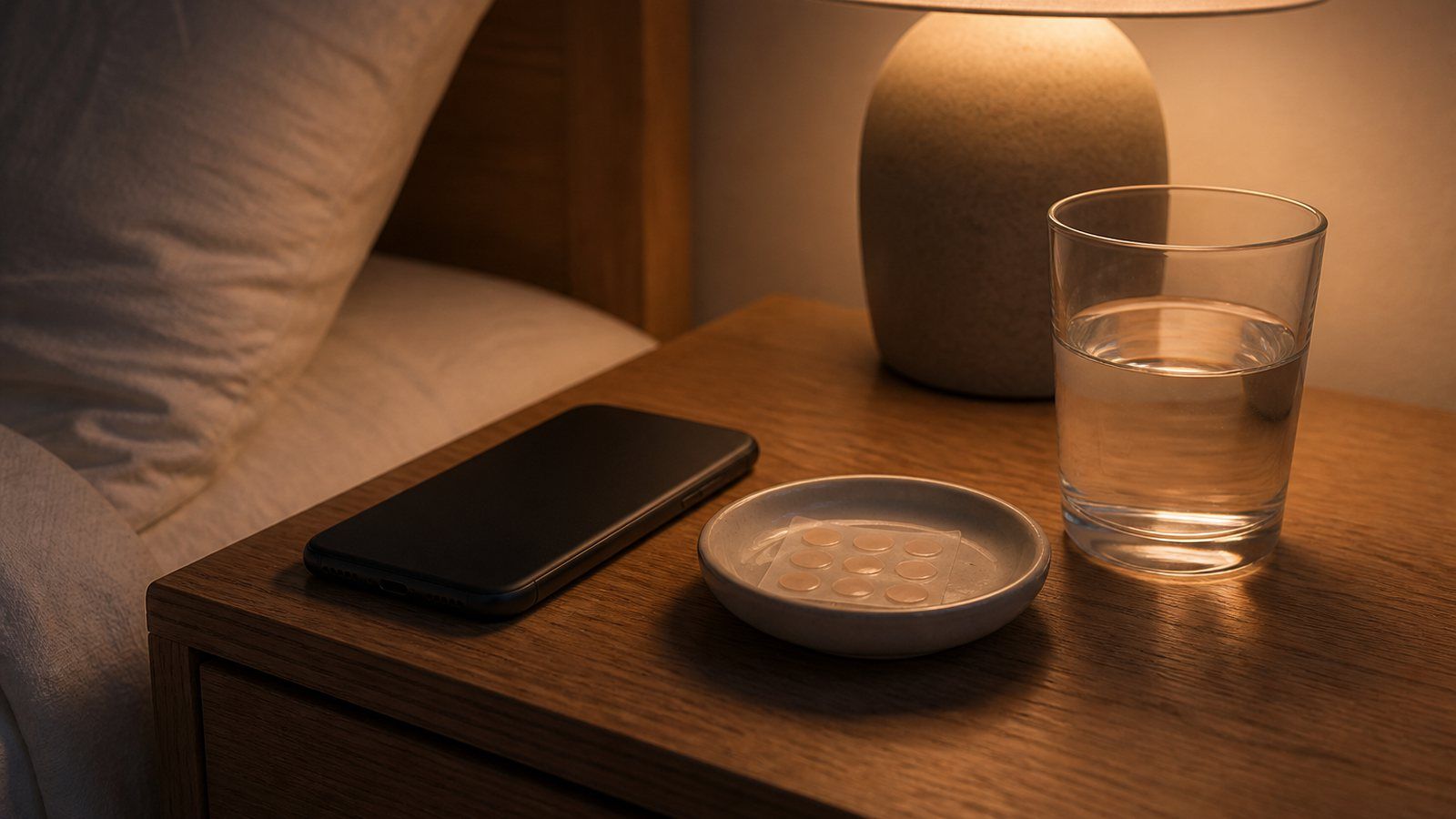
Use spot patches on anything that has come to a head. See pimple patches.
Related guideTretinoin Cream vs Gel: Which Form Is Right for Your Skin?Tretinoin cream suits dry and sensitive skin; gel suits oily, acne-prone skin and is more drying. How the bases differ, and why strengths don't compare.Read the guide →Should you stop?
Carry on if the spots are in your usual areas, your skin is dry but not raw, and you're under 12 weeks in.
Pause and speak to your prescriber or pharmacist if:
- your skin is burning, swollen, cracked or weeping
- you have a rash in places you never get spots
- you're getting deep, painful nodules or cysts
- things are still getting worse after 8 weeks, or no better at 12
Stopping for a few days and restarting at a lower frequency is better than pushing through real irritation. A damaged barrier causes its own breakouts. See retinol burn.
Does everyone purge?
No. Many people have nothing more than dryness. You're more likely to notice a flare if you have a lot of clogged pores to begin with, start at a higher strength, or go straight to nightly use.
Not purging doesn't mean it isn't working.
Does it happen with retinol and adapalene too?
It can with any retinoid. It's reported most with tretinoin because it's the strongest and most irritating. Over-the-counter retinol causes it less often. See retinol vs tretinoin and adapalene vs tretinoin.
After the purge
By three months most people see fewer spots and smoother skin. Tretinoin is a long-term treatment: acne often returns if it's stopped. For full instructions, see how to use tretinoin.
References
Yentzer BA, McClain RW, Feldman SR. Do topical retinoids cause acne to "flare"? J Drugs Dermatol. 2009;8(9):799-801. (https://pubmed.ncbi.nlm.nih.gov/19746671/)
Leyden J, Stein-Gold L, Weiss J. Why topical retinoids are mainstay of therapy for acne. Dermatol Ther (Heidelb). 2017;7(3):293-304. (https://pubmed.ncbi.nlm.nih.gov/28585191/)
FAQs
How long does the tretinoin purge last?
Usually four to eight weeks from when it starts, and it should be over by week 12.
When does the tretinoin purge start?
Typically two to four weeks after starting.
Does everyone purge on tretinoin?
No. Many people only get dryness and flaking.
How do I know if it's a purge or a breakout?
A purge appears in your usual spot-prone areas and improves within weeks. Spots in new areas, or a sore rash, suggest irritation.
Should I stop tretinoin if I'm purging?
Not usually. Reduce how often you apply it and moisturise more. Stop and seek advice if your skin is raw or you develop painful cysts.