Obviously Skincare
Niacinamide shouldn't cause purging. A purge is what happens when an ingredient speeds up skin cell turnover and brings forming blockages to the surface sooner. Retinoids and exfoliating acids do that. Niacinamide doesn't. So if you've broken out after starting a niacinamide serum, something else is going on, and waiting it out isn't the right response.
What purging is
Purging is linked to ingredients that increase the rate at which skin sheds: retinol, tretinoin, adapalene, glycolic acid, lactic acid, salicylic acid. In theory, clogs that were already developing appear earlier, in the places you usually get spots, and clear within a few weeks.
Niacinamide works differently. It supports the skin's barrier, can reduce oil output, calms inflammation and reduces pigment transfer. None of that pushes blockages to the surface. See purging vs breaking out.
So why are you breaking out?
1. The strength is too high for your skin
Much of the research on niacinamide used 2% to 5%. Many popular serums are 10%, and some go to 20%. At higher strengths a minority of people get redness, stinging, flushing or a crop of small bumps. That's irritation, and irritated skin breaks out.
2. Something else in the formula
A serum is more than its headline ingredient.
- Zinc, as in The Ordinary Niacinamide 10% + Zinc 1%, is drying for some.
- Thickeners and film-formers can sit heavily on the skin, especially layered under other products.
- Preservatives or other additives occasionally cause a reaction.
If one niacinamide product breaks you out, another may not.
3. Layering problems
Niacinamide serums are known for pilling. When a product balls up under moisturiser or sunscreen, people rub harder or add more layers. Combining a new serum with several existing actives can also tip the skin into irritation.
4. It's a coincidence
Hormonal cycles, stress, a new sunscreen, a change of season. Spots have many causes, and a new serum gets the blame because it's the newest thing.
5. You started other products at the same time
If you added niacinamide alongside a retinol or an acid, the purge, if it is one, belongs to those.
Free toolSkincare ingredient checkerCheck whether two ingredients can be used together.Open the ingredient checker →Reaction or coincidence? How to tell
| Points to the niacinamide product | Points elsewhere | |
|---|---|---|
| Timing | Starts within days of the first use | Starts weeks later, or matches your cycle |
| Location | Wherever you apply it, including places you never get spots | Your usual areas |
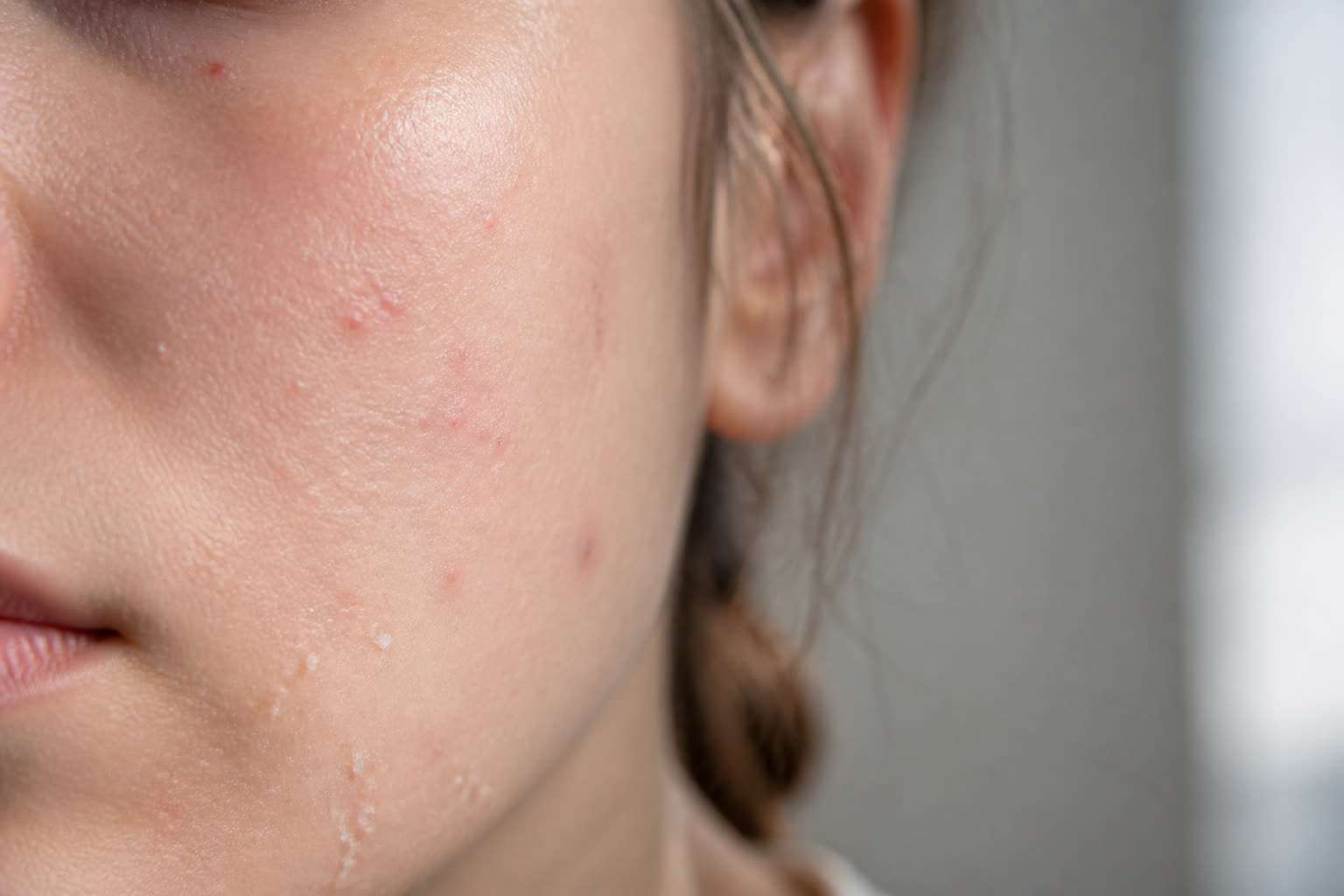
| Look | Small, uniform red bumps; redness; sometimes itch or sting | Your usual mix of spots |
| When you stop | Settles in one to two weeks | No change |
What to do
Step 1: stop it for two weeks. Keep everything else the same. If your skin calms down, the product was involved.
Step 2: if you want to try again, change one thing.
- Lower the dose. Mix one or two drops into your moisturiser, or switch to a 2% to 5% product. Many moisturisers already contain niacinamide at these levels.
- Use it less often. Every other day to begin with.
- Try a different formula, without zinc.
- Simplify the rest. Don't layer it with several other serums.
Step 3: patch test the product on a small area along the jaw for a week before going back to full-face use. See patch testing.
Don't push through. With a retinoid, there's an argument for persisting through an early flare. With niacinamide there isn't: there's no mechanism by which things get worse before they get better.
Related guideTretinoin Purge: How Long It Lasts and How to Get Through ItThe tretinoin purge usually starts in weeks 2 to 4 and settles by weeks 8 to 12.Read the guide →Flushing isn't purging either
Some people go red and warm shortly after applying high-strength niacinamide. This usually passes within an hour. It's more likely with 10% and above, and when niacinamide is layered straight over an acidic product. A lower strength usually solves it.
Is niacinamide still worth using?
For most people, yes. It's one of the best-tolerated active ingredients. A review of studies in acne found that topical niacinamide improved acne in most trials, and in a study of 2% niacinamide, sebum output fell over several weeks. If one product didn't suit you, a gentler one probably will.
If your skin reacts to niacinamide at any strength, leave it out. Nothing in skincare is essential except sunscreen. For oil and blemishes, salicylic acid and azelaic acid are alternatives.
When to get help
See a pharmacist or GP if you have swelling, hives, intense itching or a rash that spreads beyond where you applied the product, or if acne persists after you've stopped it. See also can skincare products cause acne?
For how to use it well, see the niacinamide guide and the review of The Ordinary Niacinamide 10% + Zinc 1%.
References
Walocko FM, Eber AE, Keri JE, et al. The role of nicotinamide in acne treatment. Dermatol Ther. 2017;30(5). (https://pubmed.ncbi.nlm.nih.gov/28220628/)
Draelos ZD, Matsubara A, Smiles K. The effect of 2% niacinamide on facial sebum production. J Cosmet Laser Ther. 2006;8(2):96-101. (https://pubmed.ncbi.nlm.nih.gov/16766489/)
FAQs
Can niacinamide cause purging?
It shouldn't. It doesn't increase cell turnover, which is what causes a purge.
Why am I breaking out after using niacinamide?
Usually irritation from a high strength, a reaction to another ingredient in the product, or a coincidence.
How long does a niacinamide breakout last?
It should settle within one to two weeks of stopping the product.
Should I keep using niacinamide if it breaks me out?
No. Stop, then try a lower strength or a different formula.
Is 10% niacinamide too strong?
For some people. 2% to 5% is effective and less likely to irritate.