Obviously Skincare
Dry skin doesn't need many products. It needs four things: a cleanser that doesn't strip, something that draws water into the skin, something that holds it there, and sunscreen. The Ordinary sells inexpensive versions of all four, plus a couple of gentle extras for flakiness and fine lines once your skin is comfortable.
This routine keeps it simple. Every product named below was on The Ordinary's UK site when we checked in November 2026.
If your skin is flaky, stinging, red or reacts to everything, start with the basics only, and read how to repair your skin barrier before adding anything active.
Why dry skin feels dry
Dry skin has fewer of the oils and natural water-binding molecules that normally keep the outer layer flexible. The outer layer, the stratum corneum, works like a brick wall: skin cells are the bricks, and fats such as ceramides are the mortar. Inside the cells are natural moisturising factors (NMFs), a mix of amino acids, urea, lactate and salts that hold water.
When the mortar thins and NMF levels drop, water escapes faster, the surface cracks into fine flakes, and skin feels tight and itchy. Cold weather, central heating, hot water, foaming cleansers and age all make this worse.
A good dry-skin routine replaces what's missing:
| What dry skin needs | Ingredient type | The Ordinary option |
|---|---|---|
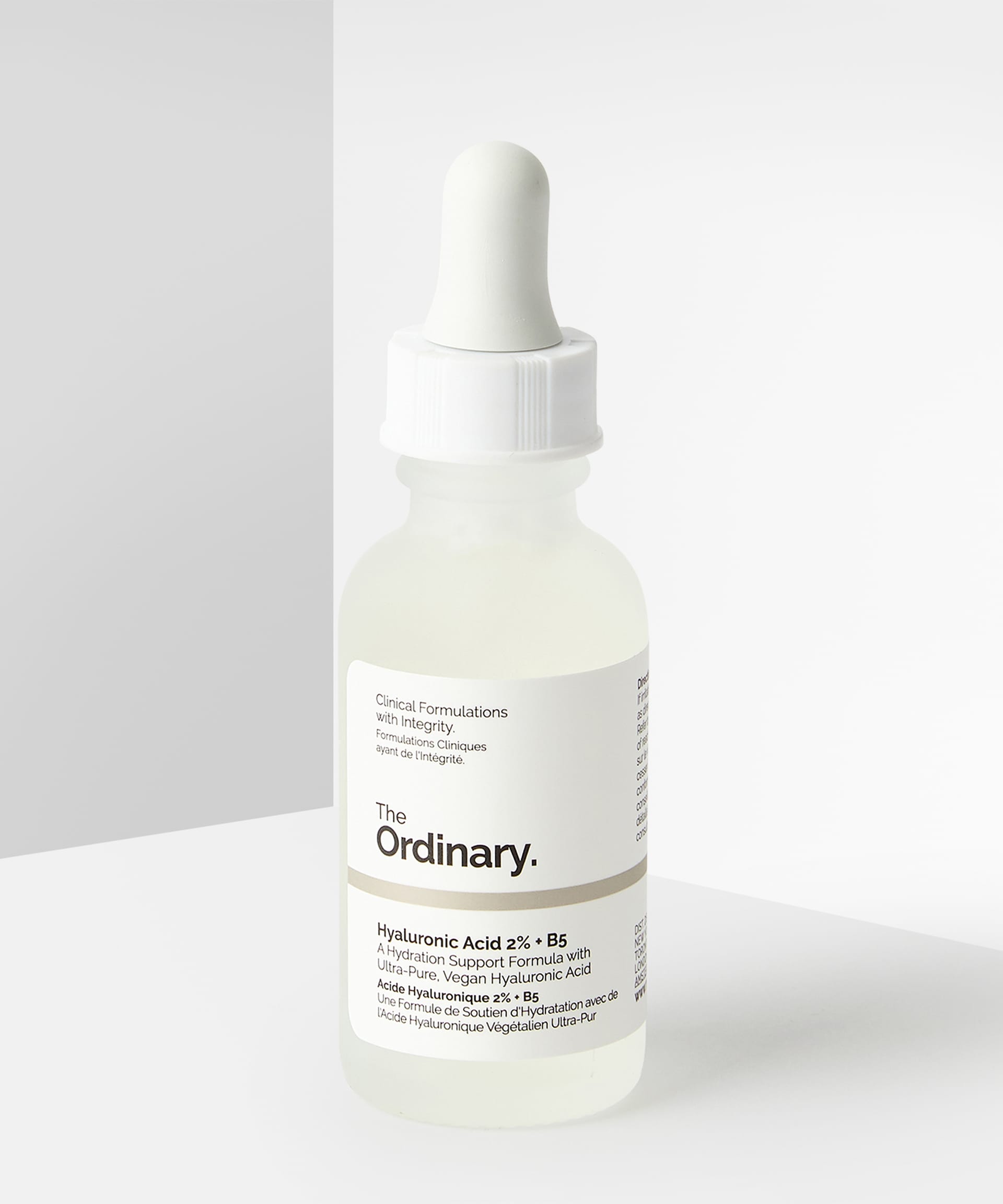
| Draw water in | Humectants: glycerin, hyaluronic acid, amino acids, urea | Hyaluronic Acid 2% + B5 (with Ceramides); Natural Moisturizing Factors + HA |
| Replace the mortar | Ceramides, fatty acids, cholesterol | Natural Moisturizing Factors + PhytoCeramides |
| Seal it in | Occlusives and emollients: squalane, plant oils, petrolatum | 100% Plant-Derived Squalane |
| Protect | SPF | UV Filters SPF 45 Serum, or any SPF you'll wear daily |
Dry is not the same as dehydrated. Dry skin lacks oil; dehydrated skin lacks water and can be oily at the same time. See dry vs dehydrated skin.
Morning routine
- Squalane Cleanser, or just rinse with lukewarm water if your skin is very dry. You don't need to cleanse with a product every morning.
- Hyaluronic Acid 2% + B5 (with Ceramides): a few drops pressed into damp skin. See our hyaluronic acid review.
- Natural Moisturizing Factors + HA, or Natural Moisturizing Factors + PhytoCeramides if you need something richer.
- SPF 30 or higher. The Ordinary's UV Filters SPF 45 Serum is light. Any broad-spectrum SPF you'll actually wear is fine. Dry skin often prefers cream sunscreens. See the best sunscreen for your face.
Evening routine
- Squalane Cleanser to remove sunscreen and makeup. Massage onto dry skin, then rinse.
- Hyaluronic Acid 2% + B5 (with Ceramides) on damp skin.
- Natural Moisturizing Factors + PhytoCeramides.
- 100% Plant-Derived Squalane: two or three drops pressed on top if your skin still feels tight. See what squalane is.
That's the core routine. Many people with dry skin need nothing more.
Optional extras, once your skin is comfortable
Add one at a time, three to four weeks apart, so you can tell what's helping and what's irritating.
| Product | What it's for | How often | Avoid on the same night as |
|---|---|---|---|
| Lactic Acid 5% + HA | Flaky texture, dullness | 1 to 2 evenings a week | Retinoids, other acids |
| Granactive Retinoid 2% Emulsion | Fine lines, uneven texture | 2 evenings a week, building to alternate nights | Acids |
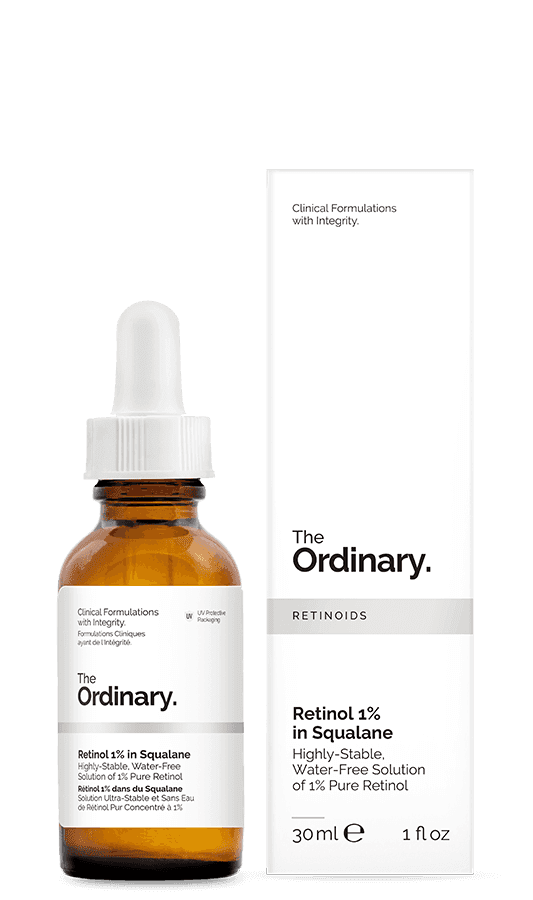
| Retinol 0.2% in Squalane | Fine lines, for those who tolerate retinoids | 2 evenings a week to start | Acids |
| Soothing & Barrier Support Serum | Redness, sensitivity | Daily | Nothing in particular |
| Niacinamide 5% Face and Body Emulsion | Redness, barrier support, uneven tone | Daily | Nothing in particular |
Why lactic acid and not glycolic? Lactic acid is a gentler AHA and a natural part of the skin's own NMF, so it hydrates as well as exfoliates. A double-blind study found a 12% lactate lotion improved dry, scaly skin significantly more than a plain moisturiser. Lower strengths used a couple of times a week are a sensible start for the face.
Why a low-strength retinoid? Retinoids have the best evidence for fine lines. In one trial of older adults, 0.4% retinol applied for 24 weeks significantly improved fine wrinkles. But retinoids can make dry skin flakier at first. The Ordinary's Granactive Retinoid emulsion and Retinol 0.2% in squalane are the gentlest starting points. Apply after moisturiser if your skin is reactive. See how to start retinol.
Don't use lactic acid and a retinoid on the same night. See ingredients you shouldn't mix.
Related guideThe Ordinary Routine for Beginners: A Simple Starter Set by Skin TypeA beginner's The Ordinary routine using four or five products. What to buy first for oily, dry, combination and normal skin, when to add an active.Read the guide →A sample week with extras
| Morning | Evening | |
|---|---|---|
| Monday | Core routine + SPF | Core routine + Granactive Retinoid |
| Tuesday | Core routine + SPF | Core routine |
| Wednesday | Core routine + SPF | Core routine + Lactic Acid 5% |
| Thursday | Core routine + SPF | Core routine + Granactive Retinoid |
| Friday | Core routine + SPF | Core routine |
| Saturday | Core routine + SPF | Core routine + squalane |
| Sunday | Core routine + SPF | Core routine |
What to avoid
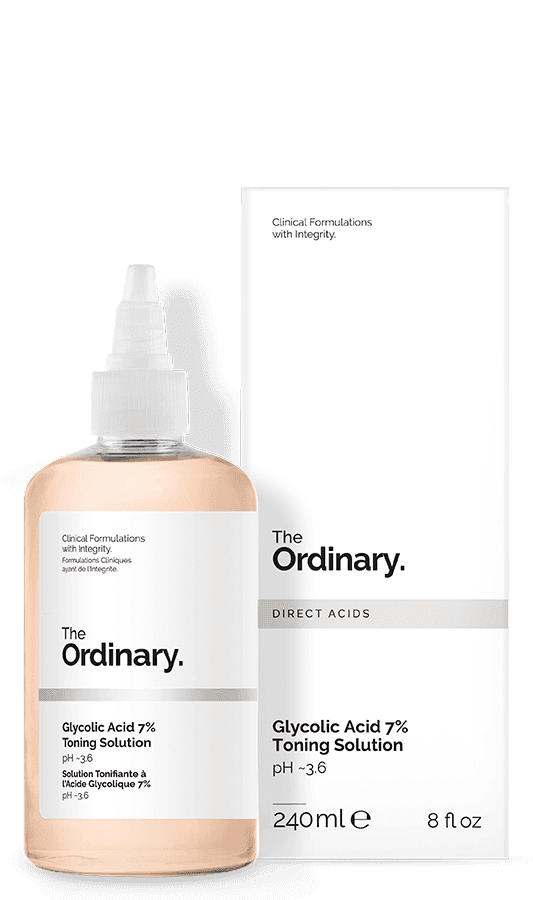
- Glycolic Acid 7% Exfoliating Toner used daily. It's a strong AHA, and frequent use can leave dry skin raw.
- AHA 30% + BHA 2% Peeling Solution. Far too strong for most dry or sensitive skin.
- Salicylic Acid 2% Solution on dry areas. It's an oil-dissolving acid meant for oily and congested skin.
- Foaming and gel cleansers, including Glucoside Foaming Cleanser, if they leave you tight.
- Hot water. It strips oils. Use lukewarm water and pat dry. See hot vs cold showers.
- Applying hyaluronic acid to bone-dry skin in a dry room and leaving it uncovered. Apply to damp skin and always follow with moisturiser.
How long until it works?
| Change | Typical timeframe |
|---|---|
| Less tightness after washing | Days |
| Fewer flakes | 1 to 2 weeks |
| Smoother, more comfortable skin | 2 to 4 weeks |
| Softer texture from lactic acid | 4 to 8 weeks |
| Softer fine lines from a retinoid | 3 to 6 months |
If it isn't enough
The Natural Moisturizing Factors + HA cream is fairly light. If your skin still feels tight by mid-afternoon:
- Swap to Natural Moisturizing Factors + PhytoCeramides, the richer option.
- Press squalane over your moisturiser at night.
- Use a thicker ceramide cream from another brand at night. See the best moisturisers for dry skin and the best ingredients for dry skin.
- Use a humidifier in winter.
- Apply a thin layer of petroleum jelly on very dry patches. See slugging.
See a GP or pharmacist if your skin is cracked, itchy, inflamed or bleeding, or if dryness comes with a rash. That could be eczema, which may need a prescription treatment. See eczema on the face.
References
- Lodén M. Role of topical emollients and moisturizers in the treatment of dry skin barrier disorders. Am J Clin Dermatol. 2003;4(11):771-88. (https://pubmed.ncbi.nlm.nih.gov/14572299/)
- Fluhr JW, Moore DJ, Lane ME, et al. Epidermal barrier function in dry, flaky and sensitive skin: A narrative review. J Eur Acad Dermatol Venereol. 2024;38(5):812-820. (https://pubmed.ncbi.nlm.nih.gov/38140732/)
- Dahl MV, Dahl AC. 12% lactate lotion for the treatment of xerosis. A double-blind clinical evaluation. Arch Dermatol. 1983;119(1):27-30. (https://pubmed.ncbi.nlm.nih.gov/6336928/)
- Pavicic T, Gauglitz GG, Lersch P, et al. Efficacy of cream-based novel formulations of hyaluronic acid of different molecular weights in anti-wrinkle treatment. J Drugs Dermatol. 2011;10(9):990-1000. (https://pubmed.ncbi.nlm.nih.gov/22052267/)
- Kafi R, Kwak HS, Schumacher WE, et al. Improvement of naturally aged skin with vitamin A (retinol). Arch Dermatol. 2007;143(5):606-12. (https://pubmed.ncbi.nlm.nih.gov/17515510/)
FAQs
What The Ordinary products are good for dry skin?
Can I use The Ordinary retinol on dry skin?
Is The Ordinary Natural Moisturizing Factors enough for very dry skin?
Should I use The Ordinary hyaluronic acid on dry skin?
Which The Ordinary exfoliant is best for dry skin?
Lactic Acid 5% + HA, once or twice a week. It's gentler than glycolic acid and also hydrates.
Can I use squalane with hyaluronic acid?
Yes. Hyaluronic acid first, then moisturiser, then a few drops of squalane to seal it in.