Obviously Skincare
"Anti-pollution" is mostly a marketing category. There's no special ingredient that forms a force field against city air. But pollution does affect skin, and a few ordinary habits help: cleaning it off properly at night, protecting your skin barrier, using an antioxidant and wearing sunscreen.
Here's what the evidence says, and what's worth buying.
What pollution does to skin
Studies in large cities have linked air pollution, especially fine particles and traffic fumes, with more pigmentation spots, more wrinkles, and flare-ups of eczema and acne. The main proposed mechanism is oxidative stress: pollutants generate reactive molecules that damage skin cells and trigger inflammation.
The evidence has real limits. A 2026 systematic review of the research on air pollution and skin disease found most studies pointed to harm, but the results varied, and the certainty of the evidence was mostly low to very low. Pollution probably matters for skin, but it's harder to measure than sun damage, and much less is known about what protects against it.
What actually helps
1. Cleanse properly in the evening
Pollution particles sit on the skin's surface along with sunscreen, makeup and oil. A thorough but gentle evening cleanse removes them. If you wear water-resistant SPF or makeup, an oil or balm cleanser first helps. See how to double cleanse.
Don't scrub or over-cleanse. Stripping your skin weakens the barrier, which makes it more vulnerable.
2. Look after your skin barrier
A healthy barrier keeps irritants out. A moisturiser with ceramides, glycerin and fatty acids supports it. See how to repair your skin barrier.
3. Use an antioxidant in the morning
Antioxidants such as vitamin C, vitamin E, ferulic acid, niacinamide and green tea help neutralise the reactive molecules that pollution and UV generate. Vitamin C has the strongest evidence. See why vitamin C is worth using.
4. Wear sunscreen every day
UV and pollution make each other worse: some pollutants become more damaging in sunlight. Daily SPF protects against the bigger, better-proven cause of skin ageing. See why SPF matters.
Free toolSkincare routine builderNot sure what order to use your products in?Open the routine builder →Products worth considering
You don't need products labelled "anti-pollution". These do the useful jobs above:
- A cleansing oil or balm for evenings when you wear makeup or water-resistant SPF. The Ordinary Squalane Cleanser is an inexpensive option.
- A gentle second cleanser. See the best cleansers for oily skin or Cetaphil Gentle Skin Cleanser for dry and sensitive skin.
- A vitamin C serum in the morning. The Ordinary's Ascorbyl Glucoside Solution 12% is a gentle, inexpensive option; many brands make one at different prices.
- A ceramide moisturiser. See the best moisturisers for dry skin.
- A broad-spectrum SPF30 or higher.
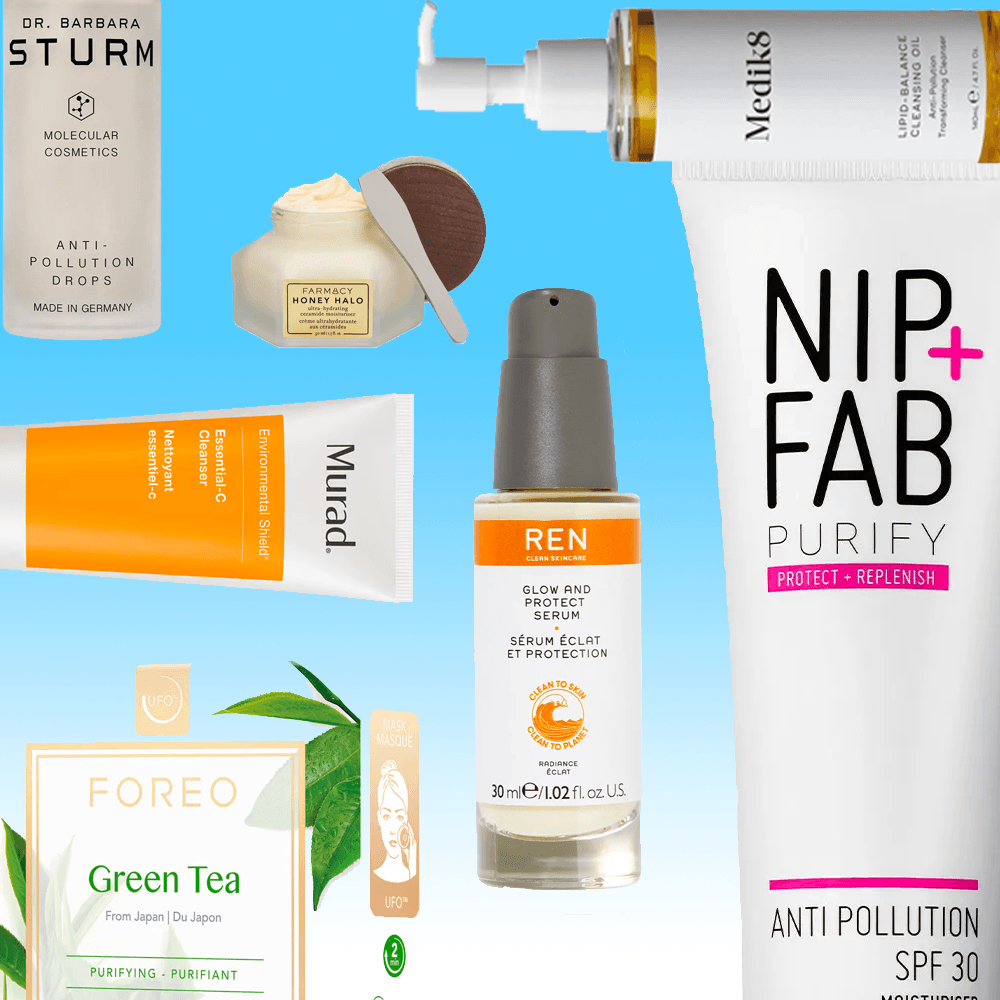
Products marketed specifically as anti-pollution (mists, "shield" serums and moisturisers with SPF) are fine if you like them, but they mostly contain the same antioxidants and moisturising ingredients as other skincare.
What doesn't help
- Mists and "shields" that claim to block pollution particles. There's little independent evidence for them.
- Charcoal products. See why charcoal is overrated.
- Over-cleansing. Washing more than twice a day damages your barrier.
What's in city air, and what it does to skin
| Pollutant | Where it comes from | Possible effects on skin |
|---|---|---|
| Fine particles (PM2.5, PM10) | Traffic, especially diesel; wood burning; industry | Linked with more pigment spots and wrinkles in long-term studies |
| Nitrogen dioxide (NO₂) | Traffic | Linked with pigment spots in some studies |
| Ozone | Formed from traffic fumes in sunlight | Depletes the skin's own antioxidants (like vitamin E) |
| Polycyclic aromatic hydrocarbons (PAHs) | Combustion, traffic, smoking | Oxidative stress; may worsen pigmentation |
| Cigarette smoke | Smoking, second-hand smoke | Strongly linked with wrinkles and premature ageing |
The best-known study followed around 400 older women in Germany and found that those exposed to more traffic-related particles had about 20% more pigment spots on the forehead and cheeks, with a weaker link to wrinkles. It's observational, so it can't prove cause, but later studies in other countries found similar links.
A simple routine for city skin
| Morning | Evening | |
|---|---|---|
| 1 | Gentle cleanser or water | Oil or balm cleanser if you wore SPF or makeup |
| 2 | Vitamin C serum | Gentle water-based cleanser |
| 3 | Moisturiser | Treatment if you use one (e.g. retinoid) |
| 4 | SPF 30+ | Moisturiser with ceramides |
Nothing here is pollution-specific, and that's the point. Thorough evening cleansing, a healthy barrier, an antioxidant and daily sunscreen cover what the evidence supports. See how to build a skincare routine.
Beyond skincare
- Don't smoke, and avoid second-hand smoke. It's the most concentrated pollution your skin meets.
- Choose quieter streets for walking or cycling where you can.
- Ventilate when cooking, especially with gas hobs and frying.
- Avoid burning wood indoors if you can.
References
Singh N, Schikowski T, Krutmann J. Air pollution and skin diseases: a systematic review of epidemiological evidence. Am J Clin Dermatol. 2026;27(2):261-276. (https://pubmed.ncbi.nlm.nih.gov/41649748/)
Vierkötter A, Schikowski T, Ranft U, et al. Airborne particle exposure and extrinsic skin aging. J Invest Dermatol. 2010;130(12):2719-26. (https://pubmed.ncbi.nlm.nih.gov/20664556/)
Krutmann J, Bouloc A, Sore G, et al. The skin aging exposome. J Dermatol Sci. 2017;85(3):152-161. (https://pubmed.ncbi.nlm.nih.gov/27720464/)
Pullar JM, Carr AC, Vissers MCM. The Roles of Vitamin C in Skin Health. Nutrients. 2017;9(8):866. (https://pubmed.ncbi.nlm.nih.gov/28805671/)
Hughes MC, Williams GM, Baker P, et al. Sunscreen and prevention of skin aging: a randomized trial. Ann Intern Med. 2013;158(11):781-90. (https://pubmed.ncbi.nlm.nih.gov/23732711/)
FAQs
Does anti-pollution skincare work?
The useful parts, cleansing, barrier care, antioxidants and sunscreen, have reasonable support. Products specifically labelled anti-pollution don't do anything special beyond that.
What does pollution do to your skin?
It's linked to more pigmentation, wrinkles, and flare-ups of eczema and acne, probably through oxidative stress. The evidence is still uncertain.
What's the best antioxidant for pollution?
Vitamin C has the most evidence as a topical antioxidant. Niacinamide and vitamin E are gentler options.
Do I need to double cleanse if I live in a city?
Only if you wear makeup or water-resistant sunscreen. Otherwise one gentle cleanse in the evening is enough.